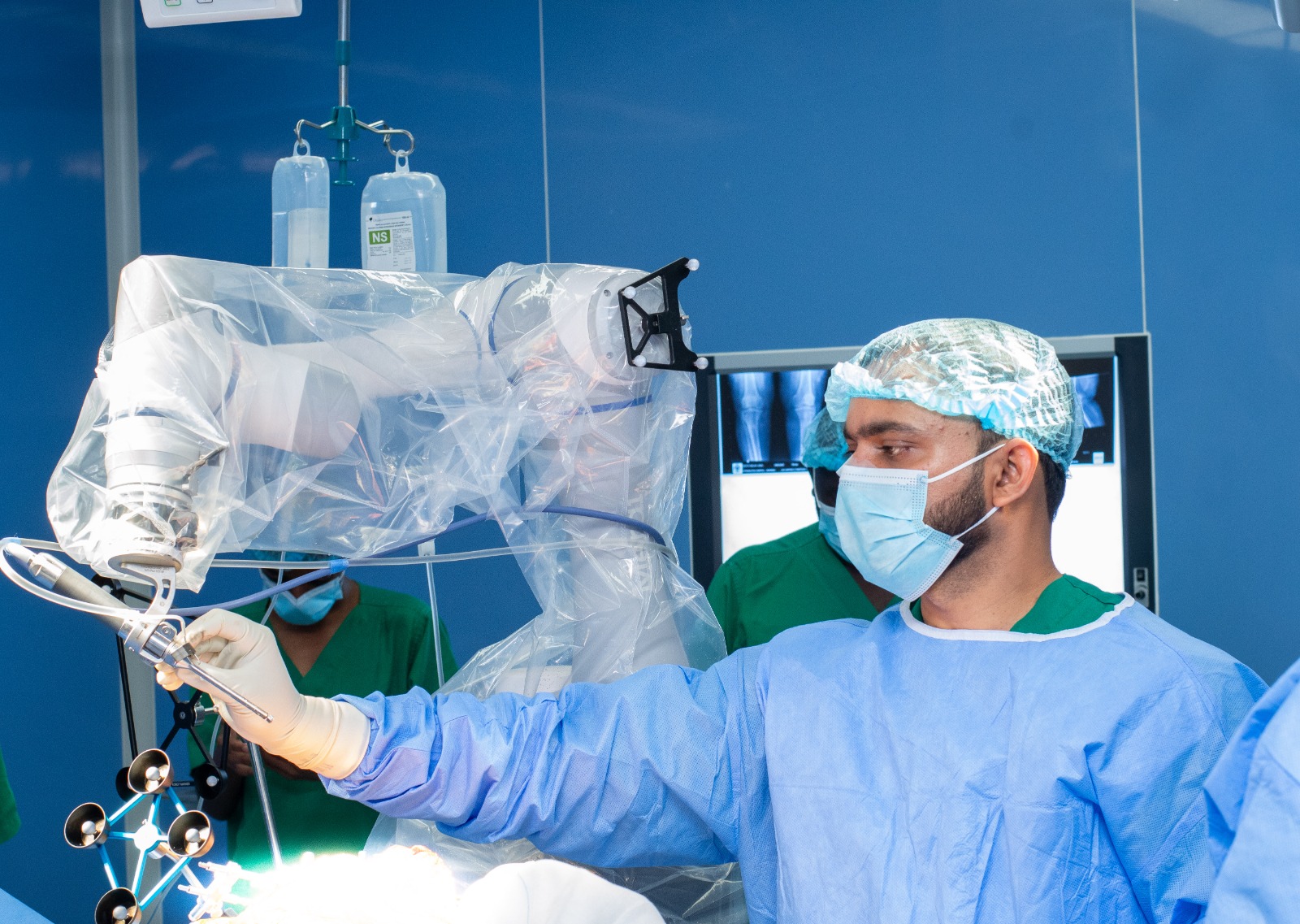
Metropolitan Hospital in Nairobi has announced that it successfully conducted what it describes as the first robotic-assisted knee replacement surgeries in East and Central Africa, marking a new phase in orthopaedic surgery capability within the region.
The two procedures were completed on December 10, 2025, under a skills-transfer programme involving local orthopaedic surgeons supported by visiting counterparts from a partner hospital in India.
The facility said the surgeries were carried out in compliance with required clinical protocols and regulatory approvals.
Hospital CEO Kanyenje Gakombe said the milestone follows decades of sustained investment in surgical capacity and technology.
“The introduction of robotic-assisted surgery at Metropolitan Hospital expands access to high-precision orthopaedic care in Kenya and the wider region. It is the result of more than 30 years of investment in clinical training, infrastructure and medical technology,” Gakombe said.
Robotic-assisted knee replacement is typically advised for patients experiencing severe joint damage caused by osteoarthritis, fractures, inflammatory disorders or sports-related injuries.
Osteoarthritis remains the leading driver of knee degeneration globally, and local data suggests a rising need for joint replacement interventions in Kenya. A 2024 peer-reviewed study in Nyamira County recorded an arthritis prevalence of 44.6 per cent among adults aged 40 and above.
Lead surgeon Dr Faraj Alkizim said robotic support enhances precision during joint replacement.
“Robotic-assisted knee replacement is designed to support surgeons with patient-specific planning and precise bone preparation, improving the accuracy of alignment and component positioning,” he said.
Previous Ministry of Health assessments have noted that many Kenyans seek joint replacement procedures abroad due to limited domestic capacity.
Metropolitan Hospital says such investments are beginning to shift that trend. A 2025 peer-reviewed study cited in the hospital’s documentation indicates that more than 140 knee replacement surgeries were performed at the facility between January and May 2023.
A representative from the visiting surgical team described the partnership as part of a broader initiative to strengthen specialised medical training across borders.
The robotic equipment was supplied by a medical technology manufacturer, while the programme received logistical and financial backing from external partners.
The hospital said it intends to expand its robotic-assisted programmes while continuing to build local surgical capability for complex orthopaedic care.
Robotic-assisted knee replacement has emerged as one of the fastest-growing technologies in orthopaedic surgery, offering more precise bone preparation and implant positioning for patients with advanced knee joint damage.
The technique combines computer-guided planning, 3D imaging and a robotic arm or navigation system to support the surgeon throughout the procedure. Unlike fully automated systems, the robot does not operate independently; surgeons retain full control of instrument placement and decision-making.
The approach is primarily used for patients suffering severe osteoarthritis, post-traumatic arthritis, inflammatory joint disease or progressive deformity. Osteoarthritis remains the leading global cause of knee joint deterioration, particularly among older adults.