Kenya has endured a devastating start to 2026 on its highways, with a series of severe road accidents claiming dozens of lives in just a few short weeks.
From the notorious black spots of the Nairobi-Nakuru Highway to multiple deadly collisions in other counties, the country’s road safety crisis, long a source of national concern, has re‑emerged with stark intensity.
The tragic multi‑vehicle collision near Gilgil and Kikopey on January 19 has once again underscored the wide‑ranging and persistent causes behind these crashes- speeding, mechanical failures, reckless driving, and unsafe road conditions.
This explainer maps out the major incidents since the start of the year, the confirmed fatalities, and what these crashes tell us about the broader road safety challenges facing Kenya in 2026.
GILGIL-KIKOPEY CRASH (JANUARY 19, 2026)
On the afternoon of January 19, one of the busiest transport corridors in the country, the Nairobi–Nakuru Highway, witnessed yet another horrific accident near the Kariandusi/Kikopey area of Gilgil, Nakuru County.
This stretch of highway has long been recognised as a “black spot,” where multiple fatal crashes have occurred over the years.
A heavy goods trailer travelling towards Nakuru lost control and veered off its lane, ploughing into multiple public service vehicles (matatus) that were travelling in the opposite direction.
Police confirmed that at least seven people were killed in the crash, with five dying at the scene and two more succumbing to their injuries later in hospital.
Some 11 others were reported injured, many critically, and rushed to nearby health facilities for treatment.
Preliminary reports from responders and witnesses paint a grim picture: the trailer, fully laden and travelling at speed, struck a matatu head‑on before hitting two others.
“The trailer heading to Nakuru veered off its lane and hit two matatus heading towards Gilgil. It then collided with a third matatu and dragged it off the highway into a ditch,” Gilgil Sub-county Police Commander Wilstone Mwakio said.
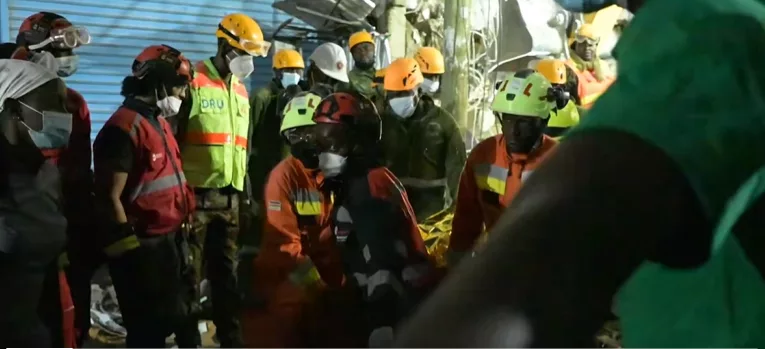
The weight of the container caused some vehicles to topple, trapping passengers within the wreckage and complicating rescue efforts.
Authorities are investigating the precise cause, but initial indications point to brake failure and excessive speed as key contributing factors, a deadly combination on a highway already notorious for its dangerous stretches and frequent crashes.
1. FIRST DAYS OF THE YEAR (JANUARY 1–3)
The year began with multiple fatal road incidents across the country.
In the first 72 hours of 2026, national reports confirmed at least 16 people were killed in various accidents involving both passenger and commercial vehicles on different highways.
These early days set a somber tone, with authorities and safety advocates warning Kenyans about the heightened risks associated with heavy travel during festive and early school‑term periods.
2. Naivasha crash (January 5)
On January 5, a particularly deadly crash occurred in the Karai area of Naivasha along the Nairobi–Nakuru Highway.
A Greenline Company bus collided head‑on with a 14‑seater matatu in the early hours of the morning.
Police confirmed that nine people, including two minors, were killed, seven on the spot and two later in hospital, with numerous others sustaining injuries and rushed to medical facilities.
This incident added to the toll on one of the country’s busiest corridors, highlighting the risks of night travel and the peril of unsafe overtaking manoeuvres, which locals and officials said were likely factors in the crash.
3. Kericho bus‑truck collision (January 6)
Just a day after the Naivasha tragedy, another serious accident occurred in Kericho County, along the Londiani-Fort Ternan Road.
A bus operated by Uwezo Sacco collided with a trailer, killing at least six people and injuring dozens more.
Authorities reported that five passengers and the bus driver died on the spot, while scores of other passengers were treated for varying degrees of injuries.
This crash occurred amid mounting reports of rising road fatalities across the country since the start of January, with police noting that more than 60 deaths had already been recorded from various accidents by this point.
Increasing toll of fatalities in early January
Detailed police tallies from the first week of January suggested that at least 31 Kenyans had perished in road accidents nationwide by January 6, following a series of separate collisions in places like Kericho, Baringo, and elsewhere, as well as pedestrian and motorcycle crashes.
These figures, tallied just days into the new year, highlighted how quickly fatalities were accumulating, with roadside collisions, truck overturns, and multi‑vehicle pile‑ups all contributing to the grim tally.
Putting together the confirmed data from national news reports and police statements shows that there have been 16 deaths in separate road crashes in the first 72 hours of 2026, various highways.
At least 31 total fatalities reported by police nationwide in the first six days of January (inclusive of crashes in multiple counties).
Taken conservatively and accounting for possible overlapping counts between aggregated fatality summaries and individual incidents, the officially documented toll from these major events alone reaches well over 40 deaths within just the first three weeks of 2026.
Many more may have been injured or lost lives in less‑reported crashes, pedestrian episodes, or collisions involving motorcycles, categories that often do not make headline news but still contribute significantly to the total.
Underlying causes
Across these incidents, several recurring factors have emerged from police reports, eyewitness testimonies and road safety analyses:
1. Black spots and hazardous corridors
Many fatal crashes have occurred on known accident‑prone sections of major highways.
The Nairobi–Nakuru highway, particularly around Gilgil, Kikopey, Naivasha and Salgaa, is frequently cited by drivers and officials as one of the most dangerous stretches in the country.
Long stretches with steep gradients, inadequate signage, flawed lane markings, and congested freight and passenger traffic combine to make these corridors exceptionally risky, especially for heavy goods vehicles and PSVs.
2. Vehicle Defects and Mechanical Failures
Mechanical problems remain a critical factor.
In the Gilgil/Kikopey case, responders and police pointed to brake failure on a heavy trailer as a key trigger.
Such failures, including worn tyres, defective braking systems, and overloaded cargo, are frequently implicated in heavy‑vehicle crashes across Kenya’s road network.
3. Speeding, reckless driving and fatigue
Speeding and unsafe overtaking have been mentioned in relation to multiple crashes, including the early January Naivasha collision where witnesses and survivors pointed to fast driving and poor judgement.
Driver fatigue is also a serious concern, particularly on long overnight journeys, a factor repeatedly cited by local road safety groups and in early January crash reports.
“Fatigue is as dangerous as alcohol. Drivers who have been on the road for long hours suffer lapses in concentration and delayed reflexes,” says Nairobi Area Traffic Commander Joseph Chirchir.
4. Inadequate training and enforcement
Calls from the Motorists Association of Kenya and road safety advocates point to deficiencies in driver training and licensing, and lax enforcement of traffic laws, as underlying contributors to road deaths.
Advocates have urged stricter oversight of driving schools, stricter compliance checks on vehicle roadworthiness, and better training for long‑distance and night driving, reforms that could mitigate some of the most common causes of fatal accidents.
While the 2026 figures are still being compiled, they reflect a continuation, and, in some places, an escalation, of a long‑running road safety crisis in Kenya.
NTSA data released for the previous year showed that by late 2025 the country had already recorded an estimated over 4,400 road fatalities, marking a year of significant road carnage.
Between January 1 and October 22, 2025, a total of 3,890 people died in road crashes, surpassing the 3,805 fatalities recorded during the same period in 2024.
Among those killed were 351 drivers, 378 pillion passengers, 57 cyclists and an alarming 1,000 motorcyclists. Vulnerable road users remain the most affected, accounting for the majority of the lives lost.
NTSA acting director general Angele Wanjira said the agency is intensifying preventative measures anchored on the Safe System Approach, an internationally recognised framework that focuses on designing a transport system resilient enough to reduce the chance of human error resulting in death.
She said NTSA will work closely with the police in running targeted, multi-agency operations that prioritise prevention over reaction.
“We intend to strengthen real-time monitoring, roadside checks, public sensitisation and collaboration with passengers themselves,” Wanjira said in a past event.
She noted that NTSA is enforcing IRSMS (Intelligent Road Safety Management System) data transmission for public service vehicles and commercial fleets.
In response to the growing toll, authorities have intensified road safety campaigns, stepped up patrols, and called for stricter enforcement of traffic rules.
NTSA and county officials have regularly urged motorists to obey speed limits, ensure vehicles are roadworthy, and adopt defensive driving practices, particularly on high‑risk corridors.
Road safety advocates continue to press for improved infrastructure at black spots, more rigorous driver licensing and training standards, and stronger compliance mechanisms for commercial transport operators