Agriculture Cabinet Secretary Mutahi Kagwe has strongly opposed renewed legislative efforts to merge the regulation of human and veterinary medicines.
Kagwe argued that proposals currently before Parliament and the East African Legislative Assembly (EALA) contradict global standards and would pose risks to both public and animal health.
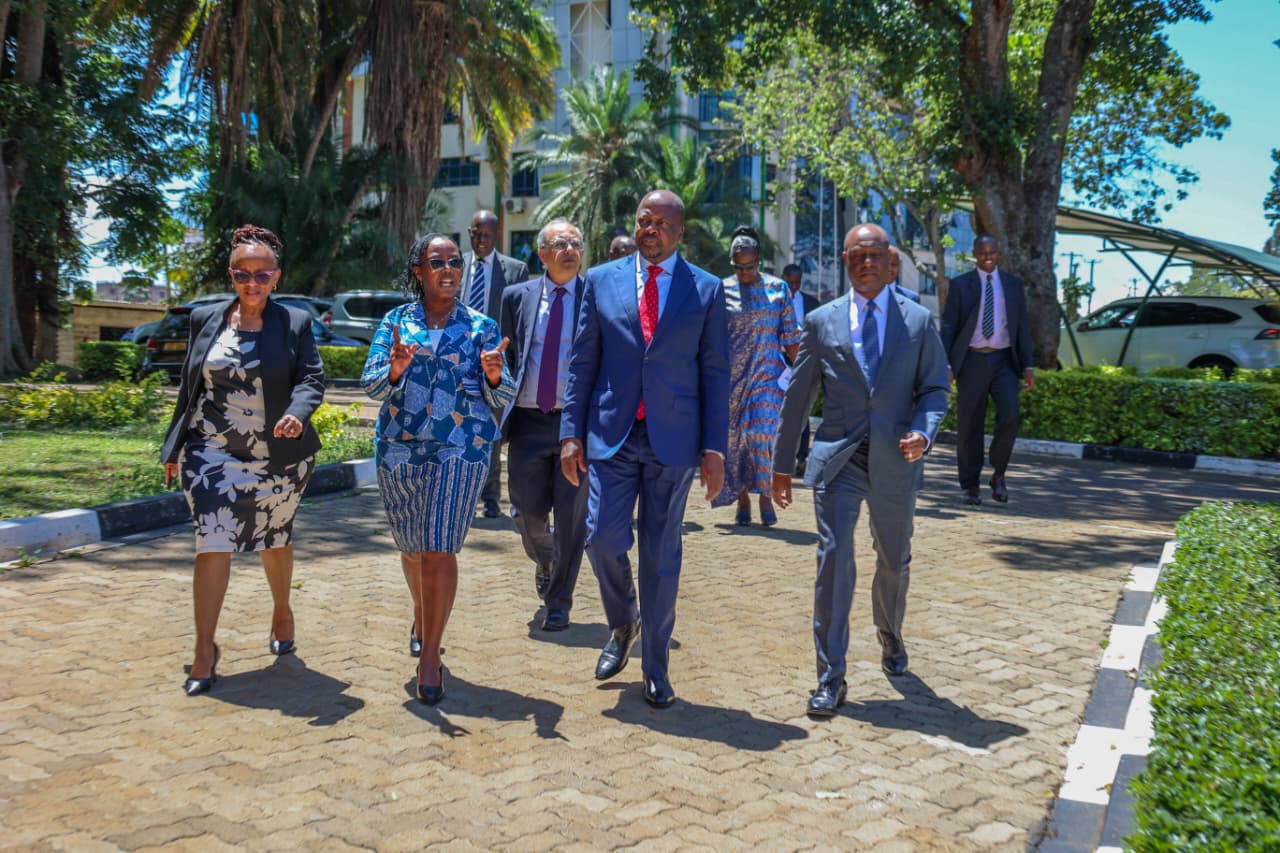
Speaking during a tour of the Veterinary Medicines Directorate (VMD) facility in Loresho, Kagwe said the separation between the two regulatory systems was deliberate, science-based and grounded in food safety and international best practice, and should not be reversed through legislation.
“Human medicines and veterinary medicines are fundamentally different. Their use, regulation, risks, and impact on food systems are not the same. That is why the separation introduced in 2015 remains valid and non-negotiable,” he said.
Kagwe noted that proposals emerging from mediation between the Senate and the National Assembly, alongside parallel processes at EALA, were particularly worrying.
He warned that merging veterinary medicine regulation into a human medicines authority would violate global standards and Kenya’s commitments under the East African Community (EAC) and COMESA frameworks.
“Even regionally, EAC and COMESA should uphold the separation of human and animal medicines. We will not allow Kenya to be the weak link,” he added.
The CS stressed that VMD remains a crucial institution, especially amid the current drought when livestock disease pressure is high and misuse of drugs can cause significant losses for pastoralists and farmers.
Livestock Development Principal Secretary Jonathan Mueke emphasized that veterinary medicines regulation directly affects human health through food safety, antimicrobial resistance and environmental protection, and argued for strengthening—not weakening—VMD’s mandate.
Kagwe also urged county governments to work more closely with VMD, warning that county business permits do not authorise the dispensing of veterinary medicines.
“A county permit is not a professional license. Dispensing veterinary medicines without approval from the Directorate is illegal and will lead to prosecution,” he said.
The ministry announced plans for structured annual engagement with practitioners at county level, including veterinary medicines conferences, public sensitisation programmes and enhanced intergovernmental coordination.
Reforms to strengthen VMD’s capacity are underway, including recruitment of additional staff, an annual internship programme for 1,500 young professionals, and the opening of regional offices to widen regulatory coverage.
The operationalisation of the National Veterinary Medicines Quality Control Laboratory is also being fast-tracked to improve quality oversight.
Kagwe said the forthcoming Veterinary Practice Bill will anchor the Directorate in law and guarantee its stability.
“We will defend the separation of human and veterinary medicines because it protects our farmers, our consumers, and our country,” he concluded.