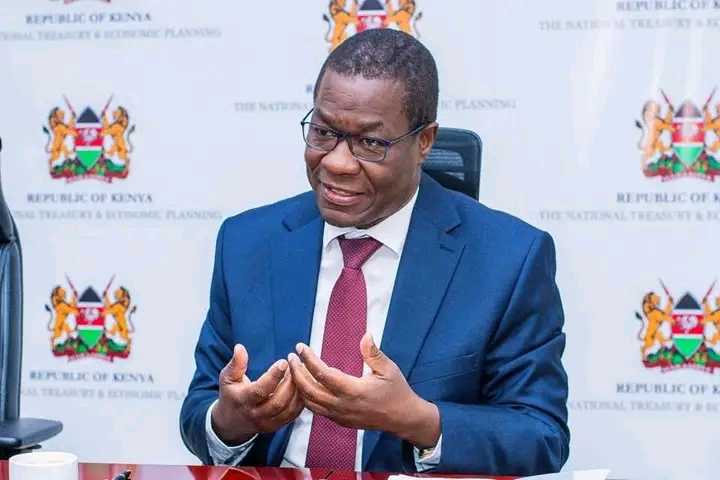
Labour and Social Protection Cabinet Secretary Alfred Mutua has issued a public warning over a digitally manipulated image that falsely depicts him in a compromising situation.
In a statement released on Tuesday, Mutua clarified that the image was entirely fabricated using artificial intelligence and does not reflect reality.
“I wish to alert the public that a manipulated, AI-generated image is currently circulating online, falsely portraying me in a compromising and misleading situation. The image is not real and has been digitally altered to spread misinformation and create misunderstanding. I urge all Kenyans to verify information from credible sources and to avoid sharing unverified or sensational content. Let us work together to stop the spread of digital misinformation,” the CS said.
Digital misinformation has increasingly become a challenge in Kenya, with AI-generated content making it easier for false narratives to spread online.
Mutua’s post included a clear side-by-side comparison, differentiating the authentic scene from the digitally altered version.
The genuine photograph captures a public event where CS Mutua is seen standing on a stage alongside President William Ruto, who is addressing the audience with a microphone.
Both leaders maintain standard postures.
However, the AI-generated image shows a digitally altered Mutua in the same setting, with his figure manipulated to appear as if he is kneeling on the stage next to the President.
This alteration fundamentally changes the narrative of the scene, implying a subservient or unusual posture that is entirely fictitious.
In November 2025, the government introduced major reforms to the country’s cybersecurity framework following the release of key highlights from the amended Computer Misuse and Cybercrimes Act.
In an exclusive interview published in MyGov, Cabinet Secretary for Information, Communications and the Digital Economy William Kabogo explained why the changes were necessary and what they mean for citizens, businesses, innovators and the broader digital ecosystem.
Kabogo said the digital environment had transformed dramatically since the original law was passed in 2018, creating both opportunities and vulnerabilities that required a modern legal response.
“Kenya’s digital landscape has evolved significantly since 2018. We now have broader fibre coverage, expanded digital services, thriving fintech innovations, and millions more citizens online,” he said.
“While this growth is welcome, it has also introduced new threats including SIM-swap fraud, identity theft, deepfakes, crypto scams, cyberbullying, child exploitation and extremist content.”
According to Kabogo, the 2025 amendment modernises the law to address these risks, safeguard citizens and ensure Kenya remains secure, innovative and globally competitive in the digital space.
Some Kenyans have expressed concern that the amendments could curtail freedom of expression or be used to target critics. Kabogo dismissed these fears.
“Freedom of expression remains fully protected. The law does not criminalise criticism, satire, political commentary or legitimate media work,” he said.
“It targets criminal misuse of technology such as child exploitation, identity theft, online harassment and the promotion of terrorism.”