In the past week or so, education has dominated all media coverage, despite the high political temperatures triggered by the death of the former Prime Minister Raila Odinga.
Families are either struggling to get their children into schools, or alternatively planning for the next step after having got their children’s results, good or bad, for what we may define as Kenya’s college entrance exams.
There are two things I find to be particularly interesting in the media reports.
First, is the many accounts of children who grew up in abject poverty and yet managed to perform so well in the exams that they were awarded full scholarships, which then propelled them to further excellence up the academic ladder.
It is a reminder of the alchemy of an effective education system: it can transform barefoot boys and girls into future brain surgeons and university professors.
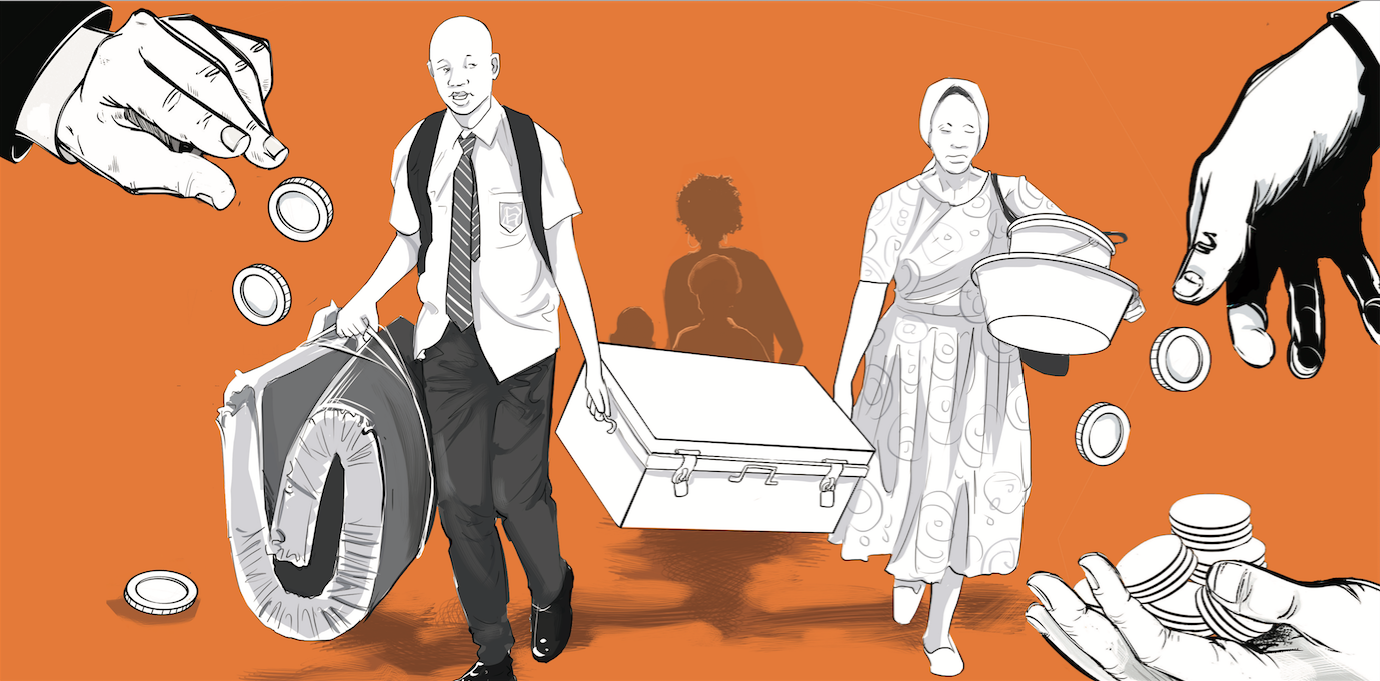
Second is the enormous amounts that Kenyan families invest in education for their children. There is really nothing which takes up as much of the average family’s income than school fees and other costs related to schooling. And this is true whether we are talking of a domestic servant who is determined that her children will grow up to be professionals, or upper middle-class Kenyans who send their children to international schools where the annual fees come to more than the fees charged by many European universities.
If you then bear it in mind that it is also education which takes the largest share of the government’s annual budget – and has done so since Independence – this all points to education possibly being the biggest formal economic sector in the country.
I specify “formal” because it is, of course, the agricultural sector in which most Kenyans are self-employed. But when you are dealing with a nation of subsistence farmers, accurate statistics are hard to come by.
It was reported last week, for example, that – due to the ongoing drought – hundreds of cows and camels had died of starvation in Northern Kenya.
So, if you estimated the wealth of a camel herder who owned one hundred camels mid-last year, you might judge him to be solidly middle-class based on his assets, given the value of each camel. But if you did your count in January or February this year, you would have to classify him as destitute, given his wealth had been devastated and his assets value reduced to zero.
Do government “statistical models and extrapolations” based on “representative samples” really capture any of this accurately?
Yet every small-scale farmer, every herder or fisher, and any jua kali artisan, will somehow manage, in most cases, to keep their children in school.
That is why it is so heartbreaking to find that what Kenyan leaders invariably refer to as “the fruits of education” are no longer what they once were. Education is not always a reliable ladder which takes the college graduate straight up and into the middle class.
Economists say that ours is a case where “economic expansion has not kept pace with population growth”.
Kenya now has a huge surplus of trained personnel in both the education and health sectors. And newly graduated young men and women, who undertook studies in these fields, usually have to wait years to get a government job.
And when I say “surplus”, I do not mean that the schools and hospitals are fully staffed at every turn, and that it would be pointless to hire any more staff in either of these institutions.
Actually, even if every single one of them was hired, we would still not have enough staff in those institutions. The reason they are not hired is that the government cannot afford to hire them all.
There just isn’t enough money for this – just as there isn’t enough money for all the roads and bridges and power transmission lines that the country needs.
In short, investment in children’s education may still be the biggest investment the average Kenyan family makes. But the returns on this investment are no longer as certain as was once the case.