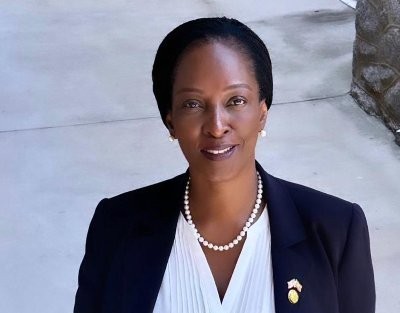
 Uganda’s Ambassador to the United States Robie Kakonge dismissed the claims as fabricated. ROBIE KAKONGE/X
Uganda has sharply criticised several leading Western media organisations over reports alleging that opposition leader Robert Kyagulanyi, popularly known as Bobi Wine, was abducted by the military in a nighttime helicopter operation.
In a statement issued from Washington DC, Uganda’s Ambassador to the United States, Robie Kakonge, dismissed the claims as fabricated and said the Ugandan government had verified that no such incident occurred.
“Reports alleging that a UPDF helicopter landed at the residence of Hon. Robert Kyagulanyi during the night and removed him to an unknown location are false, completely and unequivocally so,” Kakonge said.
“The embassy has verified the facts with the relevant authorities. No helicopter landed. No such operation occurred. Kyagulanyi is not under arrest. The story is a fabrication.”
Kakonge said the reports, which were aired by outlets including BBC, CNN, Sky News and Al Jazeera, ignored what she described as basic operational realities of military aviation.
“Military helicopters do not land silently, secretly, or without consequence in urban residential compounds,” she said, adding that such an operation would be “deafening, destructive, and impossible to conceal”.
The ambassador warned that broadcasting unverified security claims could have serious consequences.
“False reports of night-time military aviation operations are not harmless errors. They put lives at risk. They incite panic, provoke disorder, and create conditions in which civilians can be injured,” Kakonge said.
“It is therefore indefensible that the media chose to air this claim without evidence, verification or corroboration. This is not journalism. It is misinformation with foreseeable and dangerous consequences.”
Kakonge called for “immediate and prominent retractions on the same platforms and programmes on which this claim was broadcast,” and said Uganda was reviewing its future engagement with media organisations it considered reckless.
“Uganda respects media freedom. But media freedom does not confer a licence to invent security incidents, abuse aviation realities, endanger civilians, or manufacture crises for headlines,” she said.
She added that legal action was being considered against those responsible for originating or broadcasting the claims, saying Uganda would not tolerate reporting that could threaten stability.
The dispute has unfolded against the backdrop of Uganda’s tense general election, held under a nationwide internet blackout that restricted access to social media and online communications.
Early results released by electoral authorities on Friday showed President Yoweri Museveni taking an early lead, extending his bid to remain in power after nearly four decades in office since 1986.
However, the poll has been overshadowed by reports of post-vote violence and allegations of widespread fraud by Bobi Wine, Museveni’s main challenger.
The opposition has accused security forces of intimidation, arbitrary arrests and vote manipulation, claims the government has repeatedly denied.
International attention intensified after local media reported that Bobi Wine had been placed under military detention at his home following the vote. Ugandan officials rejected the reports.
On Saturday, Wine’s National Unity Platform (NUP) party said he had been picked up by a military helicopter from his home in Magere, just outside Kampala. International media subsequently reported the allegation.
The BBC noted that “Internet access has been cut making it difficult to verify this claim,” and reported that local police said they were not aware of the incident.
On Saturday, Wine issued a statement describing a security operation at his home, but did not confirm that the military had taken him.
“Last night was very difficult at our home in Magere. The military and police raided us. They switched off power and cut off some of our CCTV cameras. Helicopters were hovering over. I want to confirm that I managed to escape from them. Currently, I am not at home, although my wife and other family members remain under house arrest,” he said.
The standoff between Uganda and sections of the international media highlights the fraught political climate surrounding the election, with questions over transparency, security and press freedom likely to persist beyond the announcement of final results.