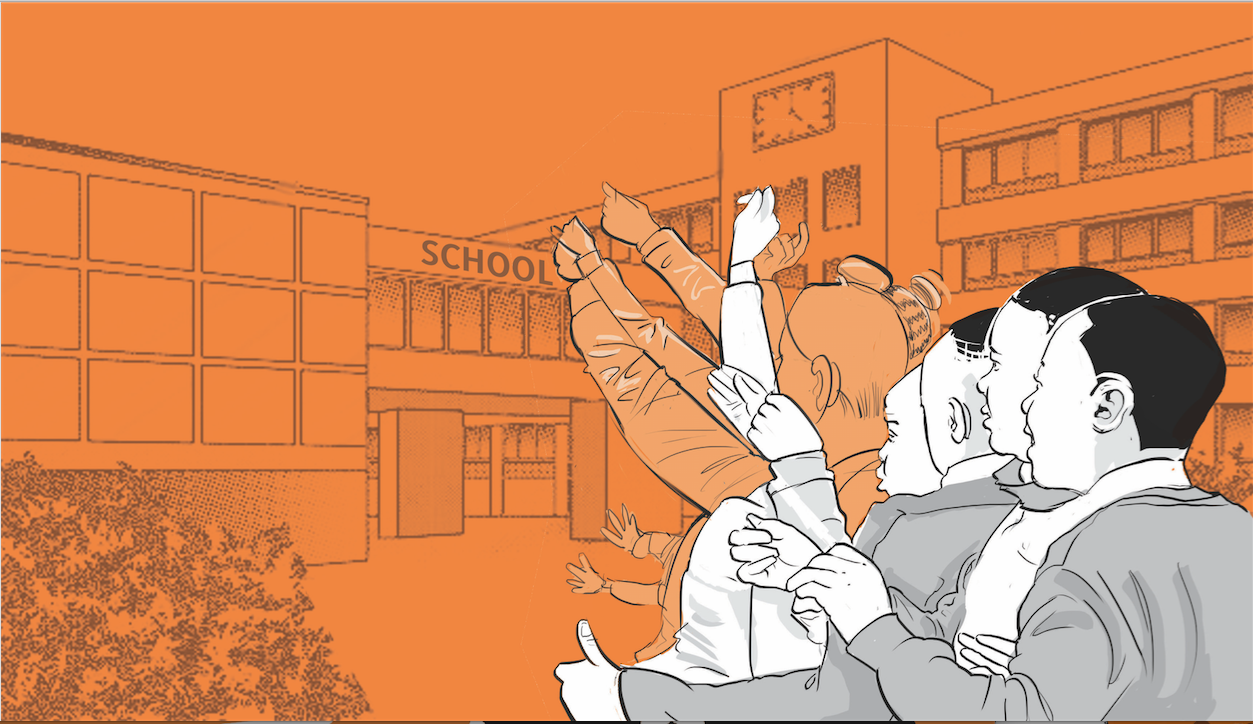
The Ministry of Education reportedly rejected over 66,000 requests by students who had sought changes to their Grade 10 senior school placements.
The media quoted Basic Education Principal Secretary Julius Bitok as saying a significant number of requests could not be accommodated due to capacity constraints.
There are serious policy issues around the incapacity of the preferred schools to accommodate more students.
The capacity—classrooms, hostels, laboratories, sanitation facilities, etc—should not, in themselves, determine admission of students. Other considerations should inform enrolment, apart from infrastructure.
One of them is ideal school size. In education, school size refers to the number of students per school. The number of students per school is a significant topic of discussion among educators and policymakers in educational systems across the world.
The size of a school has an enormous impact on the educational achievement of learners. We have not taken this into consideration.
For instance, the National Association of Secondary School Principals in the USA recommended that public high schools in the country limit their enrolment to no more than 600 students, with teachers responsible for no more than 90 students during a given term. They made the recommendations in a report, Breaking Ranks: Changing an American Institution, that was released in 1996.
“Students take more interest in school when they experience a sense of belonging,” the report said.
Such a sense of belonging is absent in large school sizes.
A school size of 600 students is far below what former Harvard President James Bryant Conant reported. In a report entitled The American High School Today, Conant suggested that a school should have at least 100 students per graduating class. This would yield, in a four-year high school education, not more than 750 students.
The school size of 600, as recommended, was in the context of massive schools in some states in the USA. Some schools in the state of New York have more than 3,000 students.
Unusually big schools are impersonal. They intimidate students. It is only strong and very bright students who can thrive in this environment. Students who are weak in character and personality, and of average ability, break down under the weight of the impersonality of the school.
School size in most secondary and high schools in Kenya in the 1980s and early 1990s ranged between 300 and 700 students. The number of students was directly proportional to the number of schools then.
Not so today. There has been a remarkable increase in learner transitions to secondary schools—thanks to the 100 per cent transition policy. There has, however, been an equally remarkable increase in the number of secondary schools.
We consequently have about 10,000 public secondary or senior schools. With an estimated student population of 5 million in the secondary school system, the enrolment of students is about 500 students per school.
Barring exceptions, a significant number of these schools are well endowed in the necessary infrastructure and teaching force. They have laboratories and workshops for technical subjects. They have libraries. They have playgrounds for co-curricular disciplines. Particularly the CI, II, III (formerly national, extra county and county) schools.
The idea of students gravitating towards a few secondary schools in CI should not, in the best of circumstances, arise. Schools in each of these clusters should be centres of excellence; this will guarantee equitable educational opportunities to learners admitted to them.
What are the policy implications of this information? Firstly, we should think about the appropriate school size, school organisation and instruction of secondary schools. Overcrowded schools and classes mean less contact time with individual students. The resulting impersonality and alienation directly make it harder to support each student.
Second, that we should start, expand or modernise infrastructure in secondary schools that have little, limited or dilapidated classrooms, laboratories, libraries and sanitation facilities.
Third, we should rethink the way we fund schools. Pegging school funding on enrolment of students is, in principle, correct. But alone, it creates what in sociological theory is called the Matthew Effect in school funding. The theory states that those who have more will be given more.
The Matthew Effect has led to a situation where schools with larger student populations get more funding, and those who have less get less funding. The current model, based on capitation, promotes inequality in the infrastructural endowment of schools. Because of this, some schools with a big student population have spent capitation on things of little or no educational value.
Fourth, the government revisits secondary schools which have all that defines high student achievement but low student enrolment. Parents keep their children from schools with low achievement scores.
The government should find out what has been ailing the schools to the extent that parents don’t want their students admitted to them. The focus should be on CI, CII and CIII schools. Let’s make these clusters of schools reflect their elevated status—by virtue of infrastructure and other factors. We should be able to have a kind of academic revival, similar to religious revival, in the fortunes of the school.
Fifth, the government should mount an aggressive in-service programme for teachers at all levels—with a view to improving their mastery of the disciplines they teach, as well as mount a strong leadership programme. The overall goal should be threefold: dramatically improve mastery of curriculum content and pedagogical knowledge (for instructional purposes) and also impart management and leadership skills (for effective management of schools now and in the future).
Good teachers and good principals produce high student achievement. This makes a school a magnet for students’ admission and enrolment. We must have a mountain range of centres of education excellence in many schools—not islands of educational excellence.
There are a million and one things—small and big—that we ought to do to ease pressure on some secondary schools and spread educational excellence across all schools in the country.
We should be able to address the problem of overcrowding in some schools because of over-enrolment and low enrolment in others. It is possible. It can be done. If we start thinking as a nation about how we are preparing children for the vagaries of the future.
Communication specialist