Some two years ago, just before Christmas, I set off on what I believed would be a familiar and comforting journey home. I had left my duty station around December 20, eager for the much-awaited festive break.
As has always been our tradition, I travelled with family, heading to our two homes in western Kenya — Homa Bay, where my mother lives, and Kisumu, home to my in-laws. The rule has never changed: Homa Bay is always the first stop. But 2024 had other plans.
We rose before dawn and were in our vehicle by 7am, leaving Nairobi with the quiet excitement that comes with long-distance travel at the start of the holidays.
We took our usual Nakuru-Naivasha route, expecting nothing more than the ordinary Christmas traffic. Instead, barely an hour into the journey, we ground to a halt at Lari.
“What is going on?” a relative we had offered a lift asked from the back seat, peering ahead impatiently.
As the minutes passed, it became clear this was no ordinary slowdown. The traffic was at a complete standstill — a deadlock. Vehicles stretched endlessly in both directions, unmoving.
Some passengers from other cars had already stepped out to stretch their legs, suggesting they had been stuck there long before we arrived.
“It seems we are going to be stuck here for a while,” I replied, rolling down my window to get a clearer view of the chaos ahead.
What struck me most was the time. It was barely 8am, yet not a single car was moving. Dust hung thick in the air as impatient drivers from behind attempted reckless overtakes, only to block the narrow passage that vehicles from the opposite direction were using. The result was total paralysis.
Hours crawled by. Two turned into three. At some point, drivers began switching off their engines to conserve fuel, resigned to the wait. The festive excitement we had started with slowly dissolved into frustration and fatigue.
“Nunua chai itoe baridi!” a hawker called out cheerfully, weaving between the stationary vehicles with a flask of black tea and a basket of mandarins. His voice cut through the tension, a small reminder of the informal economy that thrives even in gridlock.
Inside the cars, passengers scrolled endlessly on their phones. Others vented their anger openly, voices rising as the reality set in: We had spent more than three hours stuck in one place, with no clear sign of movement ahead.
What was meant to be a joyful journey home had turned into an unexpected lesson in patience, unpredictability and the shared experience of travellers bound by the same road and the same standstill.
But 2025 was different.
Still haunted by the frustrating experience of the previous year, we made a deliberate decision to leave Nairobi much earlier. This time, the alarm was set for 4am.
“Even if you wake up at 4am, you will find others with the same mindset, and all of you will still end up stuck in traffic like last year,” a friend warned me over the phone, her voice heavy with scepticism.
Despite the caution, I was determined to try a different approach. I had resolved to use the newly completed Suswa-Narok road, following advice from my sister, who had travelled the route earlier.
According to KeNHA advisories during the December travel surge, motorists were urged to plan ahead and use alternative corridors, such as the Suswa-Narok route, to reduce pressure on the heavily congested Nairobi-Nakuru highway.
“I think this year will be different now that there is a completed road along our route,” I told the caller on the other end of the line. She remained unconvinced, insisting I should postpone my holiday until January, a suggestion I vehemently rejected.
My resolve remained unshaken. We were going home.
By 5am, we were already on the road. The darkness of dawn wrapped around us as Nairobi slowly disappeared in the rear-view mirror. This time, there were no stranded motorists, no clouds of dust and no hawkers selling black tea and mandazis in the middle of a traffic jam.
“Wueh! This new road has made our travel quite easy and seamless,” the driver remarked as he smoothly turned onto the Suswa route.
“We thank God that this year is different,” I replied with a smile, the relief unmistakable.
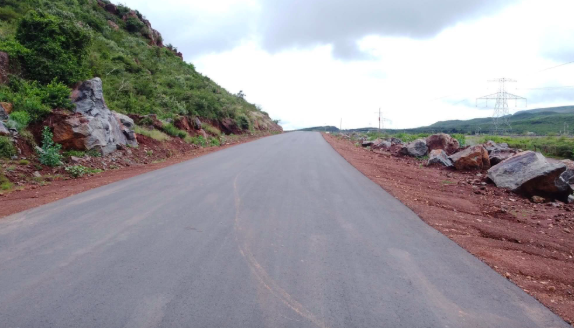
The ease of the journey was no coincidence. Days before our travel, the government had announced the full completion and official opening of the 66km Ngong-Suswa highway, bringing to an end years of delays, funding disruptions and stalled construction.
According to the State Department of Roads, the project first launched in 2018 had finally been delivered and opened to public use. The highway now serves as a critical alternative corridor out of Nairobi through Ngong, easing pressure on the notoriously congested Nairobi-Mai Mahiu and Narok routes.
“This road is now complete and open. Motorists can expect a smoother, safer and more direct connection between Ngong and Suswa,” the ministry said in a statement.
The Sh4 billion project had initially been scheduled for completion within 42 months but stalled in 2020 after the contractor abandoned the site due to financial constraints.
With its completion, the highway is expected to significantly ease congestion along the Nairobi-Mai Mahiu road, one of the country’s busiest truck and passenger corridors, long infamous for traffic snarl-ups and frequent accidents.
For motorists heading to Narok, Bomet, Kericho, Kisii, Nyamira and the wider Nyanza region, the Ngong-Suswa route offers a welcome alternative, one that is not only faster and less stressful but also scenic, cutting across open savannah plains and offering sweeping panoramic views of the Rift Valley.
For us, it was more than just a new road. It was proof that sometimes, journeys do get better.
Other travellers shared my sentiments. A friend of mine, Angeline Anyango* (not her real name), also chose the Ngong-Suswa route for her holiday travel, and was similarly relieved.
“It was smooth and saved me a lot of time, not to mention the hustle of fighting for space with lorries, which has become the norm on the Mai Mahiu route,” she said.
“I arrived at my destination in six hours — a drive that would ordinarily have taken me at least eight.”
For Angeline, the absence of heavy trucks and the steady flow of traffic made all the difference. She noted that the increasing number of vehicles using the corridor was a clear sign that motorists are beginning to embrace the alternative route.
“It’s good to see more cars on that road. It shows people are gaining confidence in it,” she observed.
Still, she cautioned that the road demands respect from drivers. Unlike the long, straight stretches on other highways, the Ngong-Suswa route winds through rugged terrain, with sharp bends that can easily catch the unwary off guard.
“Drivers need to be very cautious. It’s not a straight road, and the many bends can cause accidents if one is careless,” she warned.
Beyond safety, Angeline raised a concern shared quietly among many motorists: the question of durability.
“The big question is the quality of the road,” she said. “Was it built for posterity, or just for the hype of reducing traffic? If it wears out too fast, motorists will simply reroute back to the old road, and we’ll be right back where we started.”
Her reflections underscored a lingering uncertainty beneath the optimism — while the new highway has eased travel and transformed holiday journeys, its long-term impact will depend on maintenance, safety enforcement and whether it can stand the test of time.