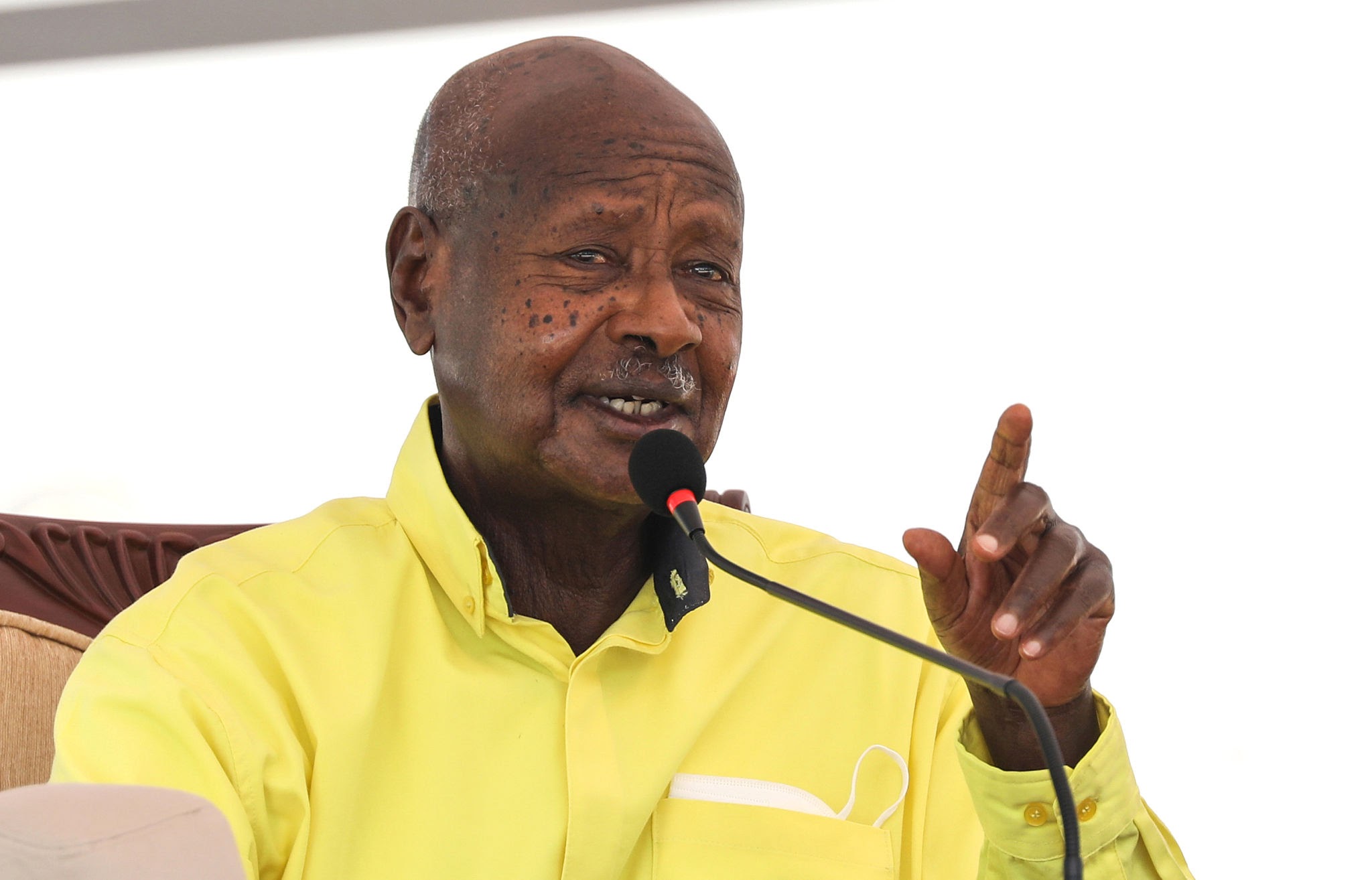
Uganda’s President Yoweri Museveni has defended his government’s tough approach toward opposition leader Robert Kyagulanyi, popularly known as Bobi Wine.
Museveni argued that Wine’s repeated clashes with security forces stem from alleged violations of the law rather than political persecution.
In an interview with Sky News, Museveni, who was addressing Uganda’s increasingly polarised political climate, rejected claims that his administration has deliberately targeted Wine since the latter’s emergence as a powerful opposition figure in 2018.
Asked why the state has acted aggressively toward him, Museveni said the issue was not Wine himself but his conduct.
“Bobi Wine breaks the law, that is why,” Museveni claimed.
“There are others in the opposition who you don’t find having problems with them. If you take each case, you will find that he is breaking the law.”
Wine, a former pop star turned politician, has built a strong following among young Ugandans frustrated by unemployment, rising living costs, and what they describe as shrinking democratic space.
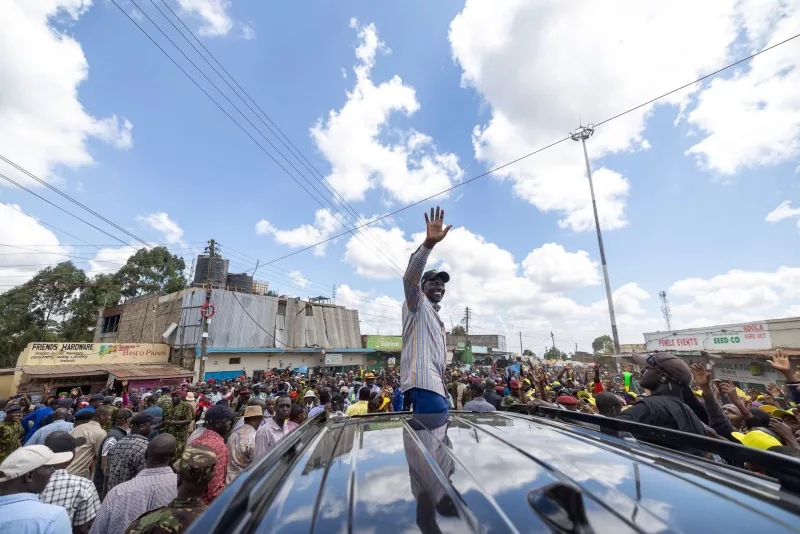
His rallies often draw large crowds, particularly in urban areas, making him the most visible challenge to Museveni’s nearly four-decade rule.
However, those same rallies have frequently ended in confrontations with security forces.
When asked about reports of violence, including incidents in which supporters were beaten with batons and one supporter was reportedly shot in the head during clashes, Museveni acknowledged that some actions by security forces were wrong but defended restrictions on public gatherings.
“The beating was a mistake,” he said.
“But this town here is quite crowded, so we don’t encourage processions or rallies in the towns or streets,” he added.
The president argued that public order laws are necessary to prevent chaos in densely populated areas, insisting that enforcement applies to all political actors.
“We cannot allow disorder,” he said, adding that unregulated processions pose risks to public safety and business activity.
Opposition figures and human rights groups dispute that narrative, accusing the government of selectively enforcing the law to weaken political challengers.
They argue that Wine’s supporters face disproportionate force, including arbitrary arrests and intimidation, aimed at discouraging political mobilisation.
Wine and his National Unity Platform (NUP) party have repeatedly denied breaking the law, saying they apply for permission to hold events and are blocked or disrupted regardless.
They maintain that the confrontations reflect a broader intolerance of dissent rather than genuine security concerns.
Voting tallying is currently ongoing in the country following the elections that were conducted this week.
The ongoing vote count, as of 2:00 PM, covers 30,138 polling stations, with a total of 6,830,089 valid votes tallied.
The figures show President Yoweri Museveni leading with 5,148,845 votes (75.38 per cent), while opposition leader Bobi Wine holds 1,414,619 votes (20.71 per cent).
Other candidates remain in single-digit percentages. Frank Bulira has 29,713 votes (0.44%), Robert Kasibante 20,626 votes (0.30%), Joseph Mabirizi 14,106 votes (0.21%), Mugisha Muntu 38,582 votes (0.56%), Mubarak Munyagwa 19,034 votes (0.28%), and Nandala Mafabi 144,564 votes (2.12%).