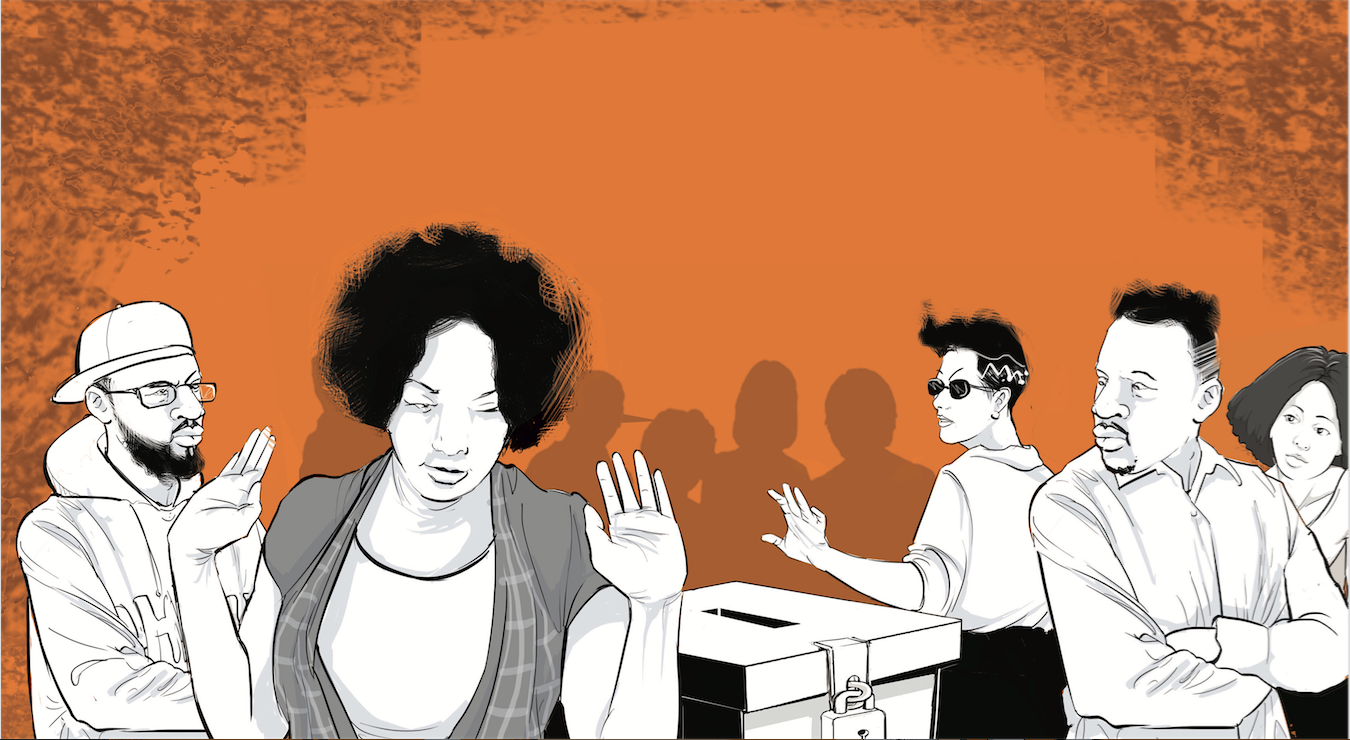
Ugandans are heading to the ballot today at a moment when the regime has shut down the internet. This decision aims to prevent the world from witnessing the human rights abuses that often accompany predetermined elections.
President Yoweri Museveni has steadily dismantled any meaningful political contest, much like his regional counterpart in Tanzania, Samia Suluhu. In Tanzania, Suluhu jailed Tundu Lissu, a leading challenger, and barred Luhaga Mpina from contesting on what were presented as technical grounds.
In Uganda, Kizza Besigye has been detained on baseless treason charges, while Bobi Wine has seen his rallies attacked by state operatives and security agencies.
The internet shutdown is especially alarming given what happened in Tanzania. When connectivity was restored after the sham elections, disturbing evidence of police violence and human rights abuses began to surface.
Museveni appears to believe that by shutting down the internet, the world will remain unaware of what is unfolding in Uganda. That assumption is flawed. The Tanzanian experience demonstrated that once access is restored, the truth eventually comes to light. Images, videos and testimonies have a way of resurfacing, no matter how long authorities try to suppress them.
The Kenya Human Rights Commission has consistently encouraged Ugandans to document every violation and share the evidence with credible human rights institutions and journalists. This documentation is crucial for informing the world and ensuring that those responsible are held accountable.
Whatever happens today and the weeks that follow, evidence from Uganda will emerge.
Concerns over the credibility of the polls have been further deepened by the arrest and detention of Sarah Bireete, a human rights activist and government critic, on December 30, 2025. She was accused of unlawfully obtaining or disclosing what authorities termed “national voters’ information.” Her arrest sent a chilling message to civil society actors involved in election monitoring and accountability.
At the same time, permits for at least five non-governmental organisations have been suspended. These organisations have been at the forefront of documenting human rights abuses throughout the campaign period. Their suspension effectively removes independent oversight at a critical moment.
Despite this repression, public sentiment suggests a strong desire for political change. An opinion poll by the East Africa Democracy Defenders Group, released on Tuesday, found that 81 per cent of Ugandans want a change in presidential leadership. In simple terms, many Ugandans are saying that Museveni must go.
Beyond individual violations, this election is unfolding under heavy securitisation. This is not new because election-related violence first became entrenched in Uganda in 2001. It intensified in 2006 and 2011, peaked during the 2016 and 2021 elections, and continues into 2026 through the heavy deployment of the Uganda People’s Defence Forces and expansive surveillance.
This overwhelming show of force suggests that what is happening today is not a democratic exercise, but a country bracing for confrontation against its own citizens.
Further illustrating this trend, the Uganda Revenue Authority announced on December 19 that importing Starlink devices would now require clearance from the Chief of Defence Forces. Measures like these mean that information access itself is being treated as a security threat.
Human rights organisations have documented numerous cases of politically linked detentions, violent dispersal of opposition gatherings and killings during this election period. Uganda’s situation mirrors a broader regional pattern. In Tanzania, the 2020 elections under John Magufuli were marked by bans on opposition rallies, mass detentions and reports of killings, particularly in Zanzibar. And it was even worse during the sham elections in October 2025.
The democratic cost of securitising elections is that voter turnout is declining, trust in electoral institutions is going down and political apathy is on the rise. We cannot allow this to go unchallenged.
KHRC’s programme manager for Political Accountability in State Institutions