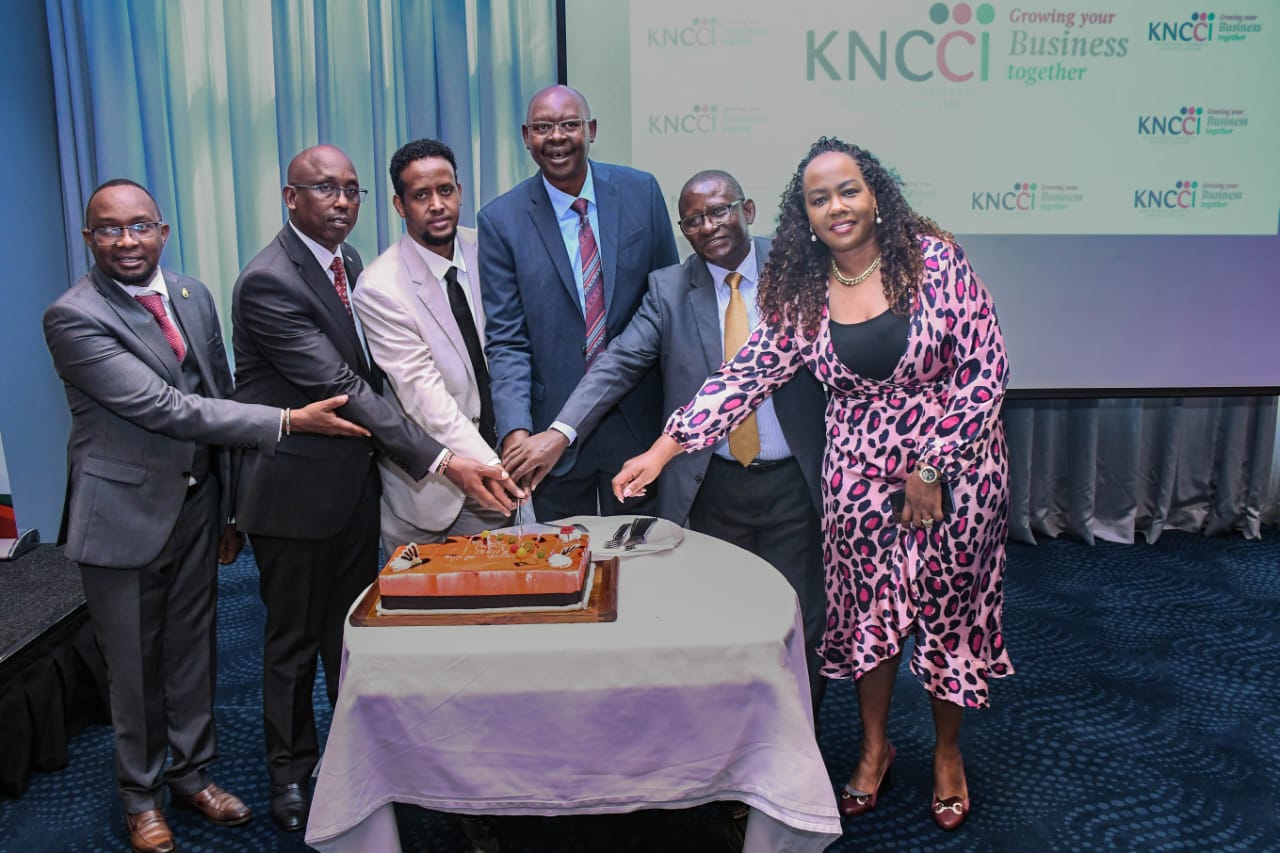
 KNCCI President Erick Rutto with other officials cut a cake during the launch of the office. /COURTESY
 The Kenya National Chamber of Commerce and Industry has opened a new office in Dubai in what officials describe as a long-overdue intervention to curb billions of shillings in losses incurred by Kenyan exporters in the Middle Eastern market.
KNCCI President Erick Rutto who spoke during the launch said the office will provide due diligence, payment protection and real-time market intelligence to curb rising trade disputes and default cases, particularly in the fresh produce and livestock sectors.
The United Arab Emirates is Kenya’s fifth largest export destination and fourth largest import source, with outbound shipments valued at USD 401.5 million (Sh51 billion) in 2023.
Behind the strong numbers, however, lies a growing crisis. According to data cited by the Chamber, Kenyan exporters have been losing substantial volumes of goods and income due to fraudulent or non-compliant buyers.
The Fresh Produce Consortium of Kenya estimates that three containers of fresh agricultural produce are lost every week in the UAE market without compensation, translating to roughly 156 containers annually.
Exporters have complained of rogue importers who masquerade as legitimate buyers, receive consignments and then disappear or push credit notes that are never honoured.
Others allegedly raise quality complaints to avoid payment or operate without verifiable business premises, leaving Kenyan suppliers with little recourse once products leave the port.
The situation in livestock exports has proven even more costly.
KNCCI estimates that between 25 and 30 per cent of livestock consignments to the UAE and Saudi Arabia remain unpaid, amounting to around Sh6 billion in annual losses.
Kenyan goat meat also fetches lower prices compared to Ethiopian competitors due to livestock disease control challenges.
In Dubai markets, Ethiopian goat meat sells at about USD 12 per kilogram against Kenya’s USD 9, while exporters report losing an additional Sh4,000 per goat from price suppression linked to quality and certification gaps.
“These are not merely statistics,” Rutto noted at the launch.
“They represent the livelihoods of farmers, the struggles of small and medium enterprises, and the future of our export-driven economy.”
KNCCI attributes the losses to four key gaps: inadequate due diligence on buyers, weak payment protection systems, information asymmetry, and limited enforcement mechanisms in cross-border disputes.
Many transactions occur on open credit terms without insurance or guarantees, while exporters lack access to real-time market information and insight into buyer creditworthiness.
Pursuing legal action across borders is expensive and technically complex, allowing unscrupulous actors to exploit the system with impunity.
The Dubai office is being positioned as a frontline solution.
It will physically verify business premises, run background checks on buyers, maintain a blacklist of defaulting importers and liaise directly with UAE chambers and commercial registries.
KNCCI said the office will also work with Kenyan diplomatic missions to fast-track dispute resolution and promote secure payment instruments such as escrow arrangements.
On-ground analysts will provide market price updates, regulatory changes and emerging sector opportunities to avert undervaluation and mismatches in compliance requirements.
The launch comes against the backdrop of deepening bilateral ties between the two countries.
Kenya and the UAE have maintained diplomatic relations since 1982 and are implementing the Comprehensive Economic Partnership Agreement to expand trade and investment flows.
Total bilateral trade recently stood at Sh173 billion.
For the partnership to flourish, KNCCI argues, Kenyan exporters must be guaranteed fair treatment and prompt payment.
“A few bad actors should not be allowed to undermine a thriving trade relationship,” Dr. Rutto said.
The Chamber is urging exporters to make use of the Dubai office as business volumes in the Gulf continue to grow.
Officials insist the initiative marks a shift from ceremonial outreach to practical protection, signalling a more assertive posture in defending Kenyan commercial interests abroad.