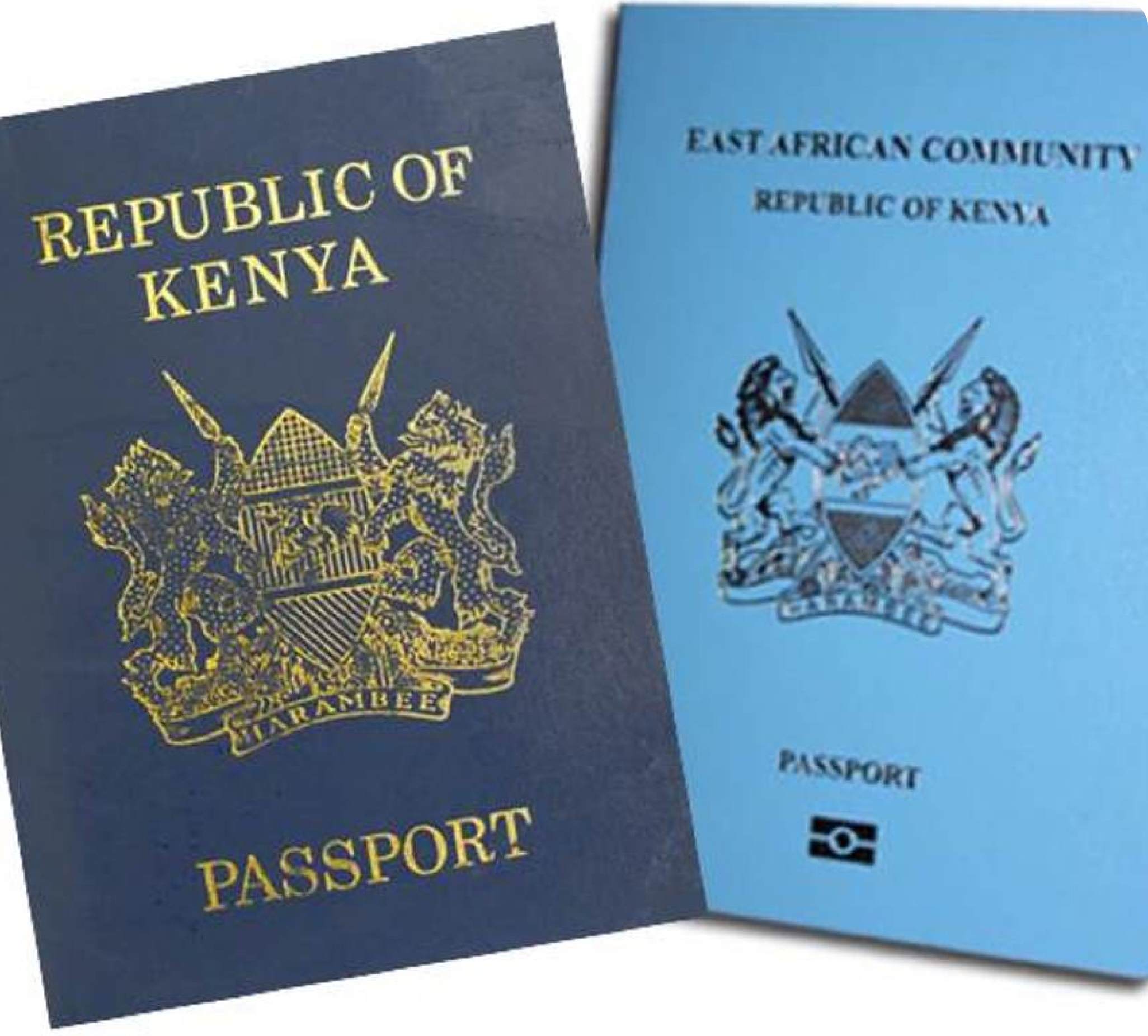
 Kenyan passports/eCitizen
Kenya’s passport has improved its standing on the global mobility scale, rising to 68th place in the 2026 Henley Passport Index, even as the number of destinations accessible without a prior visa slightly decreased.
The latest rankings from Henley & Partners, based on International Air Transport Association (IATA) data, show that Kenyan passport holders can now travel to 69 destinations without obtaining a visa before departure.
This is one fewer than the 70 destinations recorded last year, when the country fell to 73rd position after a sharp six-place drop triggered by stricter immigration rules in several regions.
The 2026 improvement signals a rebound after last year’s decline and suggests a period of stabilisation for the Kenyan passport, which has faced years of fluctuating performance due to weak reciprocity and limited bilateral visa agreements.
Henley & Partners notes that the index evaluates “how much effort a traveller must make before departure to be authorised to travel,” factoring in visa-free and visa-on-arrival access.
Historical data shows Kenya’s ranking has experienced wide swings over the past two decades, climbing as high as 52nd in 2006 before sliding to a low of 77th in 2021. The fall to 73rd last year extended a period marked by increasingly restrictive visa policies affecting Kenyan travellers. Regionally, Kenya held 10th place in Africa in 2026, maintaining its continental position.
It ranked behind Seychelles, Mauritius, South Africa, Botswana, Namibia, Lesotho, Eswatini, Morocco and Malawi. Seychelles continued to lead the continent, offering visa-free access to 154 destinations, a position associated with its strong diplomatic networks and robust bilateral engagements.
The rankings come even as Kenya scrapped visa requirements for nearly all African nationals in mid-2025, allowing travelers to enter and stay for up to 60 days without visas or electronic travel authorisation. The move, however, has not yet translated into reciprocal access for Kenyan tourists. Under Henley’s methodology, travel authorisation systems such as eTA are considered visa-free, while electronic visas count as visa restrictions.
Globally, Singapore topped the 2026 index with visa-free access to 192 destinations, followed by Japan and South Korea. Afghanistan remained at the bottom, with its citizens able to enter only 24 destinations without a prior visa. Chairman at Henley & Partners and creator of the Henley Passport Index Dr Christian Kaelin, noted that “Over the past 20 years, global mobility has expanded significantly, but the benefits have been distributed unevenly”.
“Today, passport privilege plays a decisive role in shaping opportunity, security, and economic participation, with rising average access masking a reality in which mobility advantages are increasingly concentrated among the world’s most economically powerful and politically stable nations,” Kaelin added.
Henley said this imbalance is intensifying even as international travel demand continues to grow. IATA forecasts that airlines will carry more than 5.2 billion passengers globally, in 2026.
“A record number of people are expected to travel in 2026. The unequivocal economic and social benefits generated by this travel grow as it becomes more accessible. But while more people have the economic freedom to travel, many nationalities are seeing that a passport alone is no longer sufficient to cross borders,” IATA Director General Willie Walsh said.
“As many governments look to more tightly secure their borders, technological advances such as digital ID and digital passports should not be overlooked by policymakers. Convenient travel and secure borders are possible.”