Kenya plans to ride on the renewal of the African Growth and Opportunity Act (AGOA) for increased imports to the US and job creation.
This follows the approval of the pact’s extension by the US House of Representatives on Monday, which overwhelmingly approved a three-year extension of AGOA.
The trade programme, which gave at least 32 sub-Saharan African countries duty-free access to American markets, expired on September 30, last year.
A total of 340 representatives voted in favour of a renewal against 54. The bill now goes to the Senate where it will be further debated with a simple majority vote needed to pass it and once both chambers approve identical versions, it will be sent to the President, who can sign it into law or veto it.
The latest developments end a nearly three-month period of uncertainty with both the Kenyan government and private sector expressing optimism of a soon return of AGOA, amid plans to expand export offerings beyond the traditional textile and apparel.
AGOA which was first enacted in May 2000 with several renewals and updates, granted Kenya duty-free access to the US market for over 1,800 specifically listed products, with potential access for over 5,000 items when combined with the Generalised System of Preferences (GSP).
However, Kenya has utilised only a fraction of this potential over the years, focusing heavily on apparel, macadamia, tea and coffee.
Investments, Trade and Industry CS Lee Kinyanjui yesterday said passing of the Bill marks a critical milestone in US-Africa trade relations.
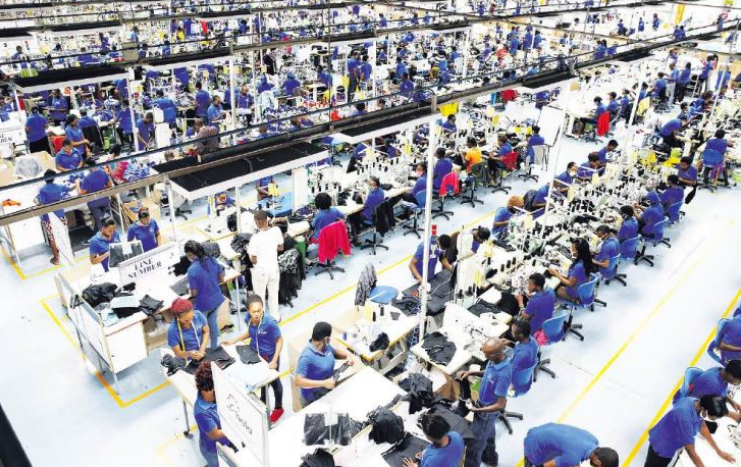
In Kenya, the textile and apparel industries operating within the Export Processing Zones (EPZs) employ over 80,000 people directly and an additional 250,000 indirectly.
Exports to the US had been hit by the expiry of AGOA, putting thousands of jobs on the line, as industries survived on other smaller markets amid high tariffs in the US.
“The uncertainty that had previously engulfed the sector will now give way to renewed confidence and expansion. As a Ministry, we aim to grow exports of additional products under the AGOA framework beyond textiles, ensuring that Kenya fully leverages this opportunity to create jobs and generate wealth,” CS Kinyanjui said in a statement.
He said Kenya is also in discussions on a bilateral trade agreement that will cover other key sectors and further cement the long-standing partnership with the US, where major exports have been textiles and apparel, coffee, tea and horticultural products.
“Expanding our export basket remains a key priority and aligns with our broader strategic economic agenda,” the CS said.
Kenya Private Sector Alliance (Kepsa), which was lobbying for a 16-year extension, with an alternative of at least a two-year transition window to allow for a trade deal between Kenya and the US, has welcomed the latest move.
“We are glad and now await the Senate and the Presidential assent. At least firms found a way to work without closing for that season of waiting,” Kepsa chief executive, Carole Kariuki, told the Star.
In 2024, Kenya exported $470 million (Sh60.6 billion) worth of apparel to the US.
Kenya Association of Manufacturers has also welcomed passing of the bill which also provides for the refund of duties (liquidation or reliquidation of entries) on articles from eligible countries that entered into the US after September 30, 2025, and before the date of the bill's enactment.
According to Congress, a refund request must be filed with US Customs and Border Protection (CBP) and must contain sufficient information to locate the entry or, if the entry cannot be located, reconstruct the entry.
CBP must thereafter refund any duties previously paid with respect to the entry within 90 days.
“This is quite progressive since it allows for a duty refund mechanisms for duties paid post AGOA expiry. It will address liquidity issues for buyers and manufacturers and at the same time manage low costs to US consumers,” KAM chief executive, Tobias Alando, said.
He called for a separate push to address the reciprocal tariffs which came into place under the Trump Tariffs regime, where Kenya was slapped with a 10 per cent duty on her exports.
A three-year extension is seen as a much better deal compared to the previous one year extension that White House had initially supported.
The AGOA Renewal and Improvement Act of 2024 which was introduced by Senators Chris Coons and James Risch had sought to extend the bill for 16 years until 2041 and continue to boost Africa’s duty-free status as a means of “attracting private sector investment to help underwrite economic development.”
For America, AGOA was delivering $200–250 million (Sh25.8 billion to Sh32.3 billion) in annual consumer savings by keeping costs low for everyday products like jeans and uniforms.