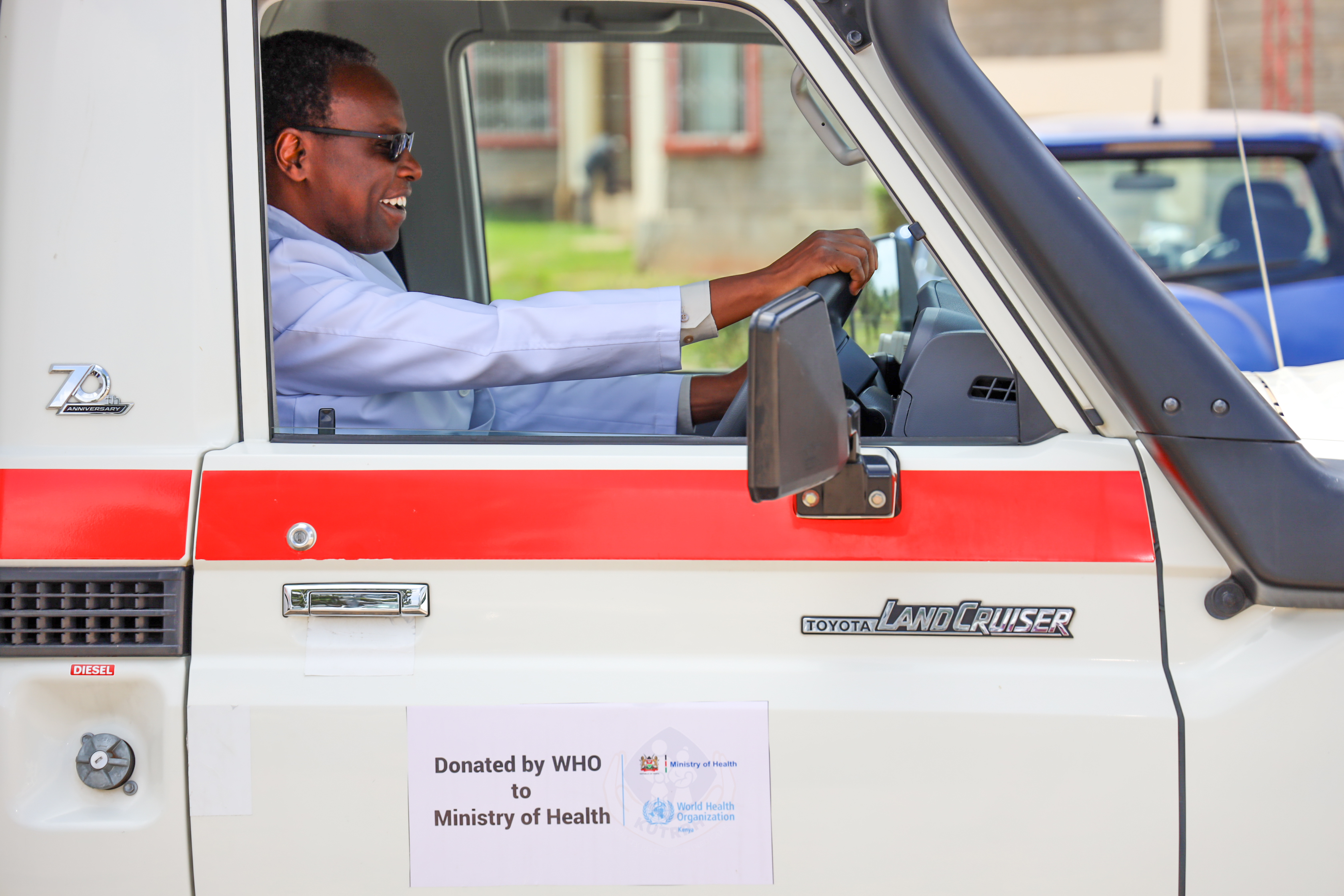
 The ambulance was donated by the World Health Organization (WHO) in partnership with the Ministry of Health. /KUTRRH
The Kenyatta University Teaching, Referral and Research Hospital has received a fully equipped Advanced Life Support ambulance from WHO, strengthening its capacity to respond to critical medical emergencies and improve patient outcomes.
The ambulance was donated by the World Health Organization (WHO) in partnership with the Ministry of Health as part of a national programme to enhance emergency medical services under the Universal Health Coverage (UHC) agenda.
According to a statement by the hospital, the vehicle is part of a fleet of 14 emergency ambulances distributed to national referral facilities and the National Emergency Response Centre to reinforce referral systems and improve service delivery in institutions that handle high patient volumes.
“This initiative supports ongoing healthcare reforms under the Universal Health Coverage agenda, aimed at strengthening emergency care, referral systems and service delivery,” KUTRRH said.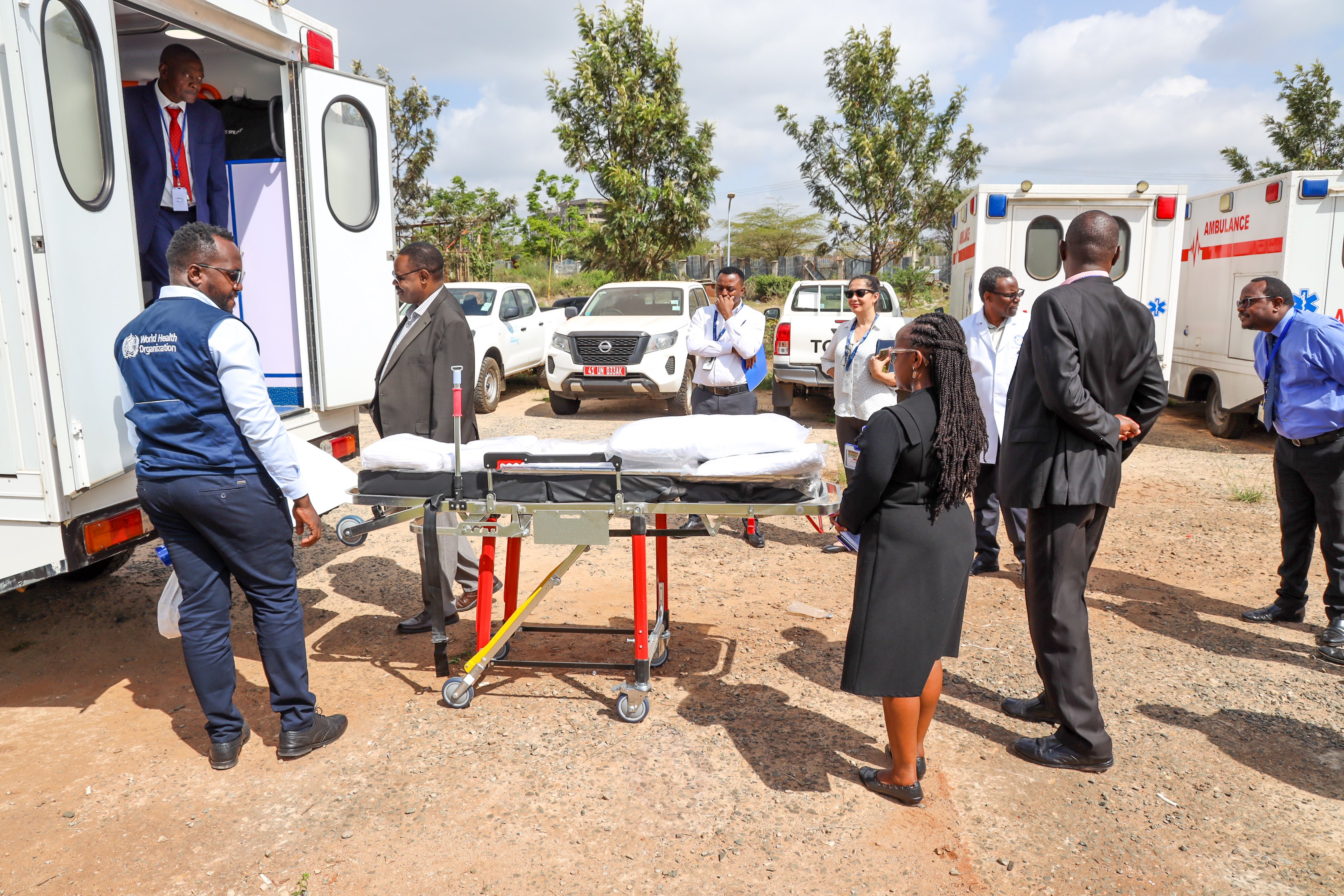 The ambulance is part of a fleet of 14 emergency ambulances provided to national referral facilities and the National Emergency Response Centre.
KUTRRH is one of Kenya's largest referral hospitals.
The hospital noted that the ambulance will enhance emergency response capacity, expand access to medical oxygen and improve the quality of care provided to patients during life-threatening situations even before reaching hospital.
These capabilities are especially critical in cases involving cardiac arrest, severe trauma, stroke or respiratory failure, where the first minutes of care often determine survival.
The donation also strengthens the National Emergency Ambulance Service Centre and the 999 emergency response system, ensuring faster dispatch, better coordination and more efficient patient transfers across the country.
By integrating advanced ambulances into the national emergency response framework, health authorities aim to reduce delays, stabilise patients earlier and ensure continuity of care from the scene of an emergency to specialised hospital units.
The handover ceremony was conducted by WHO officials, with the ambulance officially received by Acting Director of Clinical Services, Dr Antony Kamau, and Acting Director of Administration and Corporate Services, Dr John Nyambega, on behalf of KUTRRH Chief Executive Officer Dr Zeinab Gura.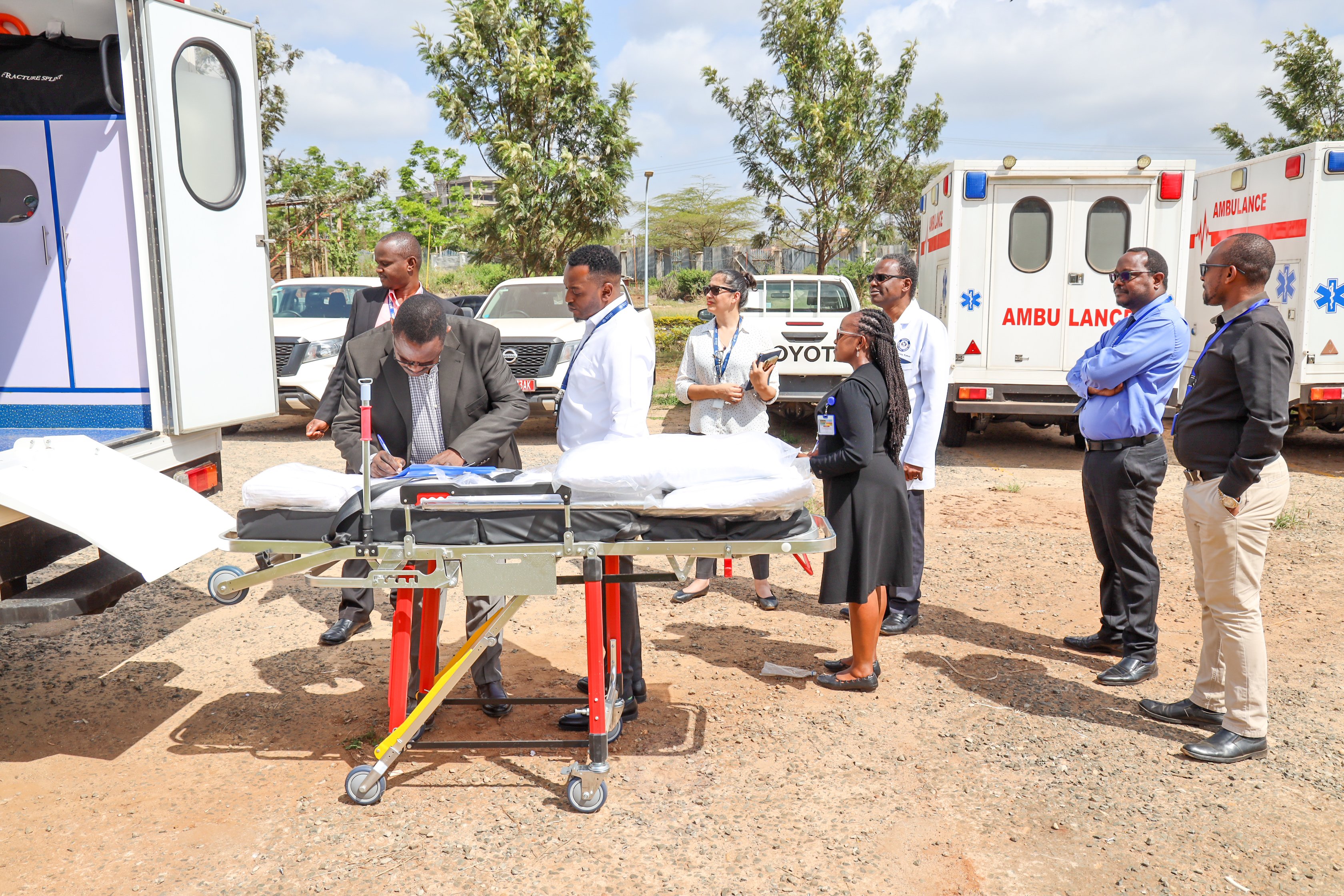 The handover ceremony was conducted by WHO officials. /KUTRRH
KUTRRH expressed gratitude to WHO and the Ministry of Health, describing the donation as a significant boost to emergency healthcare services.
“We extend our heartfelt gratitude to the World Health Organization and the Ministry of Health for their unwavering support in strengthening emergency healthcare services in Kenya,” the hospital said.
The arrival of the ALS ambulance highlights a key distinction in emergency care delivery often supported by Basic Life Support (BLS) ambulances.
Ordinary BLS ambulances are typically staffed by Emergency Medical Technicians and are designed to transport stable patients or those with minor injuries.
They carry basic equipment such as first-aid kits, oxygen cylinders, stretchers and automated external defibrillators, and rely on standardised protocols with limited medical interventions.
In contrast, ALS ambulances function as mobile intensive care units.
They are staffed by highly trained paramedics and in some cases, doctors or critical care nurses, capable of managing complex and rapidly deteriorating conditions.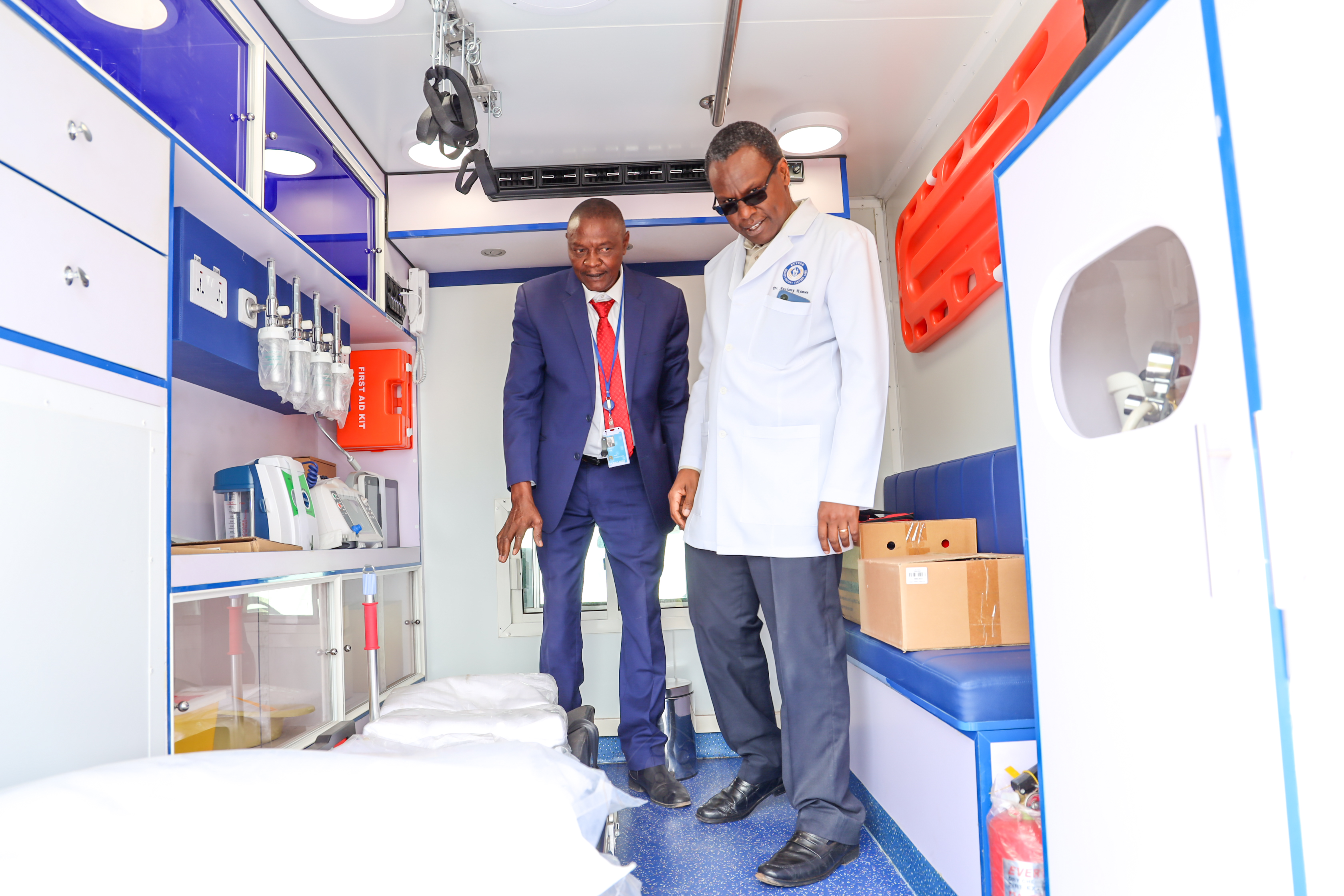 ALS ambulances function as mobile intensive care units. /KUTRRH
Equipped with ventilators, advanced cardiac monitors and defibrillators, intravenous pumps, specialised airway tools and a wide range of emergency medications, ALS ambulances allow life-saving procedures to begin immediately.
Paramedics can administer drugs, manage airways, stabilise heart rhythms and make critical decisions in real time, often in consultation with physicians.
For patients, this means the difference between simply being transported and being actively treated while en route to hospital.
In severe emergencies, the advanced care provided in an ALS ambulance can prevent deterioration, reduce complications and significantly improve survival chances before the patient reaches definitive care.