As the world was welcoming this year, US President Donald Trump was unleashing an operation that was many months in the making. Few would have imagined that many weeks of military buildup around Venezuela would culminate in an audacious operation to capture President Nicolas Maduro. And so it happened that on January 3, 2026, Nicolas Maduro ceased to be a fugitive but a guest of the US justice system.
Characteristic of him, Trump has explicitly stated part of his motivation for the move. He has not even pretended to disguise in diplomatically palatable language what his intention for the operation was: restoration of the US control over Venezuela’s oil.
In the conduct of international relations, state actors would find ways of dressing their raw intentions in language that legitimises what would otherwise be seen as being at inordinate variance with internationally acceptable rules, norms and standards. President Trump is a clear outlier, and he has always been.
But what is surprising in all these is the magnitude of the global surprise. Trump's memo has been out for a while now. In November last year, the Trump administration published its National Security Strategy, explicitly profiling what his vision for the world looks like. Without doubt, the strategy projects the classical realist postulation to international power politics.
It emphasises the centrality of the state above all else, noting that the ‘world’s fundamental political unit is and will remain the nation-state'. Not only that, it speaks eloquently of the primacy of the United States and its interests, stating that the ‘United States will put our own interests first’.
Though it acknowledges the spread of the US interests across the world, the strategy nonetheless places particular emphasis on the Western Hemisphere, profiling it as an exclusive zone to be aligned with the US interests. It is no wonder then that a defiant Venezuela, insistent on entertaining the US's rival powers, had to be subdued.
A corollary impact of the move has been its demonstration of the far the US would be willing to go to get what it wants. Which is why Europe is unprecedentedly rattled by Trump's near-undistracted obsession with Greenland.
The strategy explains how different regions fit into and serve the US interests. Put differently, it shows how different regions serve the 'America First' agenda. Africa easily qualifies as the region with the least to offer. Nothing demonstrates that fact more aptly than the space dedicated to each region in the strategy.
For perspective, Asia dominated the regional section of the strategy, accounting for some 2,004 words from 25 paragraphs. It is followed by the Western Hemisphere, with 1,233 words from 16 paragraphs. Europe came third, with 868 words from 13 paragraphs, followed by the Middle East with 627 words from seven paragraphs. Africa trails with a paltry 211 words from just three paragraphs. Expressed as a percentage of the total, the Africa section word count constitutes a dismal 4.3 per cent.
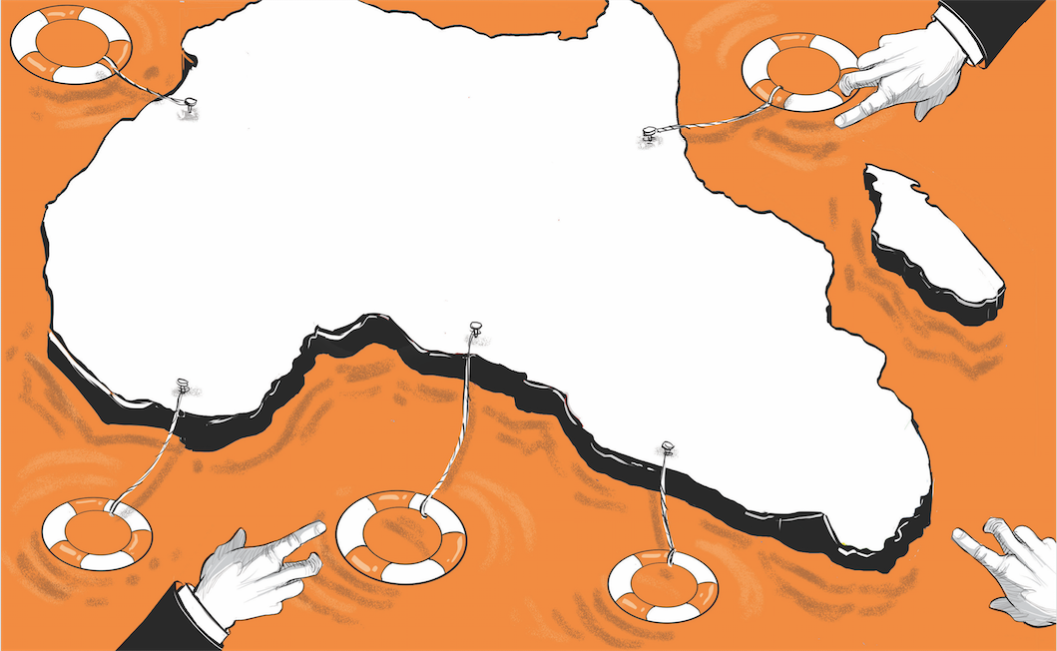
The true pain of the scant word count is in what the words communicate. The US easily identifies what it can offer the continent, being resolving its many conflicts and vague propositions on rebalancing economic ties away from foreign aid. Minerals and other natural resources remain Africa’s best value proposition to the US, with the latter most likely dictating the terms.
In the evolving international system, Africa’s choices are growing thin. The continent’s long-term safety lies in raising its agency. It should leverage its immense resources, both human and natural, to stake its rightful claim in the global system.
Writer Political commentator