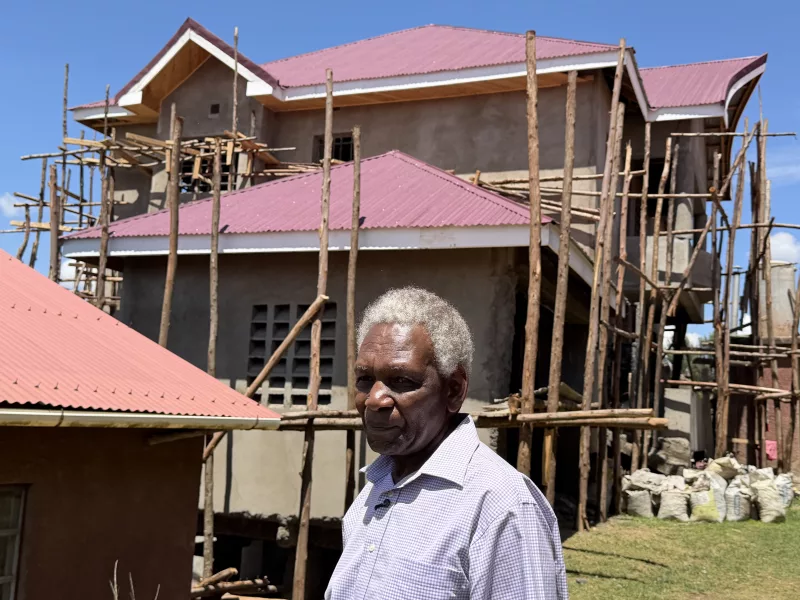
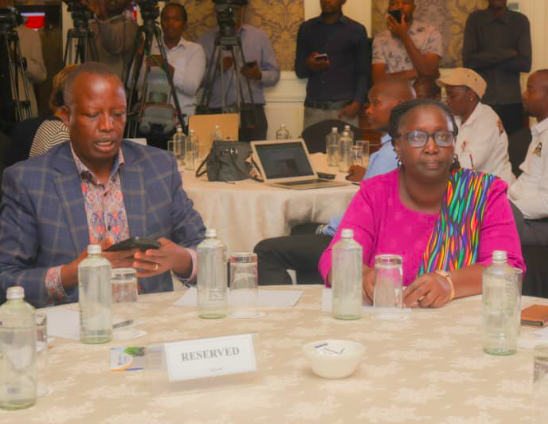
 Tinderet Barngetuny Mountain Run patron Julius Melly and Gender, Culture, Arts and Heritage CS Hannah Cheptumo at the Villa Rosa Kempinski Hotel, Nairobi, when she presided over the launch of the Barng’etuny Mountain Run, Taptengelei Festival and Trails Expedition on Monday./HANDOUT
The Kalenjin community’s fermented traditional milk, 'mursik', is set to be inventoried and documented.
Gender, culture, arts and heritage CS Amina Cheptumo said this is to safeguard the cultural heritage.
“My ministry has embarked on the process of inventorying and documenting mursik, the traditional fermented milk of the Kalenjin, with the view of enlisting it as an intangible cultural heritage in need of urgent safeguarding under the 2003 Unesco Convention for the Safeguarding of Intangible Cultural Heritage,” Cheptumo said.
Mursik is a traditional fermented milk made from fresh cow’s milk and medicinal charcoal locally known as ‘wosek’.
Cheptumo said preservation and promotion of culture, the arts and heritage align with the provisions of Article 11 of the Constitution of Kenya 201, that recognises culture as the foundation of the nation and the cumulative civilisation of the Kenyan people.
The CS was speaking on Monday at Villa Rosa Kempinski Hotel, Nairobi, when she presided over the launch of the Barng’etuny Mountain Run, Taptengelei Festival and Trails Expedition.
The event, a brainchild of the Kenya Tourism Board to diversify tourism products in the country, is a celebration of the rich and diverse cultural heritage, community cohesion, moral values, athletic prowess, collective responsibility and renewal among the Kalenjin people.
Culture and cultural heritage are the foundation upon which sustainable tourism is built, celebrating diversity and positioning Kenya as a global leader in cultural heritage and expressions.
“This is demonstrated by the fact that Kenya is the true ‘Home of Humankind’ because of the rich archaeological and palaeontological findings such as the ‘Turkana Boy’ and the ‘Millennium Man’ (Orrorin tugenensis) that were discovered in our Great Rift Valley in the Turkana Basin,” she said.
The launch event highlighted the upcoming Taptengelei Festival, Trails Expedition and the fifth edition of the Tinderet Barng’etuny Run, which will take place from January 15 to 17, 2026, in Nandi county.
Cheptumo said the festival, scheduled for January 16, will provide an authentic immersion into Kalenjin culture through demonstrations of traditional farming methods, culinary heritage including mursik and indigenous vegetables and the display of cultural regalia, music and educational systems.
The purposes of the Unesco convention are to safeguard the intangible cultural heritage; ensure respect for the intangible cultural heritage of the communities, groups and individuals concerned; raise awareness at the local, national and international levels of the importance of the intangible cultural heritage; and provide for international cooperation and assistance.
To be kept alive, intangible cultural heritage must be relevant to its community and continuously recreated and transmitted from one generation to another.
There is a risk that certain elements of intangible cultural heritage could die out or disappear without help, but safeguarding does not mean fixing or freezing intangible cultural heritage in some pure or primordial form.
Safeguarding is about the transfer of knowledge, skills and meaning. Transmission—or communicating heritage from generation to generation—is emphasised in the convention rather than the production of concrete manifestations such as dances, songs, musical instruments or crafts.
The ministry views such festivals as critical instruments for documenting, preserving, and transmitting intangible cultural heritage to younger generations who must inherit these traditions with pride and understanding.
The CS said the ministry is also working to ensure that cultural festivals across Kenya receive structured support through policy frameworks, capacity building for cultural practitioners and funding mechanisms that recognise culture as an economic sector in its own right.
It will also support similar cultural programming in other regions, including the Marsabit Lake Turkana Cultural Festival, the Lamu Cultural Festival, the Tobong’u Lore Cultural Festival and the Maa Cultural Festival, among others.
The Magical Kenya Mountain and Trail Series has evolved into a significant national platform that combines adventure tourism, competitive athletics and cultural heritage programming.
Since its launch in January 2025, the series has traversed critical cultural and ecological landscapes, including the Western region, the Aberdares and Mount Kenya, demonstrating the diversity of experiences Kenya offers to both domestic and international visitors.
The CS said the festivals and the five Unesco Cultural World Heritage Sites—Fort Jesus, Lamu Old Town, the Historic Town and Archaeological Site of Gedi, Thimlich Ohinga Historic Site and the Sacred Miji Kenda Kaya Forests—should be included in the national tourism circuits and calendars.
KTB CEO June Chepkemei said her organisation is keen to diversify tourism products through the Magical Kenya trail series.
“The Magical Kenya Trail Series is a product that is helping us position Kenya as a premier destination for adventure, culture and sports tourism. This for us is an opportunity to tap into the existing opportunities in culture and the existing opportunities in sports that have proven to us that it is an area that is worth $400 billion,” she said.