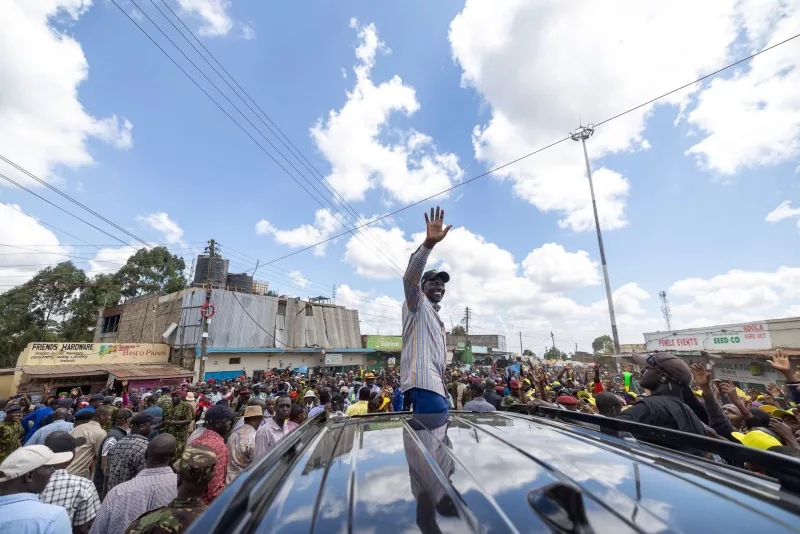
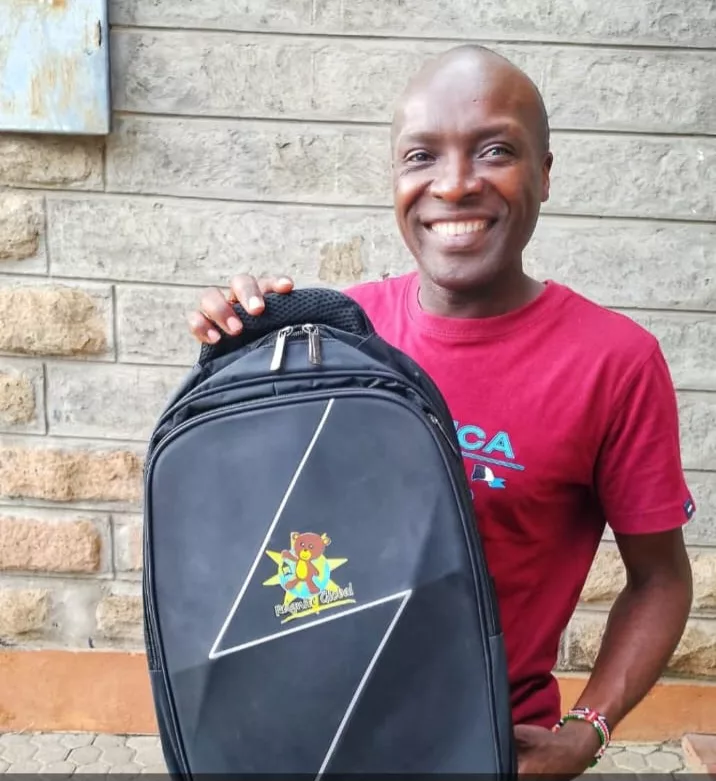
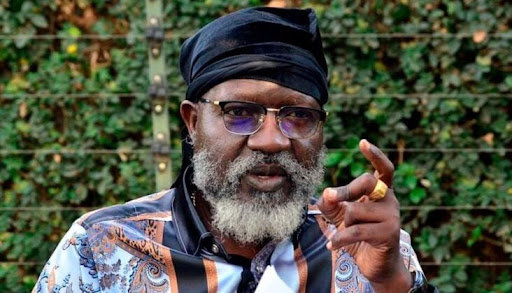
 Roots Party leader George Wajackoyah. /FILE
Roots Party leader George Wajackoyah has assessed the Gen Z movement whose emergence in mid-2024 significantly altered Kenya’s political trajectory and precipitated the formation of a broad-based government.
In an interview with K24, the former presidential aspirant, who is once again eyeing the top seat in the 2027 general election, said the youth-led movement that agitated for change began strongly but lost focus along the way.
“For the first time, I will say something against the Gen Zs,” he said. “They came up with proper momentum but they have lost it; I’m not seeing any of them going up to register as voters.”
The Independent Electoral and Boundaries Commission (IEBC) is currently conducting a continuous voter registration exercise ahead of the 2027 general election.
Wajackoyah said that while Gen Z activists earned legitimacy through the substance of the issues they raised, the political change they desire can only be realised through participation in the electoral process.
“I would therefore ask them to go and register if they want Kenyans to believe in them because they are the only ones that can bring change,” he said.
The Gen Z revolt erupted in June 2024 at the height of parliamentary debate on the now-impugned Finance Bill, 2024, which proposed a raft of tax measures widely viewed as punitive.
Despite mounting public opposition, MPs pressed ahead and on June 25, 2024, voted to pass the controversial Bill as Gen Z-led demonstrations took place outside Parliament precincts.
Anger escalated after the vote, with protesters breaching Parliament, vandalising property and torching sections of the House before anti-riot police responded with force.
The crackdown resulted in the deaths of several protesters. The unrest nearly brought the Kenya Kwanza administration to its knees amid widespread condemnation of the state’s handling of the protests.
Under intense pressure, President William Ruto wrote to Parliament to withdraw the Bill and announced plans to form a broad-based government with a national outlook.
He later brought on board four ODM leaders under the stewardship of the late party leader Raila Odinga, with whom he signed a 10-point working agreement on March 7, 2025.
Among the agreed items was full compensation for victims of anti-government protests dating back to 2017.
The truce eased tensions, but Gen Z activists have since maintained what they describe as silent protests, vowing to make the Ruto administration a one-term government.
Wajackoyah, however, dismissed that ambition as unrealistic without voter registration and turnout in 2027.
To address what he described as growing voter apathy among the youth, Wajackoyah proposed a strategy that he conceded might portray him as authoritarian but which he argued would be necessary for the country.
“This is what I would do if I became President. I will make sure that legislation is passed to run in tandem with the constitution that if you reach the age of maturity, before you get your ID or before you get your driver’s licence, you must also apply to register as a voter,” he said.