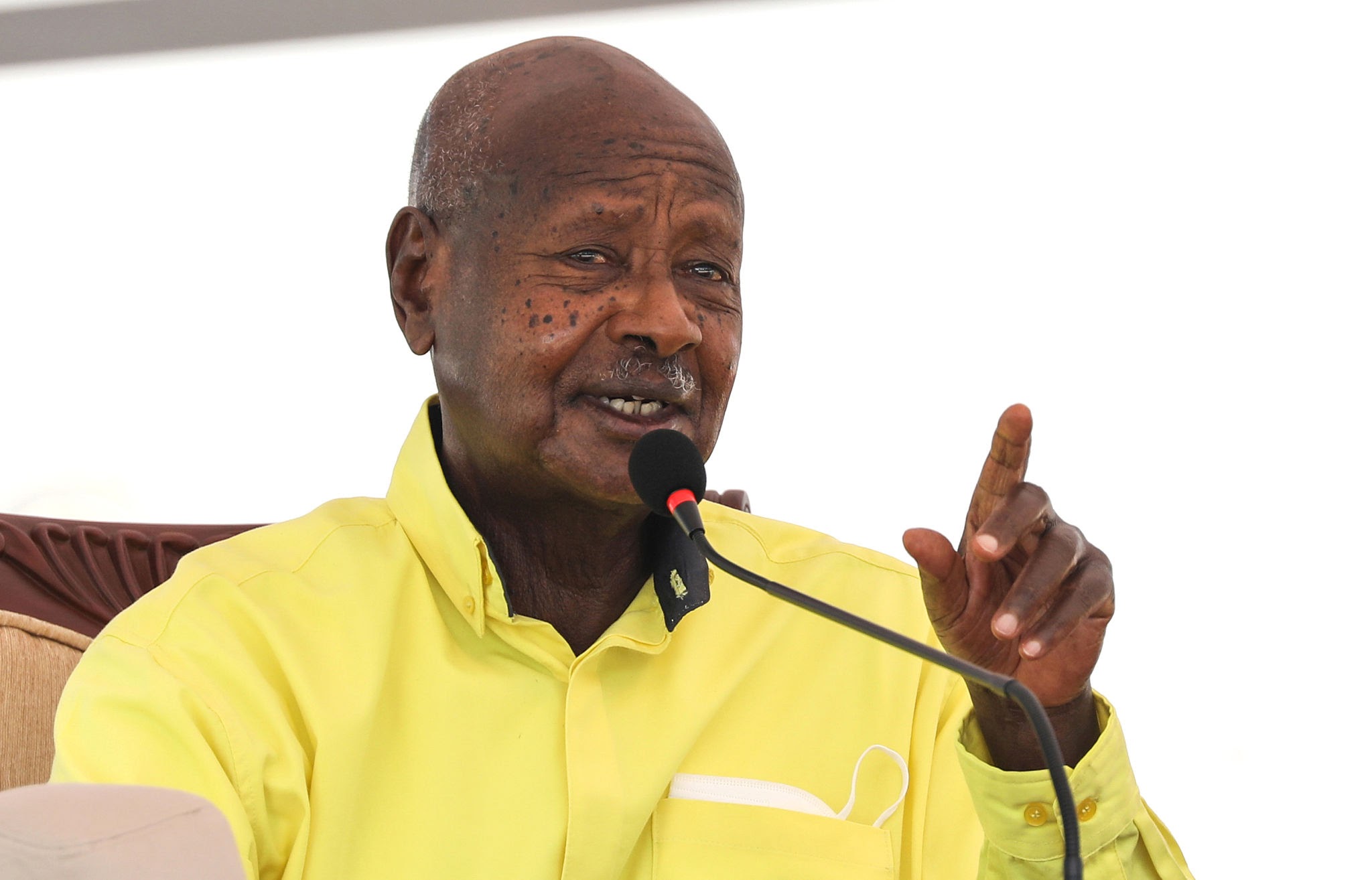
 Uganda President Yoweri Museveni. /FILE
Uganda’s decision to suspend internet access ahead of Thursday’s general election has once again thrust the country into a contentious debate about digital rights, national security, and the limits of state power during electoral periods.
While authorities insist the move is necessary to safeguard peace and stability, critics argue it exposes a troubling legal grey area in a country where internet shutdowns have become almost routine during elections.
On Tuesday evening, Ugandans across the country reported that internet access abruptly went dark at around 6pm.
Although voice calls and basic SMS services continued to function, mobile data and broadband connections were unavailable, effectively cutting off access to social media, news websites, messaging platforms, and online services.
The Uganda Communications Commission (UCC) confirmed the shutdown in a letter to mobile phone operators, saying it was acting on “a strong recommendation” from security agencies, including the army and the police.
According to the regulator, the decision was taken as a precautionary measure.
“This temporary suspension is a precautionary intervention to ensure peace, protect national stability and prevent the misuse of communication platforms during a sensitive national exercise,” UCC said.
The commission did not indicate when internet services would be restored, leaving the public and businesses in uncertainty.
The move came as a surprise to many, not least because it contradicted assurances given just days earlier.
On January 5, senior government officials had publicly dismissed claims that the internet would be switched off during the election period, describing them as false and misleading.
Speaking at a joint press briefing, Permanent Secretary in the Ministry of ICT and National Guidance Aminah Zawedde underscored the importance of digital platforms in a democratic society.
“ICTs and media platforms play a central role in democratic participation by enabling citizens to access accurate and timely information,” she said, while emphasising that responsible media coverage during elections was critical to maintaining peace, public order, and national stability.
Zawedde cautioned against the misuse of both traditional and digital media to incite violence, spread falsehoods, or undermine the credibility of the electoral process, but made no mention of internet shutdown as a consequence.
She specifically warned that live coverage of riots, unlawful processions, or violent incidents was prohibited, as such broadcasts could escalate tensions and trigger panic.
UCC Executive Director Nyombi Thembo echoed those sentiments, noting that elections place the media at the centre of national discourse.
“Elections lie at the heart of any democracy, and the cardinal function of journalism is to provide citizens with accurate, timely, and balanced information,” he said.
At the same time, he made it clear that the commission would intervene where platforms were abused.
“Words, images, and headlines can either calm a nation or inflame it,” Thembo warned.
He reiterated that live broadcasting or streaming of riots and violent incidents was prohibited, and that incitement, hate speech, and violent content, whether on air or online, would attract enforcement action.
According to him, the regulator was actively monitoring both broadcast and online spaces.
Despite these explanations, the legality of the shutdown is contested. Uganda does not have a specific law that expressly authorises the government to suspend internet services in the public interest.
Yet internet shutdowns during election periods have become a recurring feature. During the January 2021 elections, the government imposed a nationwide shutdown of social media and internet access, a move that lasted five days, from January 13 to 18, including polling day.
Authorities also blocked more than 100 virtual private networks, online mobile application stores, as well as Google Play Store and the App Store, in an effort to prevent users from circumventing censorship measures.
That shutdown prompted the East Africa Law Society (EALS) to challenge what it termed “unlawful restrictions” imposed on Ugandans, filing a case at the East African Court of Justice.
The regional body argued that the internet blackout amounted to an infringement of a wide range of fundamental rights, including freedom of access to information, freedom of speech and expression, freedom of the press, and the right to participate freely in the affairs of government.
In its filings, EALS said the shutdown also violated economic rights and the right to freedom of association and assembly, arguing that these protections are enshrined in the East African Community Treaty and the African Charter on Human and Peoples’ Rights.
The organisation contended that member states are required to recognise, promote, and protect human and peoples’ rights, and to refrain from measures likely to undermine their implementation.
The law society further argued that the shutdown breached principles of good governance, democracy, the rule of law, public accountability, and transparency, all of which are core to the East African Treaty.
An advocate who swore an affidavit in support of the application told the court that similar tactics had been employed during Uganda’s 2016 elections, and that their repetition on a “grander scale” demonstrated a pattern of entrenched violations that required urgent intervention.
He warned that unless such actions were checked by the regional court, the Ugandan government would continue to act with impunity, jeopardising not only individual rights but also the broader objectives of East African integration.
Those concerns have resurfaced as Uganda once again heads to the polls.
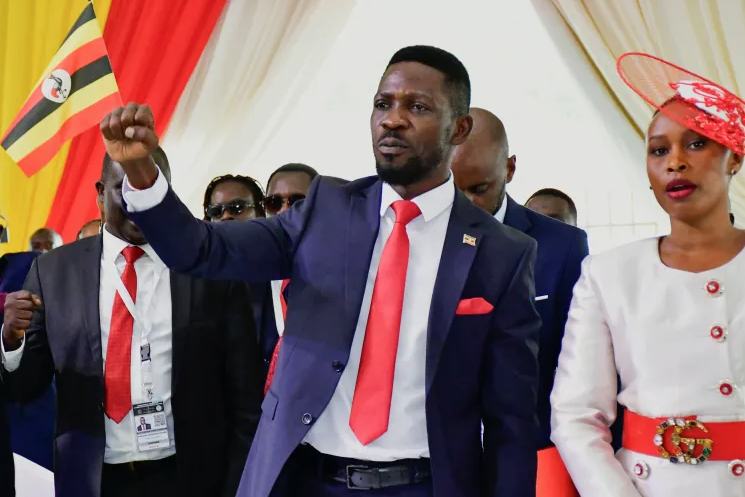 Ugandan opposition presidential candidate Robert Kyagulanyi. /FILE
Incumbent President Yoweri Museveni, 81, is seeking a seventh term in office, nearly four decades after he came to power in 1986.
He faces a challenge from several candidates, most notably 43-year-old opposition leader and former pop star Bobi Wine, whose real name is Robert Kyagulanyi.
Uganda’s digital landscape has expanded significantly over the years. The country now has more than 27 million internet subscriptions, with access estimated to reach about 60 per cent of the population.
For many citizens, especially younger voters, digital platforms have become the primary source of news, political mobilisation, and civic engagement during elections. The government, however, maintains that this influence must be exercised responsibly.
In the days leading up to the shutdown, attention focused on satellite-based internet provider Starlink, which some viewed as a potential alternative should traditional networks be switched off.
That option was swiftly closed after UCC denied the company a licence and ordered it to halt operations. Nyombi said all service providers must comply with Uganda’s licensing laws.
“It is an offence to provide telecommunication services in Uganda without a licence,” he said, confirming that Starlink was directed to deactivate its terminals after failing to meet pre-licensing requirements.
While there is no explicit legal provision permitting internet shutdowns, the government has in recent years tightened regulation of online activity.
In October 2022, Museveni signed into law amendments to the Computer Misuse Act, despite widespread concern from civil society and media organisations.
The Computer Misuse (Amendment) Bill, 2022 had been passed by Parliament a month earlier. Its sponsor argued that the changes were necessary to punish individuals who hide behind computers to harm others.
He said the law sought to enhance provisions on unauthorised access to information, prohibit hate speech, and criminalise the sending or sharing of false, malicious, or unsolicited information.
The amendments revised offences and penalties, in some cases proposing jail terms of up to 10 years, including for transmitting information about a person without consent or sharing and intercepting information without authorisation.
Opponents warned that the law could be used to silence legitimate criticism and stifle freedom of expression, particularly in a political environment where opposition figures often rely on social media after being blocked from holding street protests.
Media advocates also raised concerns that the law could undermine investigative journalism.
As the shutdown took effect, Bobi Wine condemned the move, describing those behind it as “cowards” and labelling the government a “criminal regime.”
He urged voters to download alternative communication platforms that do not rely on conventional internet access, saying they could be used to upload declaration of results forms from polling stations.
The government has meanwhile reiterated that the announcement of election results remains the sole mandate of the Electoral Commission.
During the January 5 briefing, officials warned against parallel tallying or the sharing of unverified or premature results, insisting such actions were unlawful. Thembo maintained that regulation was not intended to suppress journalism.
“Our approach is to promote professionalism, accountability and editorial independence within a predictable regulatory environment,” he said.
He also reminded the public that sharing unverified information carries legal responsibility, noting that forwarding a message makes one accountable for its content.
Against this backdrop, Uganda’s latest internet shutdown highlights the unresolved tension between security considerations and constitutional freedoms.
With no clear legal framework governing such drastic measures, the question of legality remains contested, and the debate over digital rights in Uganda remains far from settled.