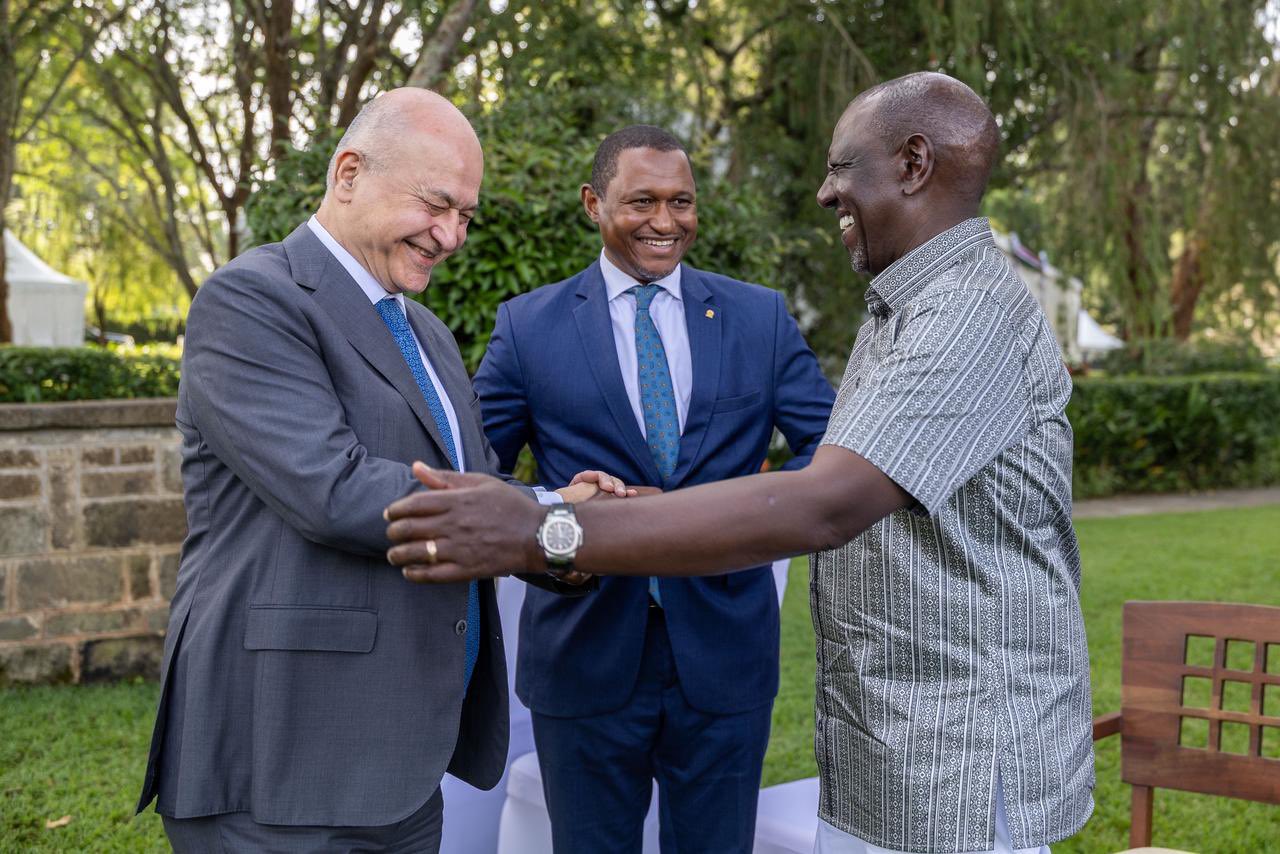
President William Ruto has appealed to the international community to support Kenya’s plan to transform refugee camps into integrated and self-reliant settlements.
President William Ruto noted that the initiative marks a major shift from humanitarian aid to sustainable development.
Speaking at State Lodge Sagana in Nyeri County during a meeting with United Nations High Commissioner for Refugees Barham Salih, Ruto said the programme, known as the Shirika Plan, is already being rolled out and requires strong international support to achieve its objectives.
“As this noble and ambitious plan is being implemented, we ask the international community to support the programme,” Ruto said.
The President said Kenya is widely recognised as a welcoming and secure nation that has hosted tens of thousands of refugees and immigrants over several decades.
He noted that for more than 40 years, the Kenyan government has worked closely with the United Nations High Commissioner for Refugees (UNHCR) to support people fleeing war, conflict and instability from neighbouring countries.
“For the past four decades, Kenya has offered refugees comfort, a home away from home and a stable environment in which they can rebuild their lives,” Ruto said.
The Shirika Plan, launched last year, seeks to fundamentally change how refugees are hosted in the country by integrating them into local communities and promoting socio-economic inclusion.
The initiative aims to move refugees away from long-term dependency on humanitarian assistance and towards self-reliance, productivity and shared prosperity with host communities.
Under the plan, traditional refugee camps such as Dadaab and Kakuma will gradually be transformed into integrated settlements that function as municipalities.
Refugees will enjoy greater freedom of movement, access to national services and opportunities to participate meaningfully in local economies.
The government plans to support refugees by facilitating access to education, healthcare, livelihoods, land use and legal documentation, while also investing in infrastructure and social services that benefit host communities.
This dual-benefit approach, the President said, is intended to ease pressure on scarce local resources, reduce tensions between refugees and host populations, and foster social cohesion.
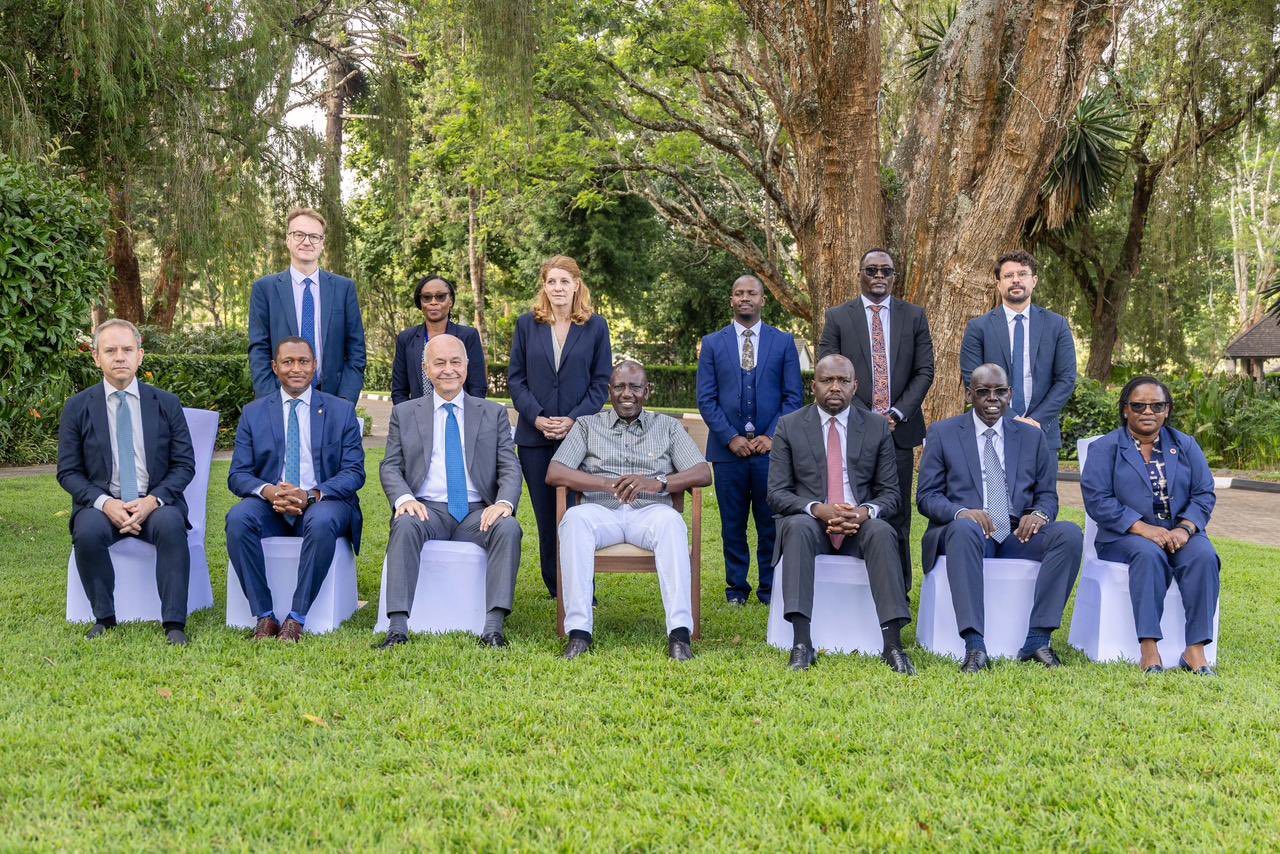
The Shirika Plan is anchored in the Refugees Act, 2021, and is designed to be implemented over three phases between 2025 and 2036.
It emphasises strong partnerships between the national and county governments, development partners, humanitarian agencies, civil society and the private sector to mobilise financing, technical expertise and investment.
By linking humanitarian support with long-term development planning, the government believes the plan will unlock economic opportunities, stimulate local economies and reduce the long-term costs associated with protracted refugee situations.
Kenya currently hosts more than 800,000 refugees and asylum seekers, with recent figures placing the number at between 830,000 and 870,000.
The majority come from Somalia and South Sudan and reside mainly in the Dadaab and Kakuma camps, as well as in urban centres such as Nairobi.
Ruto said the Shirika Plan offers a durable solution to displacement by supporting voluntary repatriation, resettlement to third countries or full integration into Kenyan society.