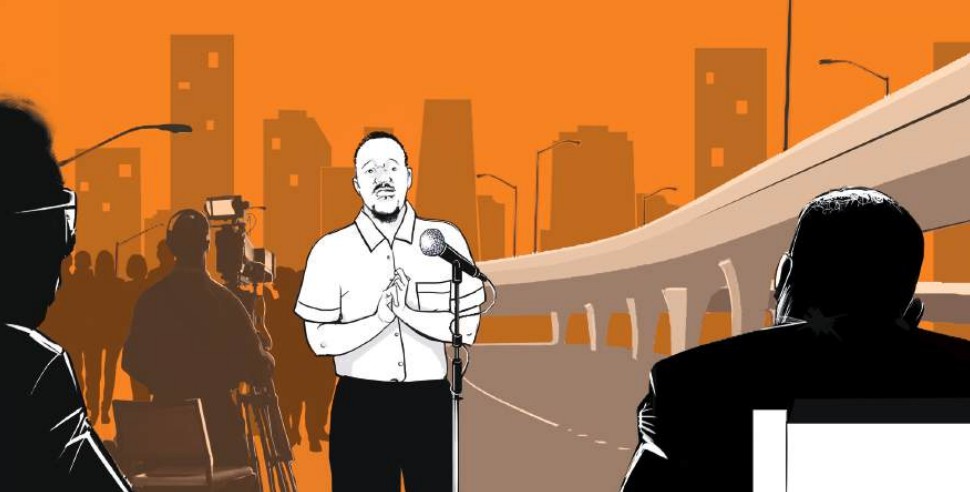
If you were to ask any ordinary Kenyan what Article 1 and Article 10 of the constitution have to say about the very popular concept of “public participation", I doubt if one in 10 would have any idea.
And yet, apart from devolution, I know of no policy initiated by the 2010 constitution, which is more ardently “owned” by the general public than that of public participation.
There is a good reason for this. As one analysis puts it, “The Constitution vests all sovereign power in the people of Kenya (Article 1), with state organs exercising that power only as a delegated trust, which logically requires that the people are involved in key decisions.”
And on the ‘African Law Matters’ website, in an article on public participation in Kenya, we learn that “Public participation is expressly listed as a national value and principle of governance under Article 10, binding all state organs, state officers, public officers and even private persons when making or implementing public policy decisions.”
But for some time now, as I have followed the reports on public participation in various newspapers, I have wondered if such participation is what really matters when it comes to some of the most important steps we have to take as a country.
For in all the things which really matter to the ordinary Kenyan – affordable healthcare; free or affordable education; property rights; and perhaps most important, economic opportunity – I would argue that what really matters is that we should get the best professional advice and also learn from the success of those who have followed a similar path before us.
Plus, in any case, agreeing on what is to be done is one thing. Actually, implementing the agreed-on proposal is something else altogether.
Proposals for new county hospitals probably met with near-universal approval when first mooted about 10 years ago.
But when some of these proposed 'level 5' hospitals ended up as empty shells, the public hopefully began to appreciate that maybe this issue of public participation was not as easy as it had seemed.
And at all events, research in public health has long established that the only truly “sustainable” policy in this field for any developing country is to prevent people from getting sick in the first place.
Hence do we have – in both African and Asian developing nations – what are generically termed “health surveillance officers” going around on motorcycles, visiting all the villages they are assigned to, and offering preliminary treatment where needed.
Yet there is an undeniable glamour to turning up to view the “official launch” of a brand-new multi-storey hospital building.
It has a “progressive” and “development” look to it that a man on a bicycle coming to check if your children have all been vaccinated, cannot have.
So much for health.
But when it comes to economic opportunity (ie job creation), the improbability of anything useful arising from the usual “community consultation” meetings is even greater.
I have never seen any of the famous Special Economic Zones of East Asia but have spoken to many journalism colleagues who have. And I have seen the inside of the kind of factories to be found in these SEZs in other countries.
If you have not had this experience, and there is a public participation forum on a proposed SEZ in your county, could you really make any reasonable assessment of this proposal? Especially as concerns the potential environmental impacts of the proposed industries?
And with all this talk of Kenya following in Singapore’s fabled footsteps towards the creation of an advanced economy in just one generation, when it comes to education, it might interest parents to learn that Singapore is just a little behind the world leader, South Korea, when it comes to putting students through “examination hell”:
Here is an excerpt from a Singaporean website dedicated to family mental health issues:
“Youth mental health in Singapore has become a growing concern, with a rising number of adolescents experiencing emotional distress, anxiety, and depression. According to reports, one in seven young people between the ages of 13 and 25 faces mental health challenges such as anxiety disorders, depression, or suicidal thoughts.”