
The second phase of Kenya’s vaccine manufacturing project is set to kick off this month(January), marking a major step towards local vaccine production and the country’s Universal Health Coverage (UHC) goals.
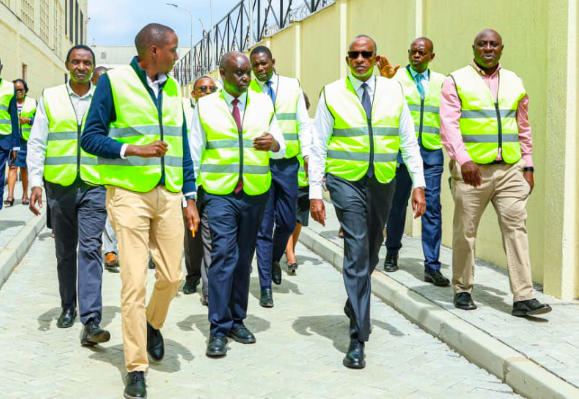
Health Cabinet Secretary Aden Duale said the phase will focus on systems integration and the installation of critical equipment at the Kenya BioVax Institute, including fill-and-finish technology, following the successful completion of the first phase.
“The Government has fully financed and completed the first phase of the vaccine manufacturing facility, and we are now moving into the second phase, which will begin this month,” Duale said during a strategic engagement with the Institute’s board and senior management on Monday.
“This phase is critical in operationalising the facility and bringing us closer to local vaccine production.”
Duale reaffirmed the Institute’s mandate to manufacture and commercialise safe, high-quality vaccines and priority health technologies, describing BioVax as a cornerstone of Kenya’s health security and UHC agenda.
The Health CS said the meeting reviewed key milestones, including progress towards Kenya’s first locally manufactured vaccine trial batch, which is expected to be released by the end of 2027.
“We are encouraged by the steady progress towards producing Kenya’s first locally manufactured vaccine. This is a historic journey that will reduce our reliance on imports and strengthen national and regional health security,” he said.
Duale also cited Kenya’s attainment of the World Health Organization (WHO) Maturity Level 3 as a significant regulatory milestone that now enables local manufacturing.
“Achieving WHO Maturity Level 3, with the support of the Pharmacy and Poisons Board and the National Quality Control Laboratory, is a major boost to confidence in our pharmaceutical sector and positions Kenya as a regional leader in research and production,” he said, adding that the achievement aligns with the Bottom-Up Economic Transformation Agenda (BETA).
The engagement further highlighted strategic partnerships supporting the initiative, including funding from the World Bank through the Regional Health Emergency Preparedness, Response and Resilience (HEPRRP) programme.
“This partnership is strengthening our healthcare systems, pharmaceutical capacity and national emergency preparedness,” Duale said.
During an interactive session with staff, the CS urged adherence to public service values, saying transparency and accountability are essential to delivering people-centred healthcare.
“We must uphold the values enshrined in Article 232 of the Constitution. Transparency and accountability are not optional — they are the foundation of public trust and quality healthcare delivery,” he said.
Duale was hosted by Kenya BioVax Institute board chairperson Charles Githinji and CEO Wesley Ronoh.
He was accompanied by Medical Services Principal Secretary Ouma Oluga, Director-General for Health Patrick Amoth, and World Bank representative Bernard Olayo.
The mandate of the Kenya BioVax Institute is to manufacture human vaccines and other routine and emergency vaccines to serve the people of Kenya and beyond.
It is also aimed at manufacturing other biomedical products including, among others, biosimilar anti-cancers, snake anti-venoms, insulin, medical infusions, and other biomedical products that can use the same platform as that of production of vaccines.







