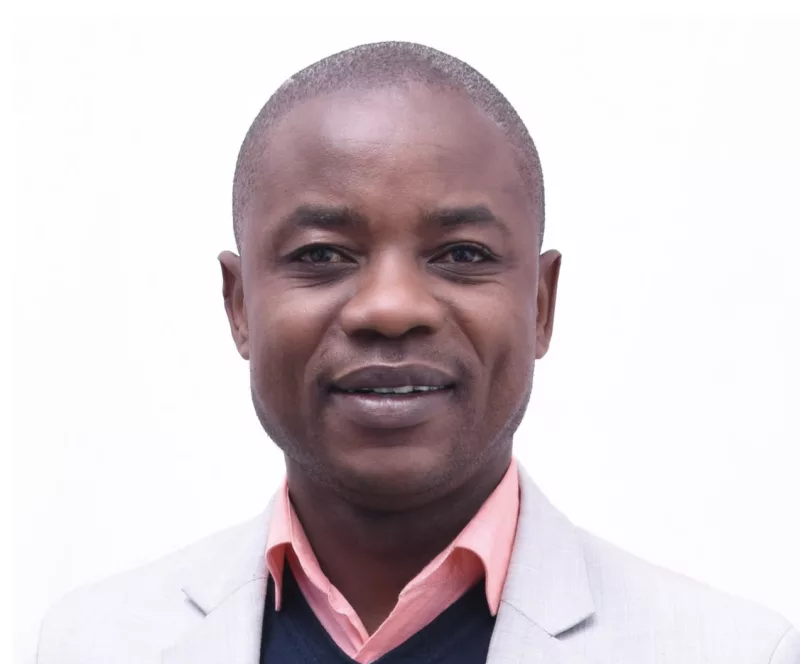
 Hon.Salah Maalim Alio, Governance, Peace and Security Management Specialist./HANDOUT
Kenya has long prided itself as a diverse republic—one whose strength lies in the mosaic of its peoples, faiths, and cultures.
Yet, beneath this constitutional promise, an uncomfortable truth persists: Kenyan officials of Somali descent, particularly Muslims holding high and sensitive state offices, are routinely subjected to abuse, harassment, and suspicion not because of incompetence or disloyalty, but because of entrenched Islamophobia and Somaliphobia.
Nowhere has this prejudice been more visible than in recent political attacks directed at the Director General of the National Intelligence Service (NIS), Mr. Nurdin Haji.
Despite his sterling record in public service, some disgruntled political actors—most notably the former Deputy President Rigathi Gachagua—have repeatedly sought to cast aspersions on his leadership, cloaking ethnic grievance and political bitterness as concern for national security.
It all began long before the 2022 Election,when the then MP For Mathira Mr.Rigathi Gichagua faced corruption charges while the DPP was Mr.Nurdin though that is history, but hell broke loss in 2023, at the height of the Gen Z-led protests against the Finance Bill, Mr. Gachagua convened a press conference in Mombasa, not to calm a restless nation, but to publicly question the competence of the NIS Director General.
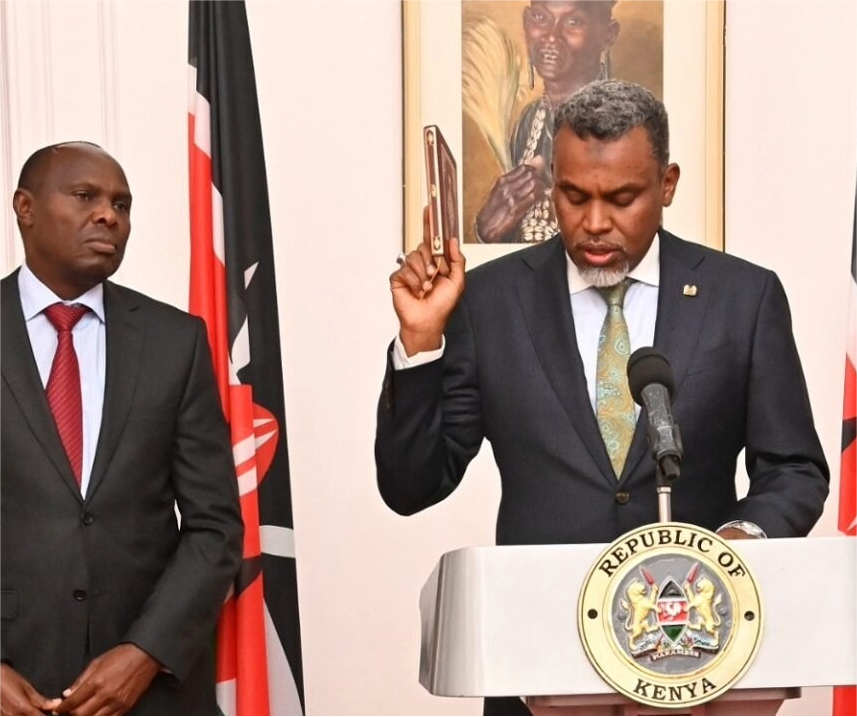 Nurdin Haji taking Oath of Office as DG-NIS on June 14, 2023./FILE
The NIS is not a political outfit. Its mandate is clear and constitutionally anchored: intelligence gathering and analysis on threats to Kenya’s sovereignty and stability; prevention of such threats before they escalate; advising the President and the National Security Council on security matters; and carrying out protective and vetting functions for state institutions and classified information.
By design, the Director General reports directly to the President—not the Deputy President—and is insulated from partisan politics precisely to preserve the objectivity and effectiveness of the intelligence function.
To ethnicise or regionalise intelligence deployments is therefore not only misguided but dangerous. Intelligence work is driven by threat assessment, capability, and strategic necessity—not tribal arithmetic.
Demanding “regional balance” in covert security operations betrays either a profound ignorance of national security or a willingness to endanger it for political mileage.
Mr. Nurdin Haji’s career speaks for itself. From his early years as a young professional at the NIS, to his tenure as Director of Public Prosecutions, and now as Director General of the intelligence service, his leadership has been marked by professionalism, restraint, and results.
Kenya has experienced reduced or neutralized external and internal security threats not known to the public, enhanced international intelligence cooperation, and improved institutional capacity—benefits widely attributed to the strengthening of intelligence networks and global partnerships under his watch.
Notably, the DG has maintained the discipline expected of his office: staying away from public political engagement and keeping an arm’s length from the media.
This silence should not be mistaken for weakness. Rather, it reflects a deep respect for the sensitive nature of intelligence work and the constitutional boundaries of his role.
What is troubling is that similar patterns of attack recur whenever any professional from Northern Kenyan ascend to positions of influence in security or finance.
Their qualifications, competence, and loyalty are rarely questioned on merit—but their identity always is. This selective outrage exposes a bias that Kenya must confront honestly if it is to mature as a nation governed by law, not fear.
Political competition must never be allowed to mutate into ethnic scapegoating.
When leaders weaponise phobia against professionals entrusted with national security, they undermine not just individuals, but the state itself. Kenya deserves better—leadership that debates policy, respects institutions, and judges public servants by performance, not by name, faith, or origin or look or region.
The writer is a Governance, Peace and Security Management Specialist.
The Views expressed herein are personal.
Email:- diwanisalah01@gmail.com