Kenya’s national schools did not emerge by accident, nor are they the product of regional exceptionalism. They evolved from racially segregated colonial and missionary institutions that were later unified after independence to serve a new national vision.
Under the British rule, education followed racial lines: Europeans, Asians, and Africans were educated separately. Institutions such as Prince of Wales School (now Nairobi School) catered exclusively to European boys, while Alliance High School became the first secondary school for African students. Maseno School began as a school for the sons of chiefs.
The concentration of national schools in Central Kenya is, therefore, largely a historical legacy of colonial settlement patterns, not evidence of superior effort or entitlement by any one region. To argue otherwise is to distort history.
The dangerous ethnic bigotry occasionally voiced by some so-called national leaders only serves to further fragment our already fragile social fabric. Such rhetoric should be rejected by all Kenyans of goodwill.
It mirrors, in troubling ways, the xenophobic drift witnessed during the Trump administration in the United States, where policy moved from targeting undocumented immigrants to lawful residents and even naturalized citizens; revealing how prejudice, once normalized, rarely stops at its initial target.
National schools whether established during the colonial era or after independence were built using public resources drawn from all Kenyans. Taxes such as the poll tax and compulsory harambee contributions funded these institutions. My late father, a meticulous record-keeper, kept receipts of poll taxes and harambees that helped build national school, many of which his own children were never able to attend.
The idea that these schools should now be reserved for residents of the counties in which they are located is ludicrous. If applied consistently, that logic would have barred most Kenyans from attending public universities in earlier decades, when the few that existed were concentrated around Nairobi, with the lone exception of Moi University.
National schools should instead remain symbols of nationhood spaces where young Kenyans from diverse backgrounds learn together. There is immense value in ensuring that students attend secondary schools outside their home counties as a way of fostering national cohesion.
Regional development disparities, meanwhile, are largely the result of post-independence governance choices. For decades, power was highly centralized in the presidency, and regions associated with the presidency tended to receive a disproportionate share of development resources while others were neglected. This pattern, common across much of post-colonial Africa, makes it disingenuous for beneficiaries of this imbalance to now blame marginalized regions for their underdevelopment.
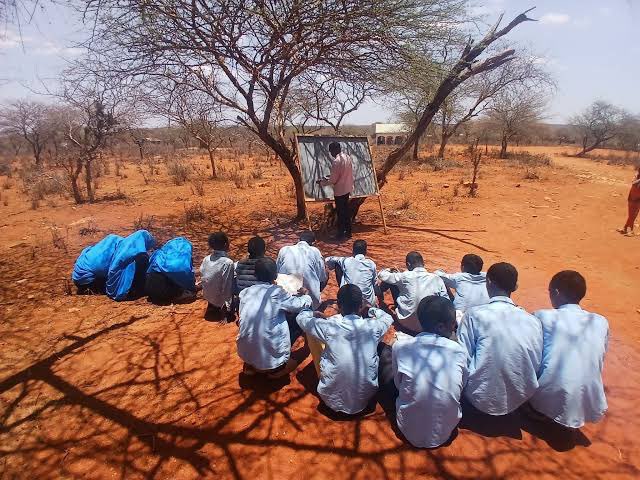
Sessional Paper No. 10 classified regions such as Northern Kenya as “low-potential” areas, deliberately depriving them of development resources through policy design. Northern Kenya, in particular, has suffered systematic neglect from the colonial era, when its semi-arid nature made it unattractive to administrators focused on agricultural productivity, through successive post-independence governments. Development was concentrated in Central and Rift Valley regions, leaving the north on the periphery.
The single greatest obstacle to Kenya’s progress, however, remains corruption. It permeates every level of leadership, from the top of government to the grassroots. Institutions mandated by the Constitution to fight corruption are weakened by political interference, incompetence, and internal rot.
From Goldenberg to Anglo Leasing, Eurobond, and Kemsa, grand corruption has become normalized, with stolen resources rarely recovered and perpetrators rarely held accountable.
Notably, none of these scandals originated in Northern Kenya.
Against this backdrop, corruption in Northern Kenya is more visible because every shilling stolen there is taken from scarcity itself, from regions already suffering acute poverty and neglect.
Devolution brought hope and substantial resources to Northern counties, but much of this promise has been squandered. Mandera county alone has received over Sh170 billion since devolution, yet 70–80 percent of its settlements lack access to water.
Health facilities are chronically under-resourced, roads are in disrepair, and public funds have instead financed mansions and apartment blocks in Nairobi. Constituency Development Funds are similarly misused, with token classrooms built for political branding rather than meaningful investment in education.
These stolen resources are recycled into extravagant election campaigns. In counties plagued by poverty and water shortages, residents watch helicopters and convoys of luxury vehicles descend during election season. Voters are bribed with their own stolen money. Mandera, one of Kenya’s poorest counties has paradoxically become one of the most expensive electoral battlegrounds in the country. The scale of corruption is unconscionable.
Criticism of Northern Kenya’s leadership, its absence from the region and its indulgence in grand corruption is therefore largely justified. Analogies comparing forbidden pork to “permissible” theft may resonate, but the moral failure on display is not a reflection of Islamic faith. It is, rather, evidence of its abandonment.
Kenya’s challenges will not be solved by ethnic scapegoating or historical amnesia. They will only be addressed through honest reckoning, equitable policy, accountable leadership, and an uncompromising fight against corruption.
The writer is Budget Controller Washington DC, and governor aspirant in Mandera. He can be reached at [email protected]