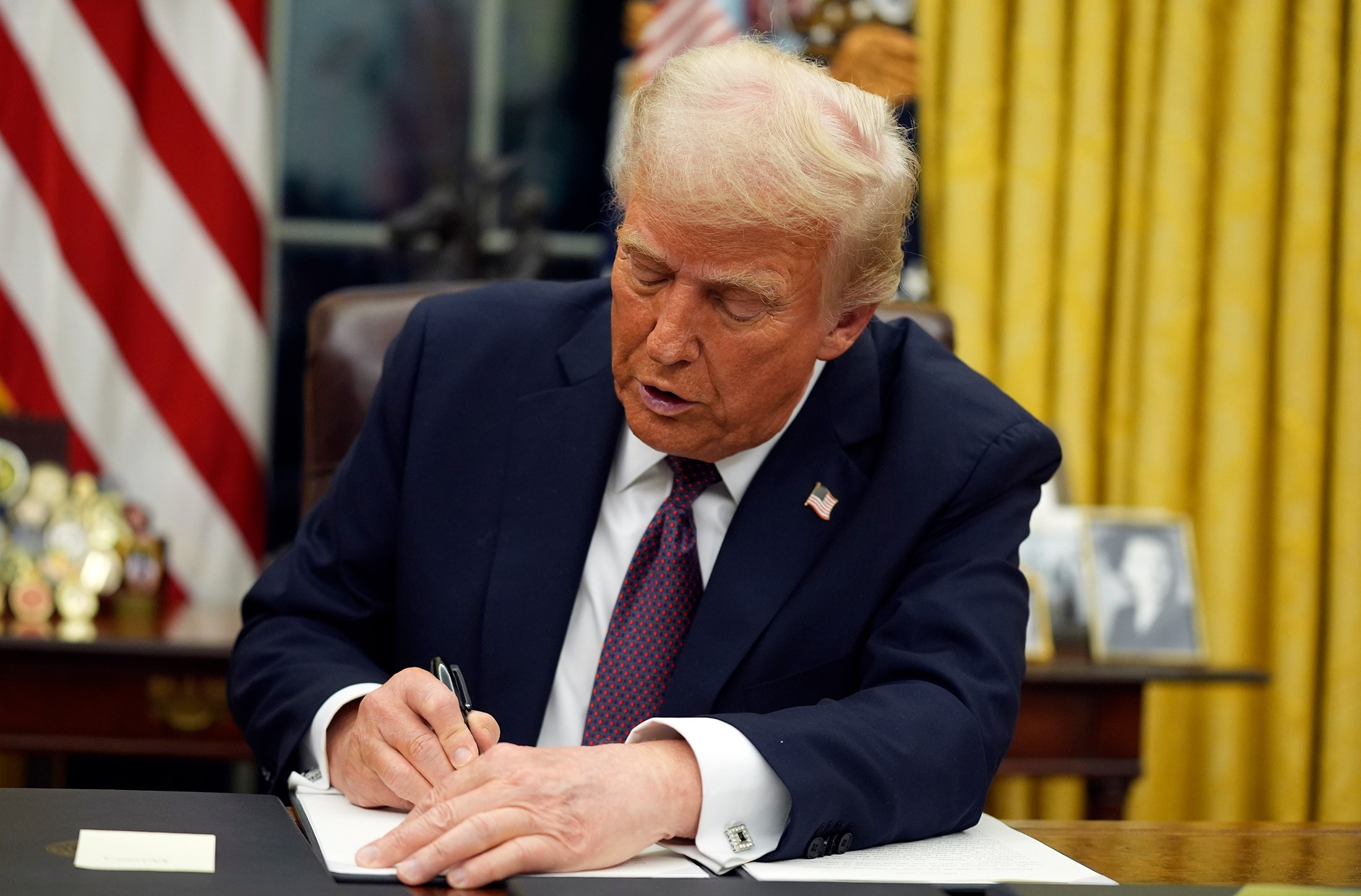
 US President Donald Trump signs new executive orders on January 21, 2025. /SCREENGRAB
President Donald Trump’s January directive ordering the United States to withdraw from support for dozens of international and United Nations-affiliated bodies marks a profound shift in US foreign policy, with potentially far-reaching consequences for Kenya.
The move, which targets 66 global organisations—including 31 UN entities and 35 non-UN international organisations—is part of a broader US policy realignment emphasising “national interest” over multilateral engagement.
By ending participation and voluntary funding where legally permissible, the Trump administration is recalibrating decades of American involvement in global governance, particularly in areas critical to Kenya, such as climate finance, labour migration, trade facilitation, and public service support.
The directive follows an executive order issued on February 4, 2025, which tasked the Secretary of State, in consultation with the United States representative to the United Nations, to review all international intergovernmental organisations of which the United States is a member.
The review also covered conventions and treaties the US is party to, with the goal of identifying institutions “contrary to the interests of the United States.”
On January 7, 2026, Secretary of State Marco Rubio reported his findings, noting that many of these organisations were “redundant in their scope, mismanaged, unnecessary, wasteful, poorly run, captured by the interests of actors advancing their own agendas contrary to our own, or a threat to our nation’s sovereignty, freedoms, and general prosperity.”
In response, President Trump directed all executive departments and agencies to “take immediate steps to effectuate the withdrawal of the United States from the organisations listed…as soon as possible.”
For UN entities, this withdrawal entails ceasing participation and funding to the extent permitted by law.
Among the entities most relevant to Kenya’s interests are those focusing on climate action, sustainable development, trade facilitation, labour mobility, and social services.
While the United States continues to engage with organisations deemed essential to security or humanitarian purposes, such as the UN Security Council, the World Food Programme, and the UN Refugee Agency, the withdrawal from key climate and development bodies represents a significant gap.
Most consequential for Kenya is the US exit from the United Nations Framework Convention on Climate Change (UNFCCC), coming just a year after Trump withdrew from the Paris Agreement for the second time, effective January 27, 2026.
The UNFCCC is the foundational treaty underpinning the Paris Agreement and global climate negotiations. By exiting, the United States is effectively stepping away from the entire international climate architecture it helped establish.
For Kenya, this has immediate and tangible consequences. The country has been positioning itself as a hub for climate finance in Africa, leveraging carbon markets, renewable energy projects, and reforestation initiatives to generate revenue, attract investment, and create jobs.
US participation in these mechanisms has historically bolstered Kenya’s ability to sell carbon credits, unlock green financing, and fund community-level projects that enhance livelihoods.
Projects such as the Mikoko Pamoja mangrove conservation initiative, the Kasigau Corridor forestry programme, and renewable energy developments at Olkaria Geothermal and Lake Turkana Wind depend on robust global climate engagement.
Loss of US funding and participation threatens the flow of debt-free climate finance, estimated in some cases at over $1 billion, potentially delaying or limiting the scale of these initiatives.
Economic benefits tied to climate action are significant. Carbon credit revenues support sustainable agriculture, forestry, and clean energy programmes, while creating employment opportunities in project auditing, management, and technology, particularly for youth.
Communities benefit from clean water projects, education initiatives, and other social programmes funded through carbon markets.
Without continued US involvement in climate bodies, Kenya may face delays in accessing these resources, reducing the potential for economic growth and environmental resilience.
Strategically, diminished participation also undermines Kenya’s ambition to establish itself as Africa’s climate finance hub, weakening its influence in regional negotiations and reducing the country’s ability to shape climate governance.
Beyond climate finance, Kenya faces broader economic and development risks. Direct programmatic support from the UN and UN-affiliated agencies contributes an estimated Sh32 billion to Sh45 billion annually in development financing.
This funding underwrites a wide range of initiatives, including public health, trade facilitation, gender programmes, peacebuilding in fragile counties, urban development, and environmental conservation.
Nairobi and surrounding regions, where many of these organisations maintain regional headquarters, stand to experience immediate economic repercussions.
Reduced institutional spending would affect consultancies, professional services, hospitality, transport, real estate, and conference hosting, where UN entities are major clients.
The contraction of these sectors may ripple through local economies, reducing employment and business opportunities linked to multilateral engagement.
Public health is an area of particular concern. Agencies such as the UN Population Fund (UNFPA) have been central to family planning, reproductive health, maternal care, and gender-based violence prevention.
Already in 2025, reduced funding had led to dwindling contraceptive stocks in parts of Kenya, highlighting vulnerabilities in service delivery.
Withdrawal of US support threatens to reverse gains in maternal health and access to contraception.
Broader health initiatives, including HIV/AIDS, malaria, tuberculosis, immunisation and nutrition programmes, which benefit from multilateral coordination and funding, also face uncertainty.
The result could be increased public and private health costs, more out-of-pocket spending and reduced labour productivity, with knock-on effects for insurance systems and workforce stability.
Trade and economic competitiveness are similarly at risk. Technical assistance from organisations such as the International Trade Centre (ITC) is critical for market access, export diversification and compliance with international standards.
Kenya relies on such support to sustain exports of horticulture, coffee, tea, and apparel, particularly under preferential trade regimes like the African Growth and Opportunity Act (AGOA).
Without US-backed support, Kenyan exporters may struggle to maintain compliance, identify new markets, and expand their global footprint.
This could slow growth in export earnings, create pressure on foreign exchange reserves, and undermine economic resilience.
Kenya’s policy capacity and diplomatic influence are also affected. Institutions such as the Economic Commission for Africa, linked to the UN Economic and Social Council (ECOSOC), provide platforms for shaping economic policy, coordinating debt and development strategies, and conducting macroeconomic analysis.
Reduced US engagement in these forums limits Kenya’s ability to participate effectively, weakening its convening power and diplomatic stature as a regional hub for multilateral initiatives.
Operations at Nairobi-based agencies such as UN-Habitat and UN Environment Programme could be downsized, reducing local employment opportunities and eroding Kenya’s position as a host for high-skilled international roles.
Labour migration and workforce mobility could be indirectly impacted as well. Multilateral programmes often support skills development, vocational training, and employment projects that feed into both domestic labour markets and regional migration channels.
Funding withdrawals and programme disruptions may slow skills acquisition and diminish employment opportunities, potentially reducing Kenya’s capacity to send skilled labour abroad and participate in regional mobility schemes.
Reduced access to technical training and professional certification programmes could also affect the quality of the local workforce, with longer-term implications for competitiveness and economic growth.
The cumulative effect of these withdrawals represents a strategic downgrade for Kenya at a critical moment. Reduced funding, diminished multilateral engagement, and weaker institutional influence threaten economic growth, social development and climate resilience simultaneously.
Fiscal pressures could force the government to allocate more domestic revenue to essential health and social services, stretching budgets and potentially diverting funds from infrastructure or education initiatives.
Trade support gaps could limit foreign exchange generation and employment, while decreased participation in climate and policy forums undermines Kenya’s leadership in continental and global governance.
Moreover, the US exit underscores the vulnerability of Kenya’s reliance on a single major donor in multilateral contexts.
While some essential security and humanitarian programmes remain supported, the gaps in climate finance, trade facilitation, health, and capacity-building highlight the need for Kenya to diversify its international partnerships.
Engagement with other bilateral donors, regional institutions and private sector investors will become increasingly critical to maintain development momentum.
The shift also raises questions about the sustainability of Kenya’s carbon markets and renewable energy projects, which are dependent on international participation to reach scale and profitability.
In environmental terms, the withdrawal from UNFCCC and related climate mechanisms could slow progress on Kenya’s Nationally Determined Contributions (NDCs) and National Climate Change Action Plans (NCCAPs).
Projects designed to enhance urban resilience, promote sustainable agriculture and develop renewable energy infrastructure may face delays or require alternative financing mechanisms.
Kenya’s ambition to be a regional leader in carbon trading, formalised through frameworks such as the Carbon Markets Regulations 2024, faces greater uncertainty, potentially impacting the projected revenues, job creation and community benefits associated with these programmes.
Some projects illustrate the stakes involved. The Mikoko Pamoja initiative, the world’s first blue carbon project, has leveraged carbon credits to fund mangrove conservation while supporting local education and livelihoods.
The Kasigau Corridor project combines forestry protection with carbon finance to generate local employment. Renewable energy installations at Olkaria and Lake Turkana contribute to the national grid while simultaneously creating carbon offsets.
Withdrawal of US engagement could reduce market confidence and delay the scaling of similar projects, affecting both local communities and Kenya’s national climate agenda.
In sum, President Trump’s withdrawal from multilateral organisations and climate frameworks is poised to deliver a multifaceted economic, social and strategic shock to Kenya.
The consequences encompass immediate fiscal pressures, diminished public health and social services, slowed trade and export growth, reduced employment opportunities and weakened influence in regional and global governance.
Climate finance mechanisms and carbon market development, which have been central to Kenya’s green economy strategy particularly since President William Ruto came into office, face uncertainty, potentially delaying progress on sustainable development and climate resilience.
Labour migration and workforce development programmes, which are also central to Ruto's job creation initiatives, may be indirectly affected through reduced funding for skills development and professional training initiatives.
As Kenya navigates this new landscape, the government will need to recalibrate its international engagement strategy, deepen partnerships with other global and regional actors and explore alternative sources of climate and development finance.
While the United States remains a key actor in security and humanitarian programmes, its retreat from climate, trade, and development institutions underscores the risks of overreliance on a single donor.
The cumulative effects of reduced funding, diminished influence and strategic uncertainty may redefine Kenya’s relationship with the global system and prompt a broader reassessment of how the country engages with multilateral and bilateral partners in the coming decade.
Ultimately, the Trump administration’s UN exit presents both a challenge and a call to action for Kenya.
Maintaining momentum in climate action, sustaining trade competitiveness, protecting public health gains and preserving diplomatic influence will require careful navigation, diversified partnerships and innovative financing solutions.
How effectively Kenya responds will determine the extent to which it can continue to harness global mechanisms for sustainable development, job creation and climate resilience in the face of shifting international priorities.