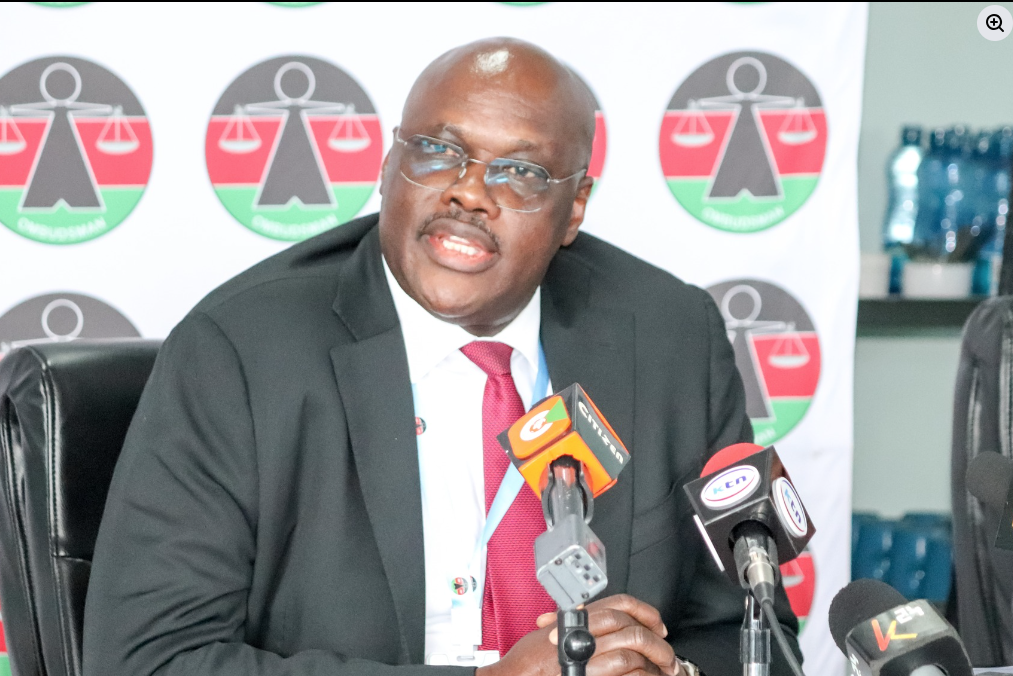
The Commission on Administrative Justice (CAJ), also known as the Office of the Ombudsman, has recommended far-reaching reforms to address delays in the processing of teachers’ pension and death gratuity claims.
In a statement, the Commission said the proposed reforms aim to ensure the timely payment of benefits to retired teachers and their dependents, following an investigation into persistent complaints involving the Teachers Service Commission (TSC) and the Pensions Department.
Among the key recommendations is the re-establishment of a stand-alone pension processing unit within TSC, the deployment of additional staff, stronger supervision, and enhanced digitisation of pension systems to help clear long-standing backlogs. The Ombudsman also called for improved coordination between TSC and the Pensions Department.
The investigation found that pension payments for teachers who retire compulsorily are delayed by between two and four years, while death gratuity claims take between four and more than six years to be settled.
Commission chairperson Charles Dulo said that although some delays were linked to beneficiaries submitting incomplete or inaccurate documentation, these factors did not account for the length of the delays experienced.
“While documentation challenges do occur, they were not the predominant causes of the prolonged delays faced by retirees and their families,” Dulo said.
At TSC, the Commission attributed delays largely to inadequate staffing, the integration of the pension unit into mainstream human resource functions, limited resources, weak supervision, and low levels of digitisation. These challenges were compounded by the heavy workload handled by a small number of officers.
At the Pensions Department, delays were linked to frequent downtimes of the Pension Management Information System (PMIS), reliance on outdated communication methods, inconsistencies in supporting documentation, and an increasing backlog of “keep-in-view” files, particularly for death gratuity claims.
The investigation also identified cases where inaccuracies in dependants’ details contributed to delays, especially in complex family situations such as polygamous households or cases involving children born out of wedlock. The Commission noted that such cases often required additional verification by local administrators.
The inquiry was prompted by a rise in public complaints, including concerns shared on social media and formal submissions by retired teachers and their next of kin. Complainants cited prolonged waiting periods, missing files, lack of feedback, repeated requests for corrections, and numerous visits to TSC offices without resolution.
To address the challenges identified, the Ombudsman issued comprehensive, time-bound directives to both TSC and the Pensions Department. These include modernising pension workflows, reviewing documentation requirements, establishing joint case-tracking systems, publishing information on pending claims, and conducting regular staff training.
TSC has been directed to submit pension claims early, re-establish a dedicated pension unit, upgrade its systems, strengthen internal supervision, conduct annual biodata update campaigns, and review policies related to pension overpayments.
The Pensions Department has been instructed to strictly implement a verifiable First-In-First-Out payment system to promote fairness and transparency.
The Commission also urged the Cabinet Secretary for the National Treasury to ensure the timely allocation and disbursement of pension funds, noting that prolonged delays undermine retirees’ constitutional right to social protection.