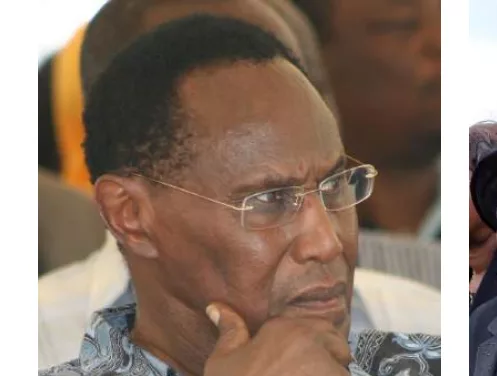
On Wednesday night, January 7, senior lawyer Miguna Miguna declared that he will contest the presidency in the 2027 General Election.
The former Nairobi Governor aspirant announced during a live interview on TV47.
Miguna said his decision is anchored on what he described as a transformative and people-centred agenda.
“I am going to vie for the presidency of the Republic of Kenya in 2027, and I am going to do it on a transformative vision,” he said.
“A vision that identifies the interest of the people of Kenya as the core and the foundation of moving the country forward.”
He added that his agenda would be guided by values that depart from current governance approaches.
“It is a vision that is built on integrity and is built on socialism, not capitalism,” Miguna stated.
Miguna’s declaration has thrust an old constitutional question back into national focus: can a Kenyan with dual citizenship contest for the presidency?
While the country has previously debated the issue around cabinet appointments and county positions, few cases have brought national attention to the matter at the presidential level.
To answer this question, it is necessary to understand what the Constitution says, how the law is applied, the historical context behind the dual-citizenship debate, what court rulings have clarified so far, and what this framework means for Miguna Miguna or any other aspiring presidential candidate who holds more than one nationality.
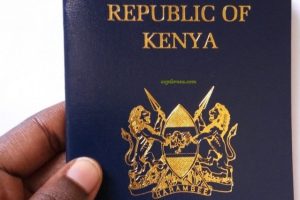
Miguna is a Kenyan-born citizen who also holds Canadian citizenship, which he acquired while in political exile.
He has consistently stated publicly that he still retains both citizenships.
In 2018, a clash ensued between the government and Miguna over his Kenyan citizenship.
“I have never, ever renounced my Kenyan citizenship and will never do that. I’ve never even contemplated it,” he said in February 2018.
Then, the Ministry of Interior said Miguna “automatically” lost his Kenyan citizenship when he acquired Canadian citizenship, saying the repealed Constitution allowed only one nationality, a claim Miguna denied.
According to the government, after the new Constitution came into force, Kenyans who had lost their citizenship as a result of acquiring other nationalities were required to officially apply afresh in a bid to regain their citizenship, something they claimed Miguna failed to do.
In December 2018, the High Court affirmed that Miguna remained a Kenyan citizen.
In his ruling, Justice Chacha Mwita awarded Miguna Sh7 Million for violation of his rights adding that citizenship by birth could not be revoked.
"Even if the petitioner (Miguna) acquired Canadian citizenship, he did not lose his Kenya citizenship. He remains a citizen of Kenya,” he ruled.
Regarding the issue of dual citizenship and holding public office, the law is clear, but also nuanced, especially in cases involving Kenyans who acquired foreign citizenship before the 2010 Constitution came into force.
Constitutional foundation: What the law says about dual citizenship
a) Article 137 – Qualifications for President
Article 137 of the Constitution outlines who can run for President.
A candidate must be a Kenyan citizen by birth, be qualified to stand for election as a Member of Parliament and be nominated by a political party or run as an independent.
Other qualifications are that he or she should be of sound mind and not bankrupt, and not have served two presidential terms.
The Constitution does not explicitly mention dual citizenship in Article 137.
This is where many misunderstandings arise. The restriction is actually found elsewhere.
b) Article 78 – State Officers and Dual Citizenship
Article 78(2) of the Constitution states:
“A State officer or a member of the defence forces shall not hold dual citizenship.”
This clause applies to all State offices, including the presidency, which is constitutionally defined as a State office under Article 260.
c) Exception for Kenyans by birth
Article 78(3) provides:
“Clause (2) does not apply to—(a) a person who has citizenship of a country by operation of that country’s law, without ability to opt out.”
However, this exception is not a blanket exemption for all dual citizens.
It only applies in limited circumstances where a Kenyan automatically acquires another citizenship, and they cannot voluntarily renounce it.
This does not cover situations where a Kenyan actively applied for citizenship in another country.
d) Leadership and Integrity Act, 2012
Section 31(2) states:
“A person who holds dual citizenship shall, upon election or appointment to a State office, not take office before officially renouncing their other citizenship in accordance with the provisions of the Kenya Citizenship and Immigration Act (Cap. 170).
This reinforces that the issue is not at the nomination level but at the level of holding the office.
What the law means in practical terms
The Constitution does not stop a dual citizen from joining a political party, campaigning, seeking nomination and presenting candidature to the IEBC.
But it does bar a dual citizen from holding the office of president unless they renounce their foreign citizenship first.
In Mohamed v Alio & others (Petition E685 of 2025), the High Court at Nairobi dismissed a pre-election challenge to the nomination of a parliamentary candidate on the basis of dual citizenship.
The petitioner argued that the respondent was disqualified due to alleged dual nationality and identity documentation issues.
The court found the complaint was premature and time-barred, noting that dual citizenship restrictions in Article 78 of the Constitution apply only when a person assumes a State office, not at the nomination stage.
It ruled that a dual citizen may contest but must renounce foreign citizenship before taking office. The petition was dismissed.
“A dual citizen who is a Kenyan citizen is eligible for nomination, election or appointment, but once he assumes office, he or she cannot be a dual citizen, meaning renunciation has to be made before formally assuming the office of the State Officer,” a 2025 ruling by Justice Lawrence Mugambi states.
Additionally, a precedent case before the Court of Appeal attracted this ruling:
“Parliament, while enacting Section 32 of the Leadership and Integrity Act, interpreted Article 78 (2) correctly.
The proscription in Article 78 (2) is not against a dual citizen being elected as a State Officer. The restriction is against leadership by a dual citizen in the specified state offices, and it does not apply unless and until a person is elected and/ or appointed to a State Office.
That is a material fact which must be borne in mind. A dual citizen is eligible to seek nomination for election as a Member of Parliament or member of County Assembly or County Government in an election, and also eligible to hold any state office.
However, a dual citizen is disqualified upon election or appointment to a state office from assuming office before voluntarily and officially renouncing his other citizenship, however granted in accordance with the Kenya Citizenship and Immigration Act unless Article 78 (3) provides he has no ability under the laws of the other country to renounce citizenship of the other country….”
Thus, an aspirant with dual citizenship has two options:
(1) Renounce foreign citizenship before presenting nomination papers
This is the safest and most straightforward path, ensuring compliance at the point of vetting.
(2) Vie while still a dual citizen, but renounce before being sworn in
This aligns with the Leadership and Integrity Act, which requires renunciation before assuming office.
Either way, the renunciation must be documented by the foreign state, and acknowledged by the country’s immigration authorities through a formal registration.
No candidate can take the oath of office while still holding another nationality.
Historical and legal context: Why Kenya included this clause
The dual-citizenship restrictions were introduced during the constitutional reform process between 2003 and 2010.
They were partly influenced by concerns about loyalty and national security, fears that holders of foreign passports could face divided allegiances, the need to align with security vetting requirements for strategic State positions, and comparative practices in other jurisdictions (e.g., Ghana, Tanzania).
During the Bomas and Naivasha phases of constitutional review, the clause was debated extensively.
The final text reflected a compromise: allowing Kenyans to hold dual citizenship as ordinary citizens, but restricting it for State officers.
What renunciation actually requires
The renunciation process includes submitting a formal renunciation request to the foreign state, where different countries have different procedures. In Canada, one must apply to Citizenship and Immigration Canada, pay fees and receive a certificate of renunciation.
The second step is receiving formal confirmation, where the foreign state must acknowledge that citizenship is withdrawn.
The individual is then required to register renunciation with Kenya’s immigration authorities, making it official in Kenyan records and producing proof to IEBC (if required).
IEBC has previously requested documentary evidence from dual citizens seeking a State office.
Without completing these steps, no dual citizen can take office as president.
Miguna’s declaration has reopened a significant constitutional debate on presidential eligibility for Kenyans with dual citizenship.
The Constitution provides: a person cannot assume the presidency while holding citizenship of another country.
The requirement does not prevent campaigning or contesting, but it does mandate formal renunciation before taking office.
As the 2027 elections draw nearer, the issue is likely to remain part of the national conversation, both for Miguna and for any other aspirants with dual nationality.