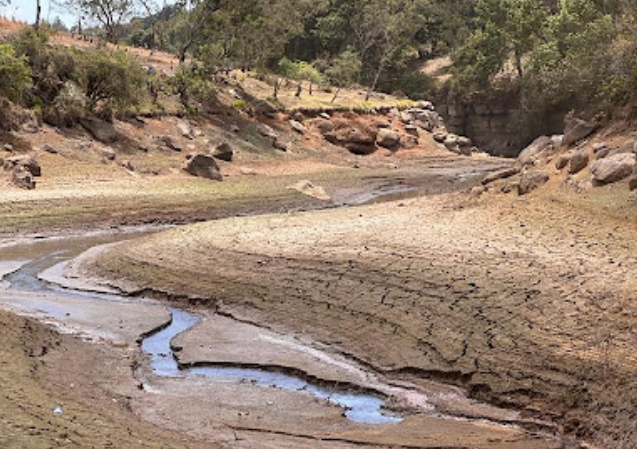
 A dry wetland following prolonged sunny and dry conditions. /FILE
The Kenya Meteorological Department has warned that most parts of the country are set to experience predominantly sunny and dry weather conditions for much of January.
The agency has urged national and county authorities, as well as humanitarian agencies, to take early action to avert potential loss of lives and livelihoods.
In its latest outlook, Kenya Met says that although a few areas may receive occasional rainfall, the prevailing dry conditions are expected to intensify, particularly in the northern and eastern parts of the country.
The agency cautions that the prolonged dryness is likely to worsen food insecurity as the availability of food, water and pasture continues to decline.
“The current dry conditions being experienced over the northern and parts of the eastern sectors of the country are expected to exacerbate. The limited pasture and water over the ASAL areas may lead to resource-based conflicts among pastoral and farming communities,” the department said.
According to the weatherman, the situation could also trigger an increase in malnutrition-related diseases, especially in northern Kenya, where vulnerable populations are already under strain.
Kenya Met has advised that contingency plans be put in place to ensure the timely provision of food and nutritional supplements to the most at-risk communities.
The department further warned that the extended dry spell may result in reduced water levels in reservoirs, lakes and ponds.
This, it said, could create favourable conditions for wildfires in forests, national parks and reserves, posing an additional threat to ecosystems and nearby communities.
Despite the generally dry outlook, Kenya Met noted that a few regions are likely to experience occasional rainfall during the period under review.
These include the Highlands West of the Rift Valley, the Lake Victoria Basin, the Central and Southern Rift Valley, the Highlands East of the Rift Valley — including Nairobi County — the Southeastern Lowlands and the Coastal strip.
Counties expected to receive intermittent rainfall include Siaya, Kisumu, Homa Bay, Migori, Kisii, Nyamira, West Pokot, Trans Nzoia, Baringo, Uasin Gishu, Elgeyo-Marakwet, Nandi, Laikipia, Nakuru, Narok, Kericho, Bomet, Kakamega, Vihiga, Bungoma and Busia.
However, the department emphasised that these rains are likely to be sporadic and insufficient to significantly reverse the prevailing dry conditions across the country.
Kenya Met added that the sunny and dry weather is expected to persist into February and March, with temperatures projected to remain above average in most regions.
Maximum daytime temperatures in northwestern counties such as Turkana, West Pokot and Samburu, as well as northeastern counties including Wajir, Garissa, Isiolo, Mandera and Marsabit, are forecast to range between 30°C and 40°C during the period.
Daytime temperatures in both the northeast and northwest are expected to remain high and may occasionally rise beyond 37°C, increasing the risk of heat-related stress.
In light of these conditions, the department has advised relevant authorities to intensify water trucking efforts to support the most vulnerable communities.
It also called on agencies to identify high-risk households and ensure they have access to adequate water supplies.
“The public is advised to invest in water harvesting practices and techniques to harness rainwater in areas where occasional rainfall is expected,” Kenya Met said.
The prolonged dry spell, the agency warned, may also escalate human-wildlife conflict in ASAL areas as wildlife migrates in search of water and pasture.
To mitigate this risk, authorities have been urged to provide fodder and establish watering points for wildlife to reduce competition with local communities.
Additionally, Kenya Met cautioned that high temperatures could lead to heat stress and related discomforts such as headaches and fatigue.
Members of the public have been advised to stay well hydrated, limit exposure to direct sunlight and avoid strenuous outdoor activities, particularly in the afternoons.