
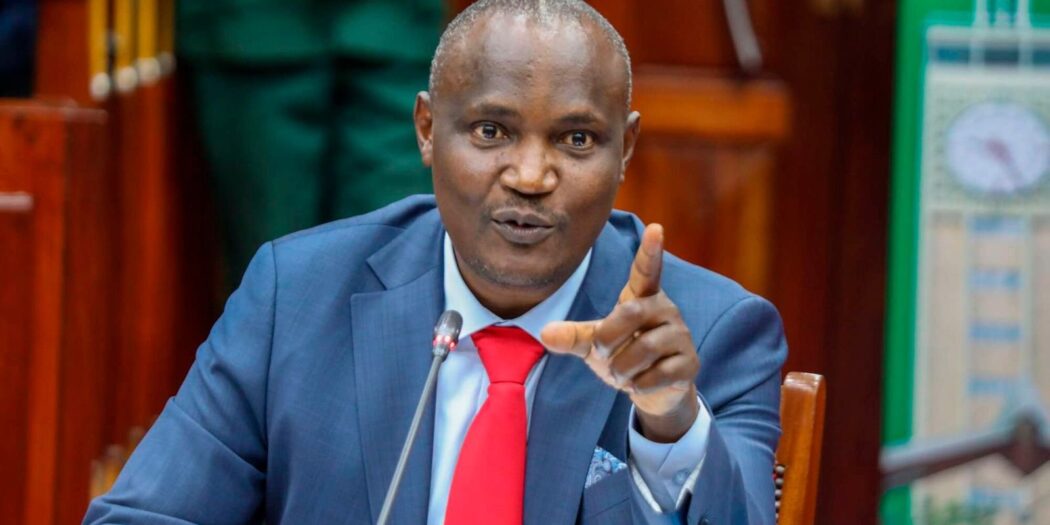
 Treasury Cabinet Secretary John Mbadi/FILE
In the run-up to the 2027 elections, Treasury Cabinet Secretary John Mbadi is poised to allocate Sh330 billion for key state agencies responsible for security and election management.
This windfall, framed as part of President William Ruto’s election-year budget, is essential for strengthening the country’s national security apparatus in the face of escalating local, regional and international challenges.
The Ministry of Interior is slated for an additional Sh7 billion, increasing its budget to Sh42.9 billion. The police service, led by Inspector General Douglas Kanja, is also set to receive a Sh12 billion increase, bringing their total budget to Sh139 billion. This influx of funds is essential for enhancing law enforcement capabilities, particularly as the nation anticipates a potentially contentious electoral period marked by uncertainties.
Allocations to other agencies with electoral responsibilities are also notable. The Independent Electoral and Boundaries Commission is expected to receive an extra Sh15 billion, boosting its total allocation to Sh24.9 billion. Nevertheless, this remains just a fraction of the Sh61 billion that the IEBC claimed it needs to effectively conduct elections. The agency has stressed the urgency for adequate resources, as delays in funding and logistics could hinder their preparedness.
Kenya's security environment is shaped by numerous factors, necessitating these increased allocations. Locally, the threat of terrorism, especially from groups such as al Shabaab, remains a significant concern. The group's activities in neighbouring Somalia pose a direct security risk to Kenya, making it imperative for the NIS and police to collaborate effectively to prevent attacks.
Regionally, Kenya's geopolitical position as a key player in East African security and stability adds another layer of complexity. Instability in nearby nations—South Sudan's ongoing civil war and the volatile situation in Ethiopia—can have spillover effects that jeopardise Kenya’s own security framework. This heightened regional tensions underscore the need for well-funded and properly coordinated security operations.
Internationally, Kenya engages in global counter-terrorism efforts, and as such, must ensure that its intelligence and policing agencies are adequately equipped to operate within intricate global security dynamics. As the country moves towards elections, the focus on securing the electoral process against both internal and external threats becomes paramount.
The proposed budget reflects a broader shift in fiscal policy, as it is not only focused on security but also aims to enhance various governmental services. For instance, the Office of the Deputy President will receive an extra Sh500 million, while the Office of the Prime Cabinet Secretary will be allocated an additional Sh470 million.
Members of Parliament's budgets have also increased, with Parliament set to receive Sh48.7 billion—an increase of about Sh900 million. The Judiciary, crucial for upholding electoral integrity, is to receive Sh29.9 billion, marking a Sh3 billion increase.
Despite these budget boosts, questions arise regarding their sustainability. The government faces a staggering deficit of Sh1.1 trillion, necessitating reliance on loans amounting to Sh1 trillion from local lenders and Sh90 billion from international sources. This financial strain raises concerns regarding the balance between funding key security measures and addressing deficits in critical sectors like education and health.
As the budget undergoes assessment, accountability remains a pressing concern. The National Treasury has urged ministries to prioritise high-impact activities and eliminate low-priority expenditures. This directive is critical to ensure that the increased allocations translate into tangible benefits for the populace.
There has been criticism regarding the substantial funding directed toward high offices, with calls for scrutiny into whether such expenditures yield beneficial outcomes for Kenyans. A recent inquiry by the National Assembly Security Committee has questioned the effectiveness of funding for various state agencies, particularly in the wake of increasing non-discretionary expenditures that threaten to overshadow potential gains.
INSTANT ANALYSIS
A well-resourced and transparent security sector is essential for upholding the rights of citizens and ensuring that elections are conducted fairly and safely. The government’s focus on security funding must, therefore, be complemented by diligent oversight to ensure that every shilling spent contributes to a safer and more democratic Kenya. With an increasingly complex security landscape bearing down on the nation, the successful implementation of this budget could not only protect elections but also bolster national resilience in the face of diverse challenges.







