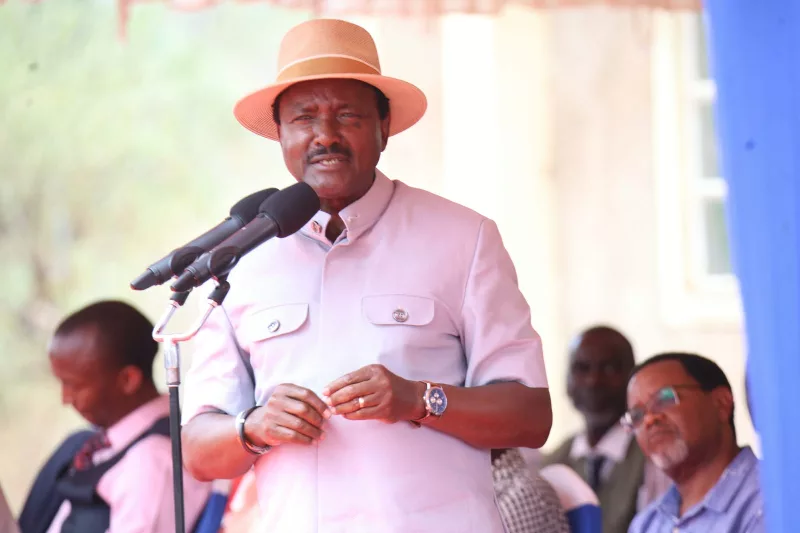
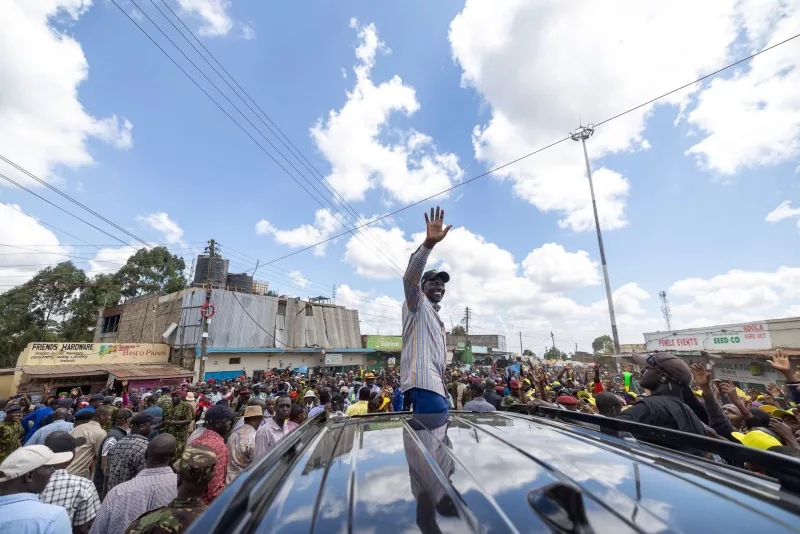
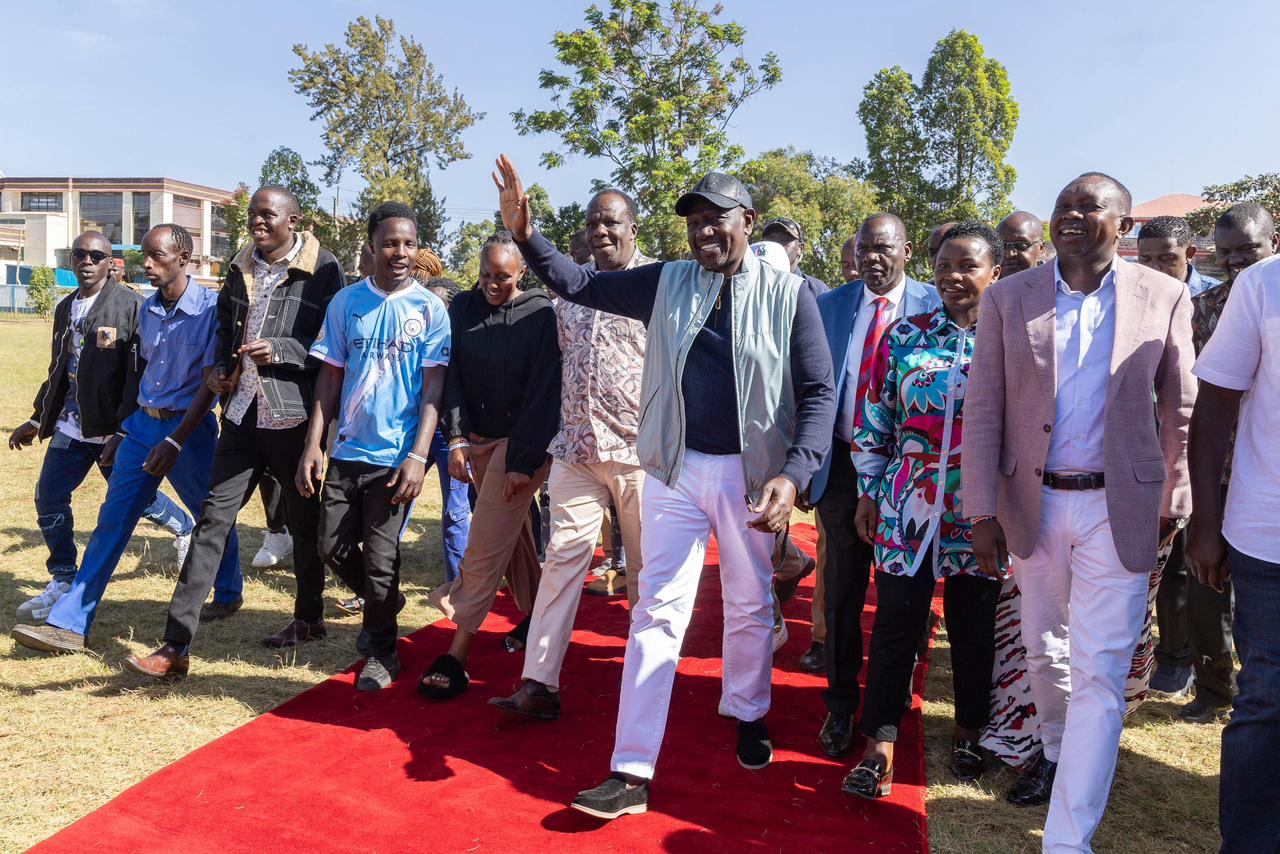
 President William Ruto receives a warm reception alongside other leaders during the disbursement of the Nyota Business Start-Up capital in Eldoret on January 8, 2026/PCS
President William Ruto has responded to remarks by his former deputy, Rigathi Gachagua, suggesting that the best schools in the central region should be reserved for students from the area.
Gachagua, who is now the leader of the Democracy for the Citizens Party (DCP), sparked controversy earlier this week after claiming that learners from the Mt Kenya region were being unfairly disadvantaged in the ongoing school placement exercise.
Speaking on Tuesday during a church service, the former deputy president alleged that children from the region, despite posting high marks, were being sent to far-flung and 'low-quality schools', while learners from other regions were allegedly being admitted to top institutions.
“Around here, our children have been placed in small schools, yet their marks are high, while other people have been brought to our schools,” Gachagua said.
On Thursday, President Ruto addressed the issue during the Nyota Business Start-Up Capital Disbursement event, urging young people not to be influenced and emphasising the importance of keeping children out of political debates ahead of the 2027 general election.
The President was speaking during the Nyota Business Start-Up Capital Disbursement event for Uasin Gishu, Nandi, Elgeyo Marakwet, Trans Nzoia and Turkana counties, held at the Eldoret Sports Club.
Ruto described attempts to politicise school placement as desperate and harmful, urging leaders to keep children out of political battles.
“How desperate can people be? Let our children be, let our children learn. Those children are Kenyans, wherever they come from, whatever community they belong to, they are our children — the children of Kenya,” he said.
The controversy comes at a time when the Ministry of Education is conducting the second phase of the Grade 10 placement revision exercise.
The ministry has allowed learners dissatisfied with their placement results an opportunity to apply for revisions, with the exercise running until January 9.
The ministry has explained that the placement of the 1.13 million learners transitioning to senior school is fully automated.
Officials have emphasised that school selection is based strictly on learners’ choices and their performance in the Kenya Junior School Education Assessment (KJSEA), not on ethnicity or region.
Following Gachagua’s remarks, the National Cohesion and Integration Commission (NCIC) issued a statement condemning suggestions that school placement should be determined by regional or ethnic considerations.
The commission warned that such views run counter to the principles of integration, equality and meaningful interaction among learners from diverse backgrounds.
Alumni associations from Mang’u High School and Alliance High School also joined in the condemnation, stressing that the institutions do not belong to any single community, region or political constituency.
They noted that the schools have historically served learners from all parts of the country and remain committed to nurturing young Kenyans united by character, discipline and academic excellence, regardless of background.
Political leaders also weighed in, with Githunguri MP Gathoni Wamuchomba warning against the dangers of politicising education.
“Dragging tribal politics into education is reckless and dangerous. Our classrooms must unite the nation, not divide it,” she said.
Chepalungu MP Victor Koech echoed similar sentiments, arguing that admissions to national schools should never be politicised.
“Tenwek is a national school located in Baringo County. The school has students from all walks of life. We have Kaplong High School; the students there are not only from the Kipsigis community,” Koech said.
“So, Alliance High School is a national school that belongs to all Kenyans,” he added.