South Sudan is facing renewed scrutiny over the strength and resilience of its national institutions, amid concerns that recent leadership changes could undermine one of the country’s few examples of measurable reform.
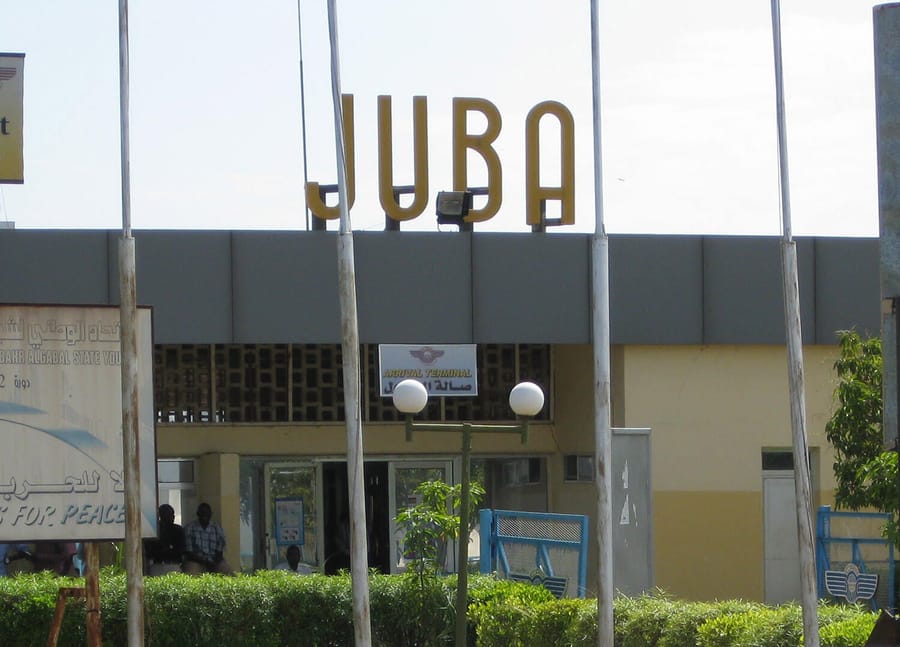
Despite being the world’s youngest nation, South Sudan remains among the most fragile states globally, with multidimensional poverty affecting close to 90 per cent of its population. Weak governance structures and persistent political instability have continued to limit the impact of institutional reforms. Within this challenging context, the South Sudan Civil Aviation Authority (SSCAA) had emerged as a rare case of progress driven by structured reforms and financial discipline.
Under previous leadership, the authority pursued a pragmatic reform agenda anchored in a Public-Private Partnership (PPP) model. Central to this approach was the introduction of a “ring-fenced” system for Air Navigation Services (ANS) fees, designed to protect revenue from diversion. Through the use of escrow accounts, funds generated by aviation services were reserved strictly for infrastructure development, operational improvements and capacity building.
This financial structure insulated the authority from external interference and created a predictable operating environment for service providers. As a result, staff salaries were paid on time and oversight systems were strengthened to levels previously absent in the sector. The reforms also brought the SSCAA closer to compliance with standards set by the International Civil Aviation Organization (ICAO), positioning the authority as a potential model for other public institutions in South Sudan.
However, recent leadership changes have raised questions about the future of these gains. The removal of senior officials, reportedly just days before a scheduled meeting to review and chart the future of existing partnerships, has been viewed by observers as a possible turning point. The appointment of new leaders without demonstrated experience in managing complex PPP arrangements or civil aviation oversight has heightened concerns over continuity.
There is growing unease that dismantling established safeguards could expose the authority to financial mismanagement and weaken South Sudan’s control over its sovereign airspace. Analysts warn that sidelining existing digital systems for citizen services and revenue tracking could erode the confidence of international partners, whose support has been critical to maintaining operational standards.
The developments at the SSCAA are increasingly being seen as a broader test of South Sudan’s commitment to the rule of law and institutional stability. In a governance environment where public revenues are often vulnerable to competing interests, the protection of functional and transparent financial mechanisms remains essential.
As the country seeks to consolidate fragile gains, experts argue that institutional integrity must take precedence over short-term leadership changes. Preserving the PPP framework at the SSCAA is not simply a technical issue, but a strategic necessity to ensure that one of South Sudan’s few functioning institutions continues to serve the public interest rather than reverting to patterns that have historically undermined national development.
Captain Atem Bol is an Aerospace Engineer.