 Sovereignty vs accountability/AI
Recent developments in the international arena have once again highlighted the critical interplay between sovereignty and accountability among nations.
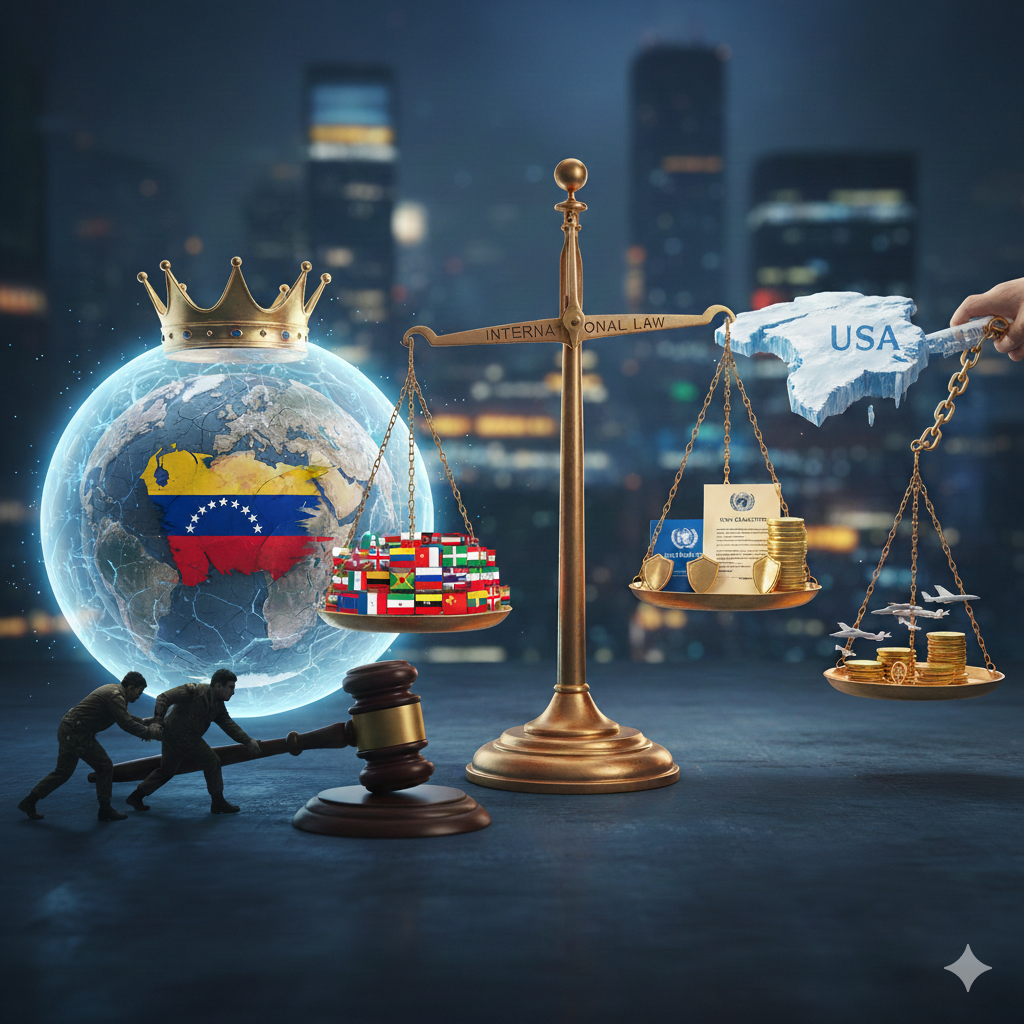
Two major events—the US capture of Venezuela’s President Nicolás Maduro and President Donald Trump’s repeated interest in Greenland—have sparked heated debates worldwide about the limits of state authority, national independence, and the responsibilities of powerful countries on the global stage.
In a dramatic turn of events over the weekend, US forces captured Venezuelan President Nicolás Maduro and his wife following a large-scale strike on Saturday.
The couple was subsequently removed from Venezuela and indicted on drug charges in New York.
The operation drew immediate international attention, with reactions ranging from strong condemnation to outright support.
Neighbouring Latin American countries condemned the actions, emphasising the violation of Venezuelan sovereignty.
Russia and China, longtime allies of Venezuela, expressed deep concern, with China stating that it was “deeply shocked and strongly condemns” the use of force against a sovereign country and its president.
Iran also criticised the strike as a “flagrant violation of the country’s national sovereignty,” while Russia’s Foreign Ministry described Maduro’s capture as an “unacceptable encroachment on the sovereignty of an independent state” and an “act of armed aggression” by the United States.
Despite the international outcry, there was also notable support for the US operation. Argentinian President Javier Milei, an ally of Trump, hailed the operation on social media, saying, “Freedom moves forward. Long live freedom.”
In Israel, Prime Minister Benjamin Netanyahu praised Trump for his “bold and historic leadership on behalf of freedom and justice,” commending the “decisive resolve and brilliant action of your brave soldiers.”
Meanwhile, the issue of sovereignty has also surfaced, albeit in a different context.
Trump has repeatedly expressed interest in acquiring Greenland, an autonomous territory of Denmark, citing the strategic importance of the island for national and international security.
Trump has revived this long-standing idea of purchasing or otherwise gaining control of Greenland, claiming that its resources and geographic position are essential for US defence and competitiveness, particularly in the face of rival powers like Russia and China.
Denmark and Greenland, however, have firmly rejected any notion of a sale or US takeover. European leaders have also reaffirmed Greenland’s sovereignty.
In a joint statement on Tuesday, leaders of seven European nations stressed that Greenland “belongs to its people,” adding that matters concerning Denmark and Greenland must be decided solely by Denmark and Greenland.
The statement further emphasised that the Kingdom of Denmark, including Greenland, is part of NATO, and that Arctic security must be achieved collectively with allies, including the United States, while upholding the principles of the UN Charter, including sovereignty, territorial integrity, and the inviolability of borders.
The contrasting reactions to Venezuela and Greenland highlight the delicate balance between national sovereignty and the interests of powerful states in global politics.
Sovereignty, at its core, refers to the supreme authority and independence a state has over its territory and people, free from external interference.
It is a foundational principle of international law and the basis for interactions among nations.
A sovereign state possesses the power to govern itself, create laws, control its resources, and conduct domestic and foreign affairs independently.
This encompasses law enforcement, taxation, provision of security, and the determination of political, economic, and social systems.
No external actor has the legal right to intervene unless permitted by international agreements.
Sovereignty also implies equality among states at the international level, allowing countries of all sizes to engage in diplomacy, sign treaties, and join organisations like the United Nations as independent entities.
However, sovereignty is not absolute. In an interconnected world, countries may voluntarily limit aspects of their sovereignty by joining international treaties or regional bodies to tackle shared challenges such as security, trade, climate change, and human rights.
Despite these limitations, sovereignty remains essential for preserving national identity, self-determination, and political independence.
Accountability complements sovereignty by ensuring that states act responsibly within their borders and on the global stage.
Accountability refers to the responsibility of governments to adhere to their laws, international agreements, and global norms. It promotes good governance, transparency, and adherence to the rule of law.
At the national level, accountability is enforced through democratic institutions, including elections, independent courts, parliaments, and oversight bodies.
These mechanisms empower citizens to question leaders, demand explanations, and seek redress when laws are violated or public resources are misused. A free media and an active civil society also play key roles in holding governments to account.
On the international stage, accountability is upheld through treaties, conventions, and organisations that monitor compliance on issues like human rights, trade, security, and environmental protection.
States that fail to meet their obligations may face sanctions, legal actions, or diplomatic pressure. Accountability strengthens trust, stability, and responsible leadership globally.
Sovereignty and accountability are not mutually exclusive; in fact, they reinforce each other.
Sovereignty grants a state the authority to govern itself, while accountability ensures this power is exercised responsibly. Together, they support good governance, uphold the rule of law, and foster sustainable international relations.
The events surrounding Venezuela and Greenland underscore the ongoing challenges of respecting sovereignty while balancing global security, strategic interests, and international law.