Public relations companies in Kenya play several strategic and practical roles that help organisations manage communication, build reputation, engage stakeholders and achieve business or social goals.
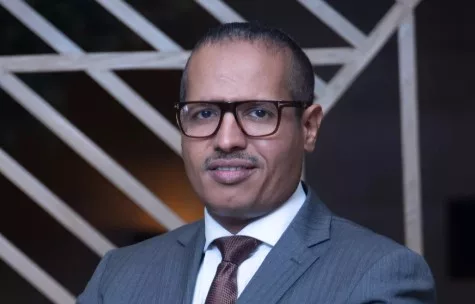
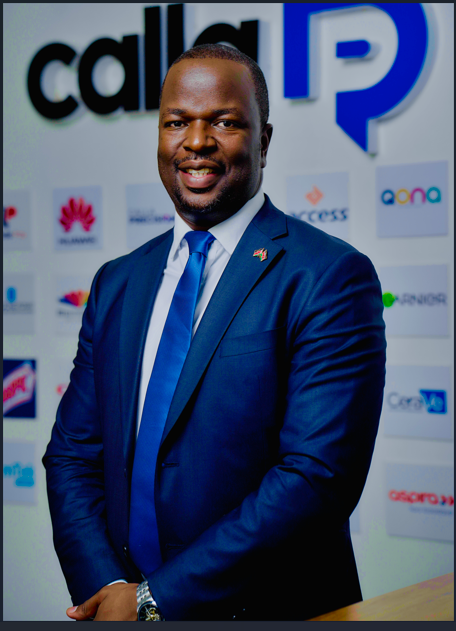
The Star spoke to Kevin Otiende, Founder and Managing Director of Calla Public Relations (Calla PR), a prominent public relations and communications agency based in Nairobi, Kenya, on his personal journey as an industry expert and the future of PR in fast-changing, digital-first enviro
He is a well-known figure in the Kenyan PR industry and was named one of Kenya's Top 50 Most nfluential CEOs in 2024. Otiende established Calla PR in April 2017 after seven years of employment in the media and PR industry, including roles at Capital FM Kenya, CGTN Africa and PMS Group Africa.
Who is Kevin Otiende — from your journalism roots and early career in media to founding Calla PR and emerging as a key voice in Kenya's communications and tech-enabled business ecosystem?
Well I consider myself a Pan-African focused entrpreneur with a focus on communications and technology. I started Calla PR close to a decade ago to offer strategic communications services to businesses and organisations of all sizes including multinationals.
Today, we serve banks and financial services players, FinTechs, manufacturers, healthcare service providers, energy, retail, beauty industry as well as consumer goods among others.
What inspired you to launch Calla PR and how did the initial challenges in Kenya's PR and communications landscape shape the company's early focus on strategic storytelling and reputation management?
My original inspiration was initially to try out this entrpreneurship thing after years of employment. I must admit while I believe employment moulded me, I was not feeling fully fulfilled as I was limited by protocols and bureacracy.
But along the way as I delved deeper into business and specifically in the PR industry, I realised just how much impact business can achieve–it cuts across virtually all sectors, it grows businesses, it creates jobs and helps magnify innovation. There, I found my purpose.
I strongly believe that if it is not known, it will be concluded it didn’t happen. Businesses in Africa do quite a lot, but a lot is not known about what they do. Yet their potential remains constrained by many dynamics including primarily lack of good communication coupled with other factors. Business in Africa, especially MSMEs employ over 90 per cent of the population and have the capabilities of improving lives, but only if helped to present their value propositions, and that is where Calla PR comes in.
A product is as good as its sold, a service as its proof points make sense to users. We’ are focused on connecting businesses to their markets anywhere in Africa.
In what ways has your background in journalism influenced how Calla PR approaches brand building and how does this foundation still play a role amid today's rapid digital shifts in Kenya?
It’s simple–everyone has a story and it is the manner in which these stories are told that sets us apart. Secondly, I believe only you can tell your own story, no one comes from a different space to tell your story and therefore brands have to own theor narrative. Thirdly and also most importantly, these stories have to be packaged in a relatable manner.
A lot of times we dedicate much energy to put together inttricacies and compexities of life, but at the end of the day there is sophistication in simplicity. Probably millions of brands are churning out content on a daily targeting the same consumers we are targeting, so it’s best to package it in a catchy and punchy manner that is consumed relatively quickly because again, decisions have to be made fast.
As an ex-journalist, I was taught to have the nose for news. It is critical for brands to know what actually and truly sells, so they learn how to refine that which the audience expects.
As Kenya positions itself as East Africa's innovation and tech hub in 2025—with booming sectors like fintech, digital economy and startups—how does Calla PR differentiate itself in helping businesses navigate this competitive and fast-evolving market?
Kenya has indeed solidified its reputation a Africa’s innovation and tech hub which stems from a combination of factors including groundbraking innovation, high mobile penetration with good digital infrastructure and a vibrant start-up ecosystem that refuses to slow down and for the right reasons. But it is not by luck neither is it by accident, but our tech ecosystem is built on the backdrop of real world impact; from mobile money revolution to disruptions in healthcare, payments, education and even food security.
As I alluded to above, none of these would be possible or scalable without comprehensive strategic and measurable communication strategies to break down use cases to stakeholders that include businesses, consumers, governments and other actors.
Our X-factors has always been to understand the business objectives of each solution or brand, interrogate how its end users would perceive it or expect to receive it, and marry the two to achieve brand awareness, appreciation and ultimately conversion that leads to revenue generation.
And it is all beginning to make sense all around. We are seeing technology create jobs, enhance others, make businesses more resilient and we’re also seeing just how much of a wealth creator technology is–which is good for innovators, good for our young people, good for governments and good for Africa as we advance at taking our rightful place on the global stage.
You have expanded Calla PR beyond traditional PR into tech-driven solutions. What key market gaps in Kenya and the region drove this evolution?
With close to a decade operating in East Africa, we have continued to mature and build a resilient agency. As we interact with a diverse range of businesses, we have been left with no choice but to also adapt into the changing times. We recently took a strategic decision to diversify the business with a particular emphasis on a solutions-based approach. We have intensified our offering beyond Kenya and recently set shop in Tanzania. Our services now span Kenya, Uganda, Tanzania, Rwanda, Zambia and Ethiopia, with partnerships in South Africa and Nigeria that help us offer the same services.
Looking at the current Kenyan business landscape marked by high growth in digital infrastructure, AI adoption and challenges like access to funding and market testing, what pivotal realisation led you to integrate technology so deeply into your services?
As we accelerate the growth of the agency, we have also been building our tech capabilities and the beauty with technology is if a solution works it works no matter your background.
If it is solving a particular gap, it’s tangible and can speak for itself. For example, we are soon launching a first of its kind food app which will be helping businesses in the industry–restaurants, supermarkets and hotels to sell surplus food which they would have otherwise wasted because on inventory left unpurchased.
Cumulatively the fresh food industry loses billions a year to wastage and these are the billions we are set to help them save.
The app will help customers purchase these meals at a huge discount of between 30 per cent and 70 per cent and what we’ are telling businesses, do not leave a dollar on the table! I honestly love what AI can do in and for so many aspects of our lives.
Even in our own industry, AI has helped us to enhance almost everything we do, with remarkable precision and speed. We shouldn’t see AI as a threat but most importantly as an enabler.
It’s easy to be left behind by technology especially if you’re not an early adopter, and in my interactions with various quarters I’m also sensing some significant levels of apprehension. But make no mistake, AI is as good as the prompter. It will give you results of what you feed it, so we have to learn to make use of it, refine our input and keep at it to get better results.
How do platforms like "Try it in Nairobi" help businesses, from SMEs to multinationals overcome barriers in visibility, connectivity and real-world validation in Africa's dynamic economy?
Through our extensive experience in the Kenyan market, we have discovered that businesses lose millions of dollars often by launching or releasing what to them are good solutions and obviously why they released them, but then these suffer low adoption for a variety of reasons. We have recently introduced a new service line called “Try It In Nairobi” to basically help businesses derisk by first through our guidance test the products or solutions with a tarteged live market before scaling.
This has helped many businesses including SMEs, large corporates and multinationals save cash they would otherwise spend on expensive development, launch and go-to-market and even marketing. Nairobi is ideal for the model thanks to our intricate market, middle class characteristics, fairly developed infrastructure and connectivity.
For multinationals, if it works in Kenya, it’s easy to replicate eslewhere in Africa. Part of the strategic services we offer under this vertical are product testing, stakeholder mapping, PR and case studies to help their markets understand and adopt quickly or at least in a fair amount of time.
In 2025's tech-forward business environment, where data, AI, and digital marketplaces are reshaping commerce and investment, how has technology transformed the way companies measure reputation, influence and market impact?
Technology helps because it has fundamentally transformed how companies measure reputation, influence and market impact, shifting from reactive, star-based metrics to proactive, signal-driven, and quantifiable systems.
AI-powered sentiment analysis now scans vast volumes of unstructured data across social media, reviews, news, and AI-driven search ecosystems in real time, detecting subtle trends, emerging crises, and emotional nuances with unprecedented accuracy while enabling predictive insights that help business leaders make informed, timely decisions.
What role do you see technology continuing to play in bridging African businesses to global opportunities while addressing local realities like regulatory compliance, data protection and inclusive growth?
Technology has already transformed Africa from a continent often viewed as a recipient of global aid and a primary consumer into a dynamic hub of innovation, with mobile money revolution like M-PESA scaling financial inclusion, insurtech like M-TIBA expanding the healthcare coverage of Kenyans, agri-techs that are helping farmers reach global markets and more.
Looking ahead, I see technology evolving as both a bridge and a buffer: connecting African businesses to global markets through seamless digital platforms, while embedding safeguards for local challenges like regulatory hurdles, data privacy, and equitable development.
This dual role isn't just opportunistic—it's essential for sustainable progress in a region where over 700 million mobile subscribers and 500 million internet users are fueling a digital economy projected to add $1.5 trillion to GDP by 2030 through AI and emerging tech. In bridging to global opportunities, tech will continue amplifying access for small and medium enterprises (SMEs), which form the backbone of African economies.
Platforms like mobile money services—building on successes such as M-Pesa—enable entrepreneurs in remote areas to participate in cross-border trade without traditional banking barriers.
For instance, blockchain and decentralised systems are streamlining supply chains, allowing a shea butter cooperative in Ghana to sell directly to buyers in Tokyo with verifiable traceability, reducing costs and opening export markets.
For example, initiatives like the African Continental Free Trade Area (AfCFTA) are leveraging digital public infrastructure, such as the newly launched ADAPT platform, to potentially double intra-African trade by 2035 and unlock $70 billion in additional value by cutting border clearance times in half.
It is important for Africa to note that while we are looking for outside markets, to achieve solid growth and resilient African economies and sectors, we must trade with ourselves and collapse unnecessary trade barriers. Inclusive growth remains the linchpin, where tech's role shifts from elite urban centers to broader empowerment.
Digital inclusion efforts, backed by investments in broadband and edge computing, will extend opportunities to rural and underserved populations.By 2030, if tech addresses these gaps, it could transform constraints into strengths, positioning Africa not as an exception in global tech but as a norm-setter for resilient, inclusive digital economies.
For emerging entrepreneurs and PR professionals in Kenya today, what advice would you offer on blending timeless communication skills with technological innovation to thrive in this era of rapid business and digital transformation?
Entrepreneurs need to appreciate that we can’t spend so much time and enormous resources only to lose out at the story-telling telling stage.
Competition is rife, and packaging is the ultimate decider. Invest as much time in marketing your solutions as you are developing them. Secondly, invest in technology in all the forms appropriate for your business, to be able to scale the market and reach new customers. Technology can both be used as a means of production and similarly a route to market. Social media has revolutionised how we reach consumers and sell to them.
Mobile money technology has changed how they pay and how we collect payments. There are businesses with no physical stores that sell millions a month just off TikTok and Instagram. More than ever people not only use TripAdvisor for information on their next tourist destination, but will go watch videos on TikTok and Instagram.
Businesses are conencting today more on LinkedIn than anywhere else, and professionals and creatives are getting discovered more on this platform. Third, let us learn to come out of our shells, occupy rooms and spaces our peers, partners and potential clients are and represent ourselves both locally and internationally. Fourth, let us learn to do reports and case studies.
These reports make markets understand our impact and investors appreciate the need to inject capital. Lastly, let us embrace collaboration. The people at the top are doing things more together than competing, pursuing mutual interests that benefit entire sectors. It is better to have a small piece of a big cake than a big piece of a small cake.