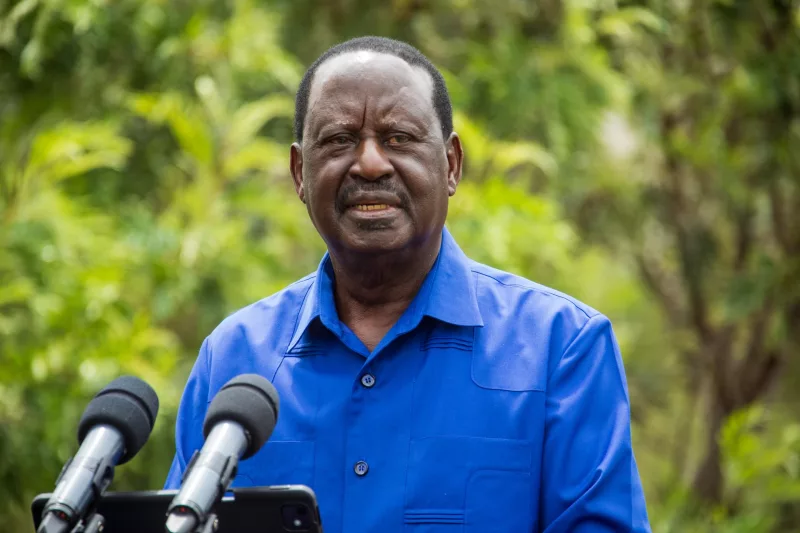
 Hon.Salah Maalim Alio.-Governance,Diplomacy,peace and Security management specialist and CEC Lands,County Government of Mandera./HANDOUT
Since October 2022, Kenya’s diplomatic posture has undergone a deliberate but consequential recalibration under the stewardship of Foreign Affairs Principal Secretary Sing’oei Korir.
Away from headline diplomacy and performative grandstanding, this shift has been marked by pragmatism, strategic clarity and a firm anchoring of foreign policy in Kenya’s national interests.
That clarity is grounded in Kenya’s 2024 Foreign Policy and made operational through Sessional Paper No. 1 of 2025 on the implementation of Kenya’s Foreign Policy, both of which Korir personally chaperoned and helped shape.
The impact of this reorientation is most visible in three critical theatres: the Middle East, the East African Community and the Great Lakes Region—each central to Kenya’s economic resilience, security, and regional influence.
In the Middle East, Kenya’s diplomacy has evolved from largely transactional engagement to a more structured, mutually reinforcing partnership model. The region remains indispensable for Kenya’s labour exports, energy security, investment inflows and diaspora welfare.
Under Korir’s guidance, the Ministry of Foreign and Diaspora Affairs has prioritised structured bilateral frameworks that address long-standing concerns around migrant worker protection while simultaneously expanding trade, investment and development cooperation.
This reflects a notable step change in policy thinking. Economic diplomacy is no longer treated as separate from citizen protection. By placing labour agreements, diaspora engagement and high-level political dialogue on the same strategic plane, Kenya has enhanced its credibility as a reliable partner while affirming its duty of care to citizens abroad. The result is a more balanced engagement—one that aligns economic ambition with social responsibility.
Closer home, EAC has seen renewed diplomatic energy from Nairobi. EAC is not merely a regional bloc; it is Kenya’s most immediate economic and political ecosystem. Korir’s tenure has coincided with a deliberate effort to re-anchor Kenya as a stabilizing and integrative force within the Community.
This has included sustained engagement on trade facilitation, regional infrastructure—most notably the Horn of Africa Gateway Project linking Isiolo–Wajir–Mandera to the triangular border of Mandera (Kenya), Suftu (Ethiopia), and Bulla Hawa (Somalia)—as well as the sensitive politics of enlargement and institutional reform.
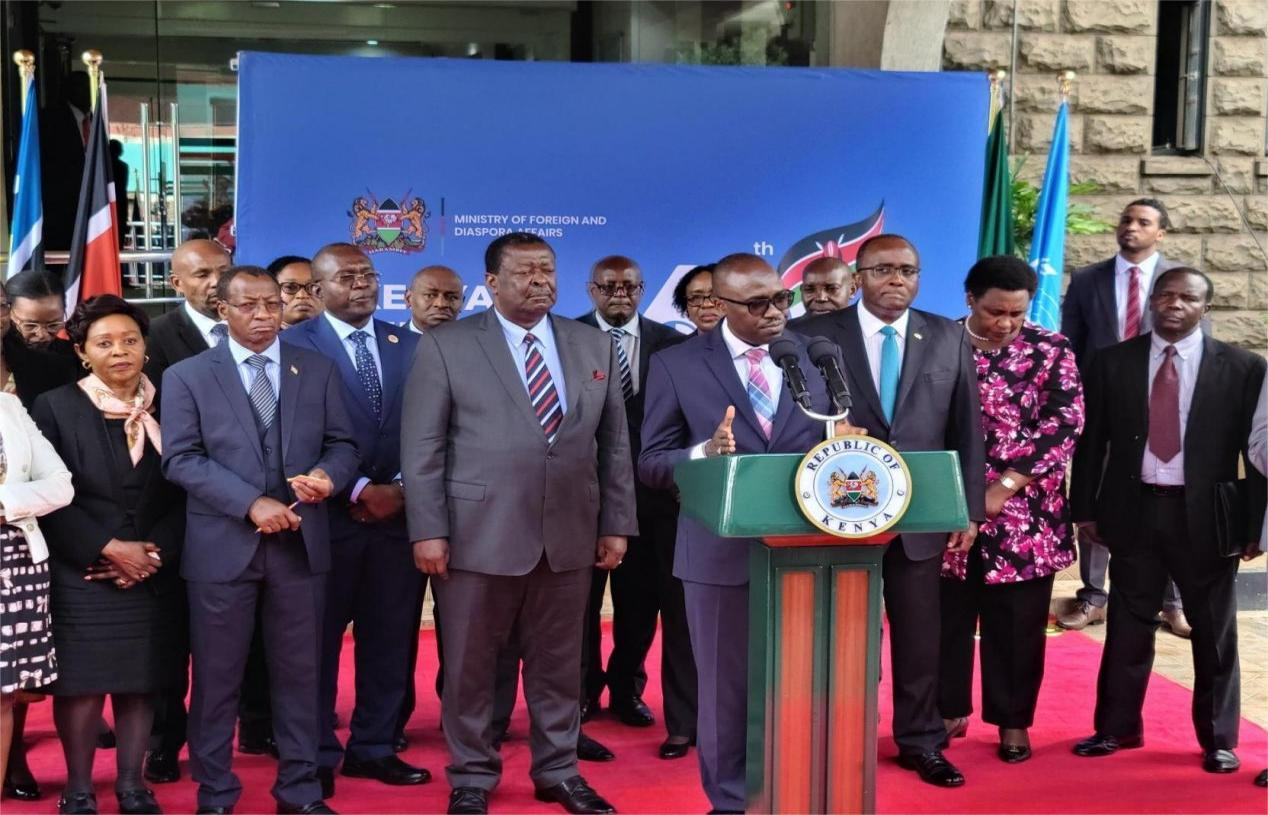 The Princpal Secretary of Foreign and Diaspora Affairs Dr.Singoe Korir addressing media brief on Foreign Policy Mashinani (File Photo).
Perhaps the most complex arena of Kenya’s diplomatic reorientation has been the Great Lakes region. Long characterised by political volatility and protracted conflict, the region demands a diplomacy that is both principled and pragmatic. Under Korir, Kenya has leaned into its role as a credible mediator and peace partner, reinforcing regional stability as a core pillar of national security.
This engagement has gone beyond rhetoric. Kenya has supported regional peace initiatives, emphasised multilateral solutions and worked closely with continental and international partners. The strategic logic is clear: instability in the Great Lakes is not a distant humanitarian concern, but a direct threat to economic growth, refugee management and regional trade corridors. Investing diplomatic capital in peace is, therefore, an investment in Kenya’s long-term prosperity.
What distinguishes this period is not dramatic policy reversals, but coherence between policy design and implementation. Beyond shaping the policy architecture, Korir has placed strong emphasis on localizing ownership of Kenya’s foreign policy through the Foreign Policy Mashinani Initiative. The initiative seeks to take the policy to its rightful owners—the people of Kenya—through inclusive town-hall engagements across all 47 counties, engaging diverse communities and stakeholders.
The first phases of this initiative, rolled out in Kisumu and Mombasa, were met with strong public participation and valuable real-time feedback. This “live” feedback mechanism allows the ministry to continuously fine-tune operational aspects of foreign policy implementation, ensuring responsiveness, relevance and national ownership.
In an era of shifting global power dynamics and heightened regional uncertainty, Kenya’s re-calibrated diplomacy offers an instructive model. It demonstrates that middle powers can shape their strategic environment not through noise, but through consistency, professionalism and foresight. As Kenya navigates an increasingly complex international system, the quiet but consequential shifts since October 2022 point to a foreign policy that is more confident, more grounded and more aligned with the lived realities of its people.
Ultimately, this transformation underscores a simple but powerful truth: effective diplomacy is not measured by rhetoric, but by results—delivered quietly, sustained patiently and anchored firmly in national interest. It is a reminder that Kenya’s strength abroad is inseparable from its coherence at home, and that diplomacy, when done right, does not seek applause—it earns trust.
The writer is a governance, diplomacy, peace and security management specialist