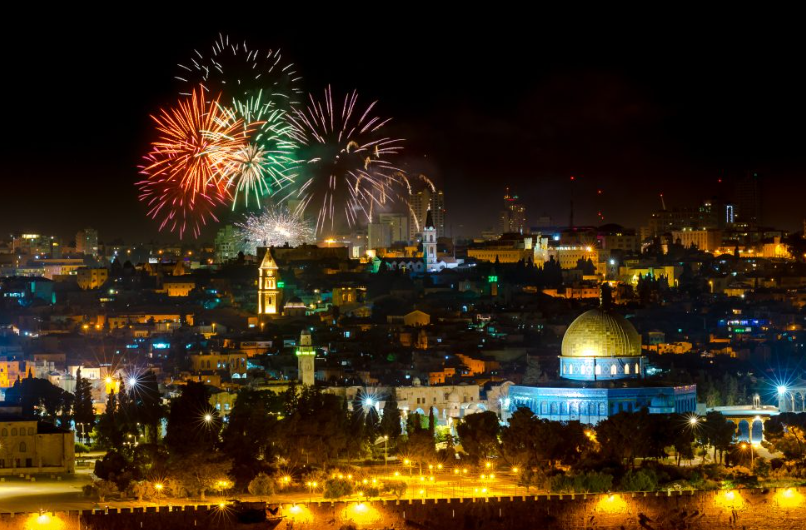
As fireworks light up major cities around the world on January 1, marking the start of a new year under the Gregorian calendar, millions of people elsewhere go about their day as usual.
For them, January 1 is simply another date, not necessarily the true beginning of the year.
While January 1 is widely recognised as New Year’s Day under the Gregorian calendar, not all countries consider it the most culturally significant start of the year.
Across the globe, several nations follow alternative calendars rooted in religion, history, or seasonal cycles, celebrating the New Year on dates that differ from January 1.
The origins of January 1 as New Year’s Day
The tradition of marking January 1 as the start of the year began with the Romans. During the reign of King Numa Pompilius (c. 715–673 BCE), January replaced March as the first month of the Roman calendar.
The choice was symbolic: January was named after Janus, the Roman god of beginnings, while March honoured Mars, the god of war. Some sources credit Numa with creating the month of January.
Evidence suggests that January 1 was not officially adopted as the start of the Roman year until 153 BCE. In 46 BCE, Julius Caesar introduced the Julian calendar, which retained January 1 as the opening day of the year. As the Roman Empire expanded, the Julian calendar spread across Europe.
After the fall of Rome in the 5th century CE, many Christian countries adjusted the calendar to align with religious observances. March 25 (the Feast of the Annunciation) and December 25 (Christmas) became common New Year’s Days.
By the 16th century, miscalculations in the Julian calendar had caused seasons and religious festivals, including Easter, to drift. To correct this, Pope Gregory XIII introduced the Gregorian calendar in 1582, restoring January 1 as the official start of the year.
While countries such as Italy, France, and Spain adopted the calendar immediately, Protestant and Orthodox nations were slower. Great Britain and its American colonies, for example, did not switch until 1752, celebrating New Year’s on March 25 until then.
Over time, non-Christian countries also began using the Gregorian calendar, with China adopting it officially in 1912. Yet, in many countries, traditional or religious calendars continue to determine the culturally significant New Year. Ethiopia, for example, celebrates Enkutatash in September according to its own calendar.
Gregorian calendar is not universal
Although January 1 has become a global civil standard, many civilisations in Asia, the Middle East, and Africa maintained their own timekeeping systems. These traditional calendars remain central to cultural and religious life, even in countries that officially follow the Gregorian calendar.
Islamic New Year
In Islamic countries, the New Year follows the lunar-based Hijri calendar. The Islamic New Year begins on 1 Muharram, a date that shifts approximately 11 days earlier each year relative to the Gregorian calendar.
In countries such as Saudi Arabia, Pakistan, Afghanistan, and Yemen, January 1 is not observed as a public holiday. Instead, the Islamic New Year is marked through prayer and reflection.
Religious scholar Sheikh Omar Khalid notes: “The Islamic New Year is a quiet and reflective time, focused on prayer and introspection. Unlike the Gregorian New Year, it is not about fireworks or parties, but marking the passage of time according to faith.”
Persian New Year – Nowruz
In Iran, Afghanistan, and parts of Central Asia, the New Year is celebrated during Nowruz, which falls on or around March 20–21, coinciding with the spring equinox. Nowruz, with roots over 3,000 years old, symbolises renewal, rebirth, and harmony with nature.
Families clean their homes, prepare traditional meals, and set up Haft-Seen tables with items representing health, prosperity, and new beginnings. Unlike January 1, Nowruz is astronomically determined, linked directly to seasonal cycles.
East Asia: Lunar New Year
In China, Vietnam, North Korea, and South Korea, the most important New Year celebration is the Lunar New Year, based on a lunisolar calendar. Falling between late January and mid-February, the festival—called the Spring Festival in China and Tết in Vietnam—often lasts up to 15 days.
Families reunite, honour ancestors, exchange gifts, and enjoy traditional foods. Firecrackers, dragon dances, and red decorations symbolising fortune dominate the celebrations. While January 1 is officially recognised, it lacks the cultural prominence of the Lunar New Year.
In North Korea, Seollal is a three-day family-focused celebration that includes traditional games, ancestral rituals, and meals such as tteokguk, a rice cake soup believed to bring longevity. Families exchange good wishes and money gifts to symbolise luck and prosperity.
South Asia: Solar calendars and agricultural roots
In Bangladesh, the new year, Pohela Boishakh, is celebrated on April 14 according to the Bengali solar calendar, marking the start of a new agricultural cycle with colourful processions, music, and traditional foods. Similarly, Nepal observes its New Year in mid-April following the Bikram Sambat calendar.
In India, new year dates vary by region and are often linked to harvest seasons or solar cycles. Different communities follow different calendars, resulting in multiple New Year celebrations throughout the year. January 1 is officially recognised for administrative purposes, but traditional festivals vary by region and belief system.
In Thailand, Songkran is celebrated from April 13–15 with nationwide water festivities intended to symbolise cleansing and renewal.
Ethiopia: Enkutatash
Ethiopia uses a calendar roughly seven to eight years behind the Gregorian system, consisting of 13 months. The Ethiopian New Year, Enkutatash, occurs in September, marking the end of the rainy season and the blooming of yellow daisies. The celebration has roots in Christianity and the country’s ancient history.
Israel: Rosh Hashanah
In Israel, January 1 is a regular working day. The Jewish New Year, Rosh Hashanah, is observed in September or October according to the Hebrew lunar-solar calendar. It is a solemn occasion marked by prayer, reflection, and family gatherings, with greater religious significance than the Gregorian New Year.