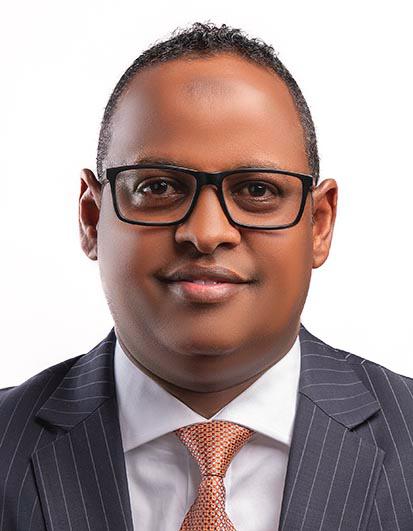
 Hon. Mustafa Abdirashid Ahmed MCA Iftin and current Deputy Speaker of Garissa County Assembly./COURTESY
Every political season breeds its own symbols, but few are as compelling or as contested as the idea that moral clarity can redeem a broken system.
In Garissa, where politics has grown heavy with compromise, the entry Dr. Ahmed Sharawe, a sheikh and academic into the senatorial race endorsed by a section of the ulama has stirred both hope and unease.
It is a moment that invites reflection not only on the candidate himself, but on the political environment he seeks to navigate.
There was a time when Garissa was spoken of with quiet pride. Leadership disagreements existed, but they rarely hardened into permanent divisions.
Public office was imperfect, yet it carried a sense of restraint, an understanding that authority was borrowed from the people and answerable to them.
Over the years, that ethos has steadily eroded. Politics has become louder, costlier, and more unforgiving. Money now speaks more clearly than ideas, clan arithmetic often outweighs competence, and influence determines outcomes more reliably than vision.
It is within this context that a morally grounded academic steps forward, offering a different image of leadership.
His candidacy resonates with citizens fatigued by transactional politics and recurring disappointment. Education, faith, and integrity promise relief from a cycle that feels endless. Yet Garissa politics, as it currently operates, has a way of testing such promises relentlessly.
The challenge is not the absence of virtue, but the environment in which virtue is expected to operate. Corruption is no longer an occasional scandal; it has matured into a system of expectations.
Nepotism is justified as obligation rather than condemned as abuse. Political loyalty is negotiated openly and measured by what one can deliver immediately, not by what one can build sustainably.
A reform-minded leader entering this space soon learns that resistance is not always dramatic. Often it is quiet, procedural, and exhausting.
Across the country, history offers cautionary lessons. Technocrats, scholars, and idealists have entered politics convinced that competence and integrity would be sufficient shields.
Some were slowly compromised, others sidelined, and a few exited disillusioned. The system does not always demand outright betrayal; sometimes it merely requires enough silence to render reform harmless.
The endorsement of religious leaders gives this candidacy symbolic weight, but symbolism alone cannot carry the burden of change. Moral authority is most credible when it is consistent and courageous, when it speaks beyond election cycles and confronts wrongdoing even when doing so is uncomfortable.
Many citizens quietly wonder whether moral voices have been loud enough as corruption entrenched itself over the years. Endorsement matters, but it cannot substitute for sustained ethical engagement with society and power.
Garissa’s political complexity is also reflected in how deeply politics has permeated daily life. Today, even school-going children actively participate in political debates through social media, often reproducing the divisions and hostilities of adults.
This early immersion does not necessarily signal political maturity; rather, it reveals how normalized polarization has become. In such a climate, reform is not merely about winning office, but about reshaping attitudes that have hardened over time.
None of this diminishes the courage required to step forward. Contesting in a difficult environment is itself an act of conviction.
It also highlights the public’s longing for alternatives, leaders who speak of service rather than spoils, and of unity rather than arithmetic. That longing is real and should not be dismissed as naïve.
Yet balance demands realism. Expecting one individual, however principled, to reverse decades of political decay risks placing an impossible burden on the candidate and creating inevitable disappointment among supporters.
Change is rarely the work of a single office or a single term. It requires institutions that reward integrity, citizens who demand accountability, and leaders willing to confront uncomfortable truths collectively.
The deeper question, then, is not whether a moral candidate deserves support, but whether the political culture is ready to sustain moral leadership without punishing it. Leadership reflects the society that produces it. When voters prioritize short-term gain over long-term governance, or when identity eclipses accountability, even the best intentions struggle to survive.
Caution, in this sense, should not be mistaken for cynicism. It is recognition of complexity. Garissa’s challenges were built over time, and they will not dissolve through symbolism alone. Hope must be accompanied by patience, and virtue by strategy.
Faith can inspire politics, but it cannot replace the slow, demanding work of institutional reform and civic responsibility.
Whether moral leadership can survive Garissa politics will ultimately depend not on the character of one candidate alone, but on the collective willingness of society to defend integrity when it becomes inconvenient.
Until then, every reform-minded candidacy will stand as both a beacon of possibility and a test of how much change the system is truly prepared to tolerate.