For millions of Kenyans, falling sick once meant falling into poverty. A hospital visit could wipe out savings, plunge families into debt, or deny them treatment altogether.
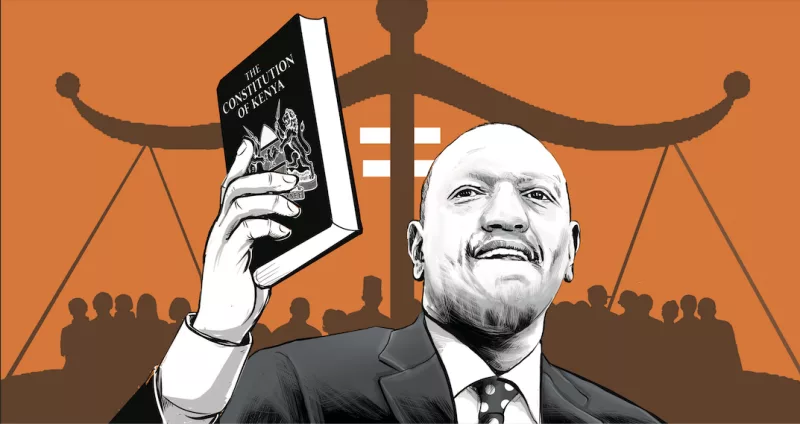
Yet our Constitution is unequivocal that every citizen has the right to the highest attainable standard of health.
Article 43 makes it unambiguous that healthcare is not a privilege reserved for the fortunate few but a fundamental right guaranteed to all citizens.
For decades, every successive administration in Kenya committed itself to Universal Health Coverage (UHC).
Yet despite genuine efforts, the system never delivered healthcare that was accessible, affordable, and equitable for all.
When President William Ruto came into office in 2022, he made it clear to his team- and to us in the Ministry of Health- that incremental fixes would not be sufficient to deliver the Universal Healthcare promise.
Under the President’s leadership, we concluded that what Kenya needed was nothing short of a foundational overhaul of its healthcare system; one capable of finally turning constitutional intent into lived reality.
Consequently, the government initiated far-reaching reforms to fundamentally redesign how healthcare is financed, delivered, and governed in Kenya.
On October 19, 2023, the president signed into law four landmark UHC laws that laid a new and firm foundation for the health sector: the Social Health Insurance Act, the Primary Health Care Act, the Digital Health Act, and the Facility Improvement Financing Act.
The Social Health Insurance Act replaced the National Health Insurance Fund (NHIF) with the Social Health Authority (SHA); a new institution designed to guarantee universal access and equity. SHA manages three complementary funds: the Primary Health Care Fund, the Emergency, Chronic and Critical Illness Fund, and the Social Health Insurance Fund.
For the first time in Kenya’s history, primary healthcare is free at the point of use in dispensaries, health centres, and selected hospitals.
Ambulance and emergency services are also free, ensuring that no Kenyan is denied critical care in moments of greatest vulnerability.
Equally transformative is the Digital Health Act, which has enabled the digitisation of every step of healthcare: from patient registration to claims management.
By reducing unnecessary human interaction, we are decisively tackling corruption, eliminating waste, and improving efficiency, transparency, and accountability across the health system.
Today, as Cabinet Secretary for Health, I can affirm with confidence that the Social Health Authority is turning the vision of Universal Health Coverage into lived reality. More than 28 million Kenyans have registered under SHA up from just 7 million under the defunct NHIF.
That is more than 400 per cent increase, and more citizens are still enrolling, a confirmation that SHA is working.
So far over 6 million citizens have already accessed essential healthcare services. These are not mere statistics; they represent lives saved, dignity restored and families reassured.
Yet even as we made this progress, we confronted a sobering reality: some Kenyans, our most vulnerable households, remained outside the coverage net. These are families with no formal jobs, no assets to sell, no savings to fall back on. When illness struck, they would simply go without care.
In response, the Government launched the National Government Sponsorship Programme and the Digital Sponsorship Programme under SHA.
Through these initiatives, the Government now fully sponsors the healthcare of 2.3 million indigent Kenyans, including the elderly, widows, orphans, and other disadvantaged members of society.
Just like every other Kenyan covered under SHA, every sponsored beneficiary now enjoys free primary healthcare, access to referral and specialist services, and the freedom to choose from over 10,000 SHA-contracted public, private, and faith-based health facilities across the country.
To translate the UHC policy into lived reality, the Government anchored healthcare reforms on six key pillars.
The first pillar is grassroots service delivery. In partnership with county governments, we recruited 110,000 Community Health Promoters across all our 47 counties, who now form the frontline of our healthcare system.
To date, they have visited over 9 million households, screened more than 10 million Kenyans for diabetes and 7 million for hypertension, enabling early detection, early intervention, and the prevention of life-threatening complications.
The second pillar is a motivated and protected health workforce. We resolved long-standing labour disputes, paid Sh 3.5 billion in arrears owed to doctors, and are progressively regularising terms of service for health workers across all cadres.
The third pillar is digital transformation. A comprehensive, integrated health management information system is already live in over 1,400 facilities across 19 counties, with thousands more facilities in the process of integration.
This will enable health data portability, strengthen telemedicine, enhance transparency, and improve efficiency across the entire health system.
The fourth pillar is sustainable health financing anchored on the Social Health Authority. In the 2025/2026 financial year, the Government committed Sh13 billion to the Primary Health Care Fund and Sh8 billion to the Emergency, Chronic and Critical Illness Fund; forming the backbone of equitable, sustainable healthcare for all Kenyans.
The fifth pillar is equitable access to safe, affordable medical products and technologies.
We have repositioned the Kenya Medical Supplies Agency (KEMSA) as the central procurement, warehousing, and distribution agency for medical commodities.
To strengthen its capacity, we capitalised KEMSA with Sh1.5 billion and provided a Sh10 billion line of credit, targeting a 100 per cent order fill rate by March 2026.
The sixth pillar is leadership, governance, and law. The four UHC laws enacted in 2023 create a durable institutional and legal framework that ensures there is no reverse gear on Universal Health Coverage in Kenya.
The impact of these reforms is already evident in both reach and financing.
To date, over 3 million Kenyans have benefited from services under the Social Health Insurance Fund (SHIF), while more than 7.4 million citizens have accessed care through the Primary Health Care (PHC) Fund, translating to nearly 8.8 million unique beneficiaries who have directly received health services under the new Universal Health Coverage framework.
This expanding coverage is matched by unprecedented financial commitment. Payouts under the PHC Fund have reached nearly Sh11 billion, ensuring free primary healthcare at the grassroots, while over Sh72 billion has been disbursed through SHIF to support specialised treatment, hospital admissions, and critical care.
In addition, over Sh650 million has been paid out through the Emergency, Chronic and Critical Illness Fund, and more than Sh3.2 billion disbursed under the Public Officers Medical Scheme Fund.
Together, these figures underscore a decisive shift from fragmented coverage to a comprehensive, well-financed system that is delivering tangible benefits and affirming healthcare as a right rather than a privilege.
In sum, Universal Health Coverage in Kenya is no longer a slogan or a distant aspiration. It is happening across thousands of facilities, for millions of Kenyans, every single day.
In 2025, we undertook the most comprehensive health sector reforms since independence, and we will not relent as we move forward.
This is the solemn pledge President William Ruto made to the people of Kenya. And as Cabinet Secretary for Health, I will deploy every instrument of leadership, policy, and resolve at my disposal to ensure that Universal Health Coverage is no longer an aspiration on paper, but a lived and enduring reality for every citizen.
The Writer is the Cabinet Secretary for Health