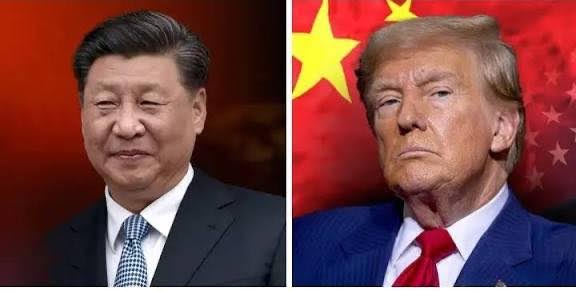
Beijing has imposed countermeasures against United States military-related companies and senior executives in retaliation for what it described as a large-scale arms sale by Washington to China’s Taiwan region, escalating tensions between the world’s two largest economies over one of the most sensitive issues in their bilateral relations.
In a decree issued on December 26 under China’s Law on Countering Foreign Sanctions, the Ministry of Foreign Affairs of the People’s Republic of China announced sanctions targeting US defence entities and individuals linked to the arms deal.
The measures were unveiled through Decree No. 19 and reinforced by statements from spokespersons of both the Chinese Foreign Ministry and the Ministry of National Defence.
China said the US move “seriously violates” the one-China principle and the three China-US Joint Communiqués, undermines China’s sovereignty and security interests, and damages strategic mutual trust between Beijing and Washington.
Chinese officials also warned that the arms sale sends what they termed “an extremely wrong signal” to separatist forces advocating for Taiwan independence.
“The Taiwan question lies at the very core of China’s core interests,” the Foreign Ministry said, describing it as the “first red line” that must not be crossed in China-US relations.
Beijing reiterated that the one-China principle remains the political foundation for China’s diplomatic relations with all countries.
China underscored that its goal of complete national reunification is an “irreversible historical trend” and vowed that any attempts to challenge its position on Taiwan would be met with a firm response.
“No country or force should underestimate the resolve, will and ability of the Chinese government and people to safeguard national sovereignty and territorial integrity,” the ministry said.
The sanctions announcement comes against the backdrop of long-standing understandings between Beijing and Washington, particularly those enshrined in the Joint Communiqué on the Establishment of Diplomatic Relations of January 1, 1979, and the August 17, 1982 Joint Communiqué.
In these agreements, the United States recognised the Government of the People’s Republic of China as the sole legal government of China and acknowledged the Chinese position that Taiwan is part of China, while maintaining unofficial relations with the island.
The August 17, 1982, communiqué specifically addressed the contentious issue of US arms sales to Taiwan.
In it, the United States stated that it did not seek to pursue a long-term policy of arms sales to Taiwan and that such sales would not exceed the levels supplied in the years following normalisation of relations, with the intention of gradually reducing them over time.
China has consistently argued that continued arms sales contradict these commitments.
Beijing reiterated that Taiwan is an internal affair and emphasised its stated policy of striving for peaceful reunification, first articulated in the 1979 “Message to Compatriots in Taiwan” and later expanded in proposals aimed at resolving the issue through dialogue.
In its latest statement, China urged the United States to “abide by the one-China principle and the three China-US joint communiqués,” and to act on commitments made by US leaders.
Beijing called on Washington to halt what it described as “dangerous moves” of arming Taiwan, warning that such actions undermine peace and stability in the Taiwan Strait.
“China once again urges the US to stop sending wrong signals to ‘Taiwan independence’ separatist forces,” the Foreign Ministry said, adding that Beijing would continue to take resolute measures to defend its sovereignty, security and territorial integrity.
While the specific companies and individuals targeted by the sanctions were not detailed in the public summary, the move signals China’s readiness to use legal and economic tools to respond to actions it views as infringing on its core interests.
The development adds another layer of strain to already complex China–US relations, which span cooperation and competition across trade, security, technology and global governance.
Analysts note that the Taiwan issue remains the most volatile flashpoint, with both sides repeatedly cautioning against miscalculation.
Despite the heightened rhetoric, China reaffirmed that stable China-US relations serve the interests of both countries and contribute to global peace and stability, echoing language from past joint communiqués.
However, Beijing made clear that progress in bilateral ties cannot come at the expense of what it considers its fundamental national interests.
As exchanges continue, the sanctions underscore Beijing’s message that Taiwan remains a non-negotiable issue and that actions challenging the one-China framework will draw firm response.