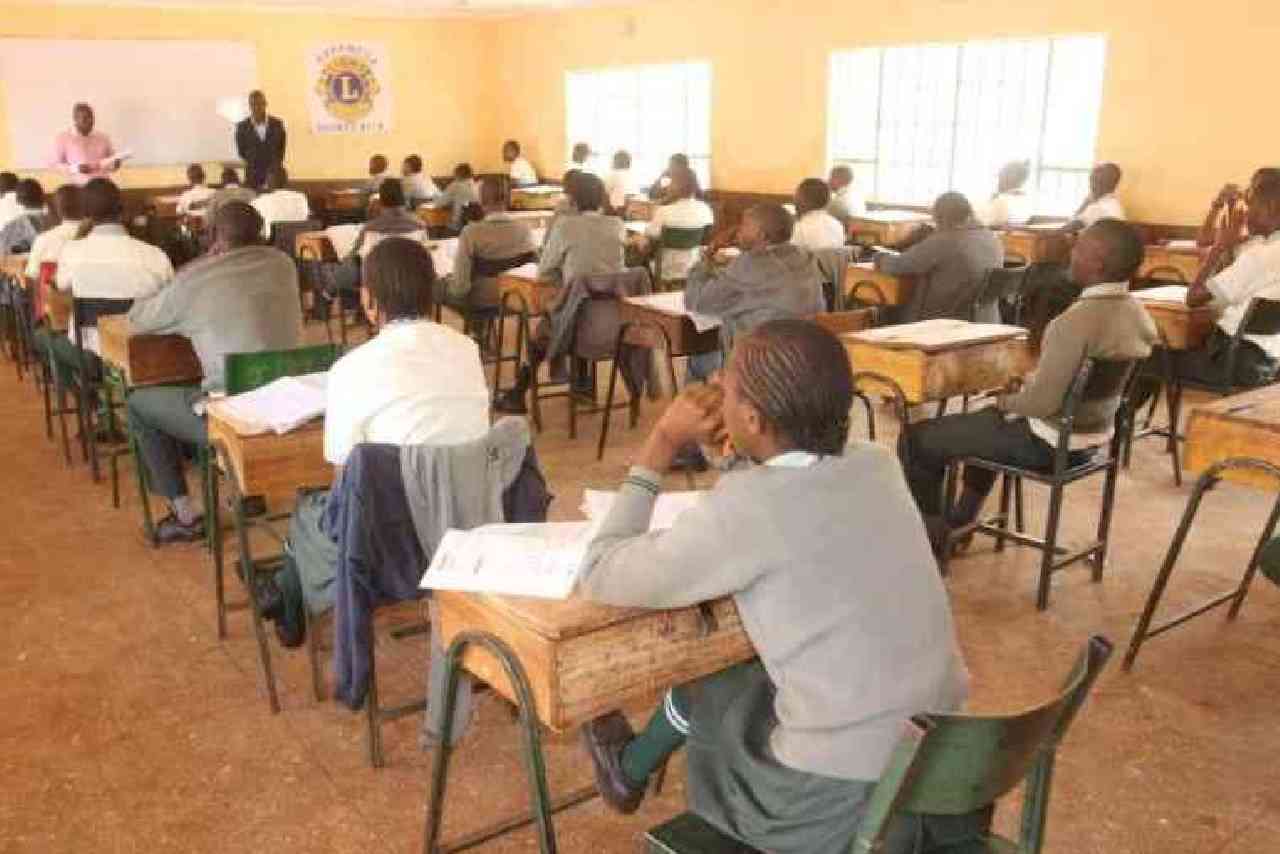
The Ministry of Education will open a second phase of the Grade 10 placement revision exercise after the initial seven-day window closes on Monday, December 29, following the rejection of a large number of requests by learners seeking transfers to different schools.
Basic Education Principal Secretary Julius Bitok said the ministry had received overwhelming applications, most of them targeting a small cluster of top-tier schools with limited capacity.
Out of the 1.13 million learners who sat the inaugural Kenya Junior School Education Assessment (KJSEA), more than 343,000 applied for placement revision.
By Saturday, December 27, 183,000 of those applications had been processed, with about 68,000 rejected.
Bitok attributed the high rejection rate largely to congestion in Category 1 (C1) schools, formerly known as national schools.
“The main reason why we are declining most of the requests is because of capacity. More than 50,000 students are interested in 20 schools,” the PS said.
Under the current classification, senior schools are grouped into four categories: Category 1 (C1), which comprises former national schools; Category 2 (C2), former extra-county schools; Category 3 (C3), county schools; and Category 4 (C4), sub-county schools.
Although the revision window allowed learners to change both schools and pathways, the majority of applications focused on changing schools, particularly into C1 institutions.
Nationally, there are only 266 C1 schools, a number Bitok said cannot absorb the tens of thousands of learners competing for placement in a handful of popular institutions.
“These schools have a capacity of 500 students each. The schools which are always thought to be top schools in the country, there are about 20 of them and more than 60,000 students are interested in these schools. It’s not possible to place all these students in these 20 schools,” he said.
“That is why we have to decline and ask them to look for other options of C1 schools."
For learners whose initial placement and subsequent revision requests were unsuccessful, the PS outlined what could improve their chances when the second revision window opens in January.
He pointed out that several C1 schools in remote areas are struggling to attract enough learners.
“We have quite a number of C1 schools in some far-flung areas which are not attracting enough students and as a ministry, we are thinking hard to see how best can we ensure that all our C1 schools receive students around the country,” Bitok said.
This means learners willing to consider C1 schools outside the traditionally sought-after institutions may stand a better chance of approval than those limiting their choices to the most well-known schools.
The ministry is planning to reopen the revision portal in the first week of January 9 to give dissatisfied candidates another opportunity to apply.
“We are thinking of opening up for a second revision between the 6th and 9th of January so that we can be able to allow applying again,” Bitok said.
A total of 1,130,459 candidates sat the KJSEA, comprising 578,630 male learners (51.19 per cent) and 551,829 female learners (48.81 per cent).
They selected their preferred Grade 10 senior schools in May, but some were unhappy with the outcomes when placements were released.
Placement is done automatically, with learners assigned to schools based on their KJSEA results and the choices they made during selection.