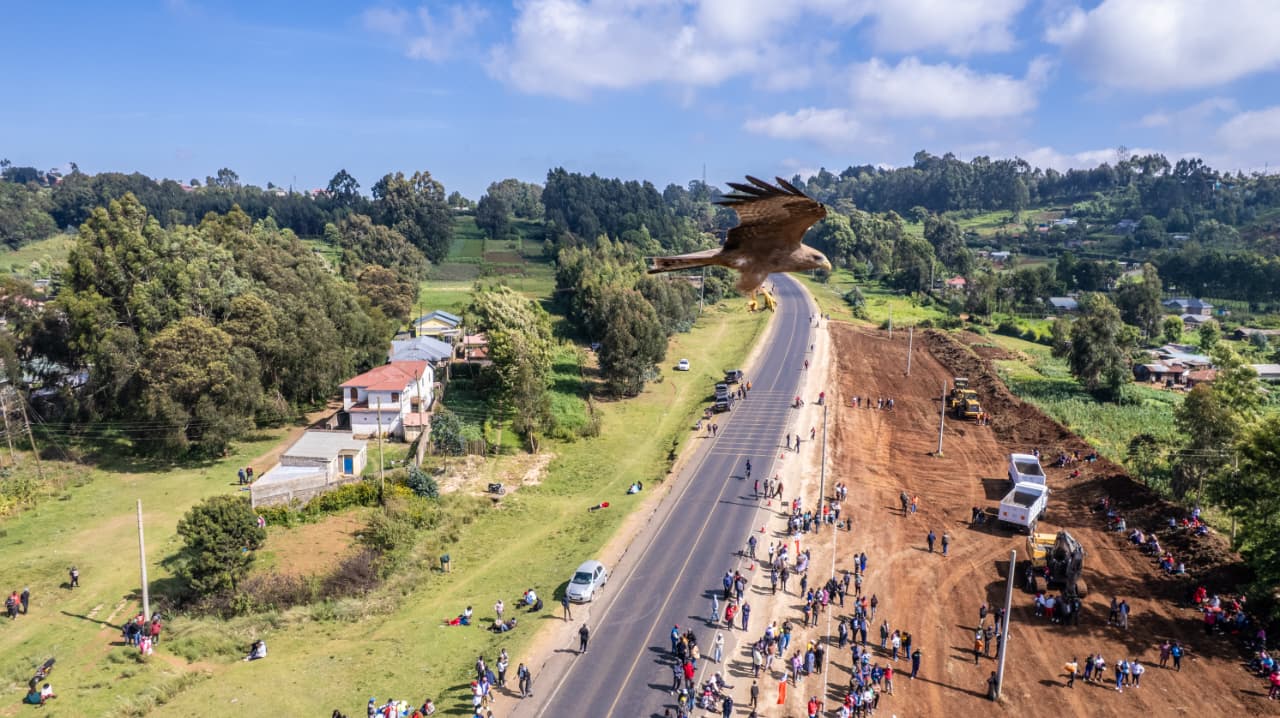
 Aerial view during the commissioning of Rironi-Mau summit road by President William Ruto at Kamandura, Kiambu, on November 28, 2025/PCS
As Kenya heads into 2026, the government’s renewed infrastructure push is emerging as a defining feature of the country’s economic outlook.
A series of large-scale road-dualling projects, smart-city developments, transport upgrades and public–private partnership (PPP) initiatives have either been launched or reached key milestones — positioning 2026 as a year when groundwork begins to translate into visible construction activity, investment uptake and early operational impact.
From highways to high-tech zones, several flagship projects stand out as critical ones to watch in the year ahead.
Rironi–Mau Summit / Northern Corridor road dualling
Topping the list is the recently launched dualling of the 170-kilometre Rironi–Naivasha–Mau Summit highway, a key artery on the Northern Corridor linking Nairobi to the Rift Valley, Naivasha, Nakuru and western Kenya.
President William Ruto formally launched the project on 28 November 2025, describing it as transformational.
“This project we launch today is more than a highway; it’s a gateway to prosperity, unity, and transformation,” Ruto said.
Among the largest road projects in East Africa, the dualling has been structured under a public–private partnership model, with an investment value exceeding Sh170 billion, according to a statement issued by the President.
The Nairobi–Nakuru–Mau Summit section spans 175 kilometres, while the Nairobi–Maai Mahiu–Naivasha segment adds another 58 kilometres. Both sections are being upgraded into modern, multi-lane dual carriageways designed, financed, operated and maintained under what the government has termed a world-class PPP framework.
The corridor will be reinforced to better handle heavy commercial traffic, with features including interchanges, truck lay-bys, pedestrian bridges, enhanced lighting, safety barriers, drainage systems and intelligent transport technologies.
“I have directed the contractors to finish up the work by 2027. By the time we celebrate Madaraka Day on June 1, 2027, the Rironi–Mau Summit should be complete,” Ruto said.
Against that backdrop, 2026 is expected to be a peak construction year for the highway, with works accelerating across multiple sections.
The project is being implemented through a PPP involving China Road and Bridge Corporation (CRBC) and the National Social Security Fund (NSSF).
It also marks the first phase of a broader national roads expansion programme. In his November 2025 State of the Nation address, President Ruto announced plans to dual 2,500 kilometres of highways and tarmac an additional 28,000 kilometres over the next decade.
Roads earmarked for dualling include Muthaiga–Kiambu–Ndumberi, Machakos Junction–Mariakani, Mau Summit–Kericho–Kisumu, Kisumu–Busia, Mau Summit–Eldoret–Malaba, Athi River–Namanga, Karatina–Nanyuki–Isiolo, and Makutano–Embu–Meru–Maua, among others.
If implementation proceeds as planned, 2026 could begin to deliver early gains — easing congestion, improving freight movement, expanding market access and unlocking new development along historically under-served corridors.
Modernisation of JKIA and port infrastructure
Another major infrastructure front to watch in 2026 is the planned modernisation of Kenya’s aviation and port facilities.
President Ruto has announced plans to onboard private-sector partners to upgrade Jomo Kenyatta International Airport (JKIA), Mombasa Airport and Lamu port infrastructure.
“We will onboard public–private partnerships in the modernisation of JKIA, Mombasa, and Lamu airports,” Ruto said, citing fiscal pressures that limit reliance on conventional borrowing or higher taxation.
The strategy signals a shift in infrastructure financing, with the government planning to operationalise a National Infrastructure Fund and a Sovereign Wealth Fund to leverage privatisation proceeds, capital markets and concessional financing rather than further expand public debt.
While detailed timelines are yet to be made public, the 2026–2027 period is emerging as a critical window, as improvements to aviation and port infrastructure are central to export growth, tourism recovery, trade efficiency and regional integration.
If implemented, upgraded airports and ports could reduce logistical bottlenecks, improve international connectivity and enhance Kenya’s competitiveness within East Africa and beyond.
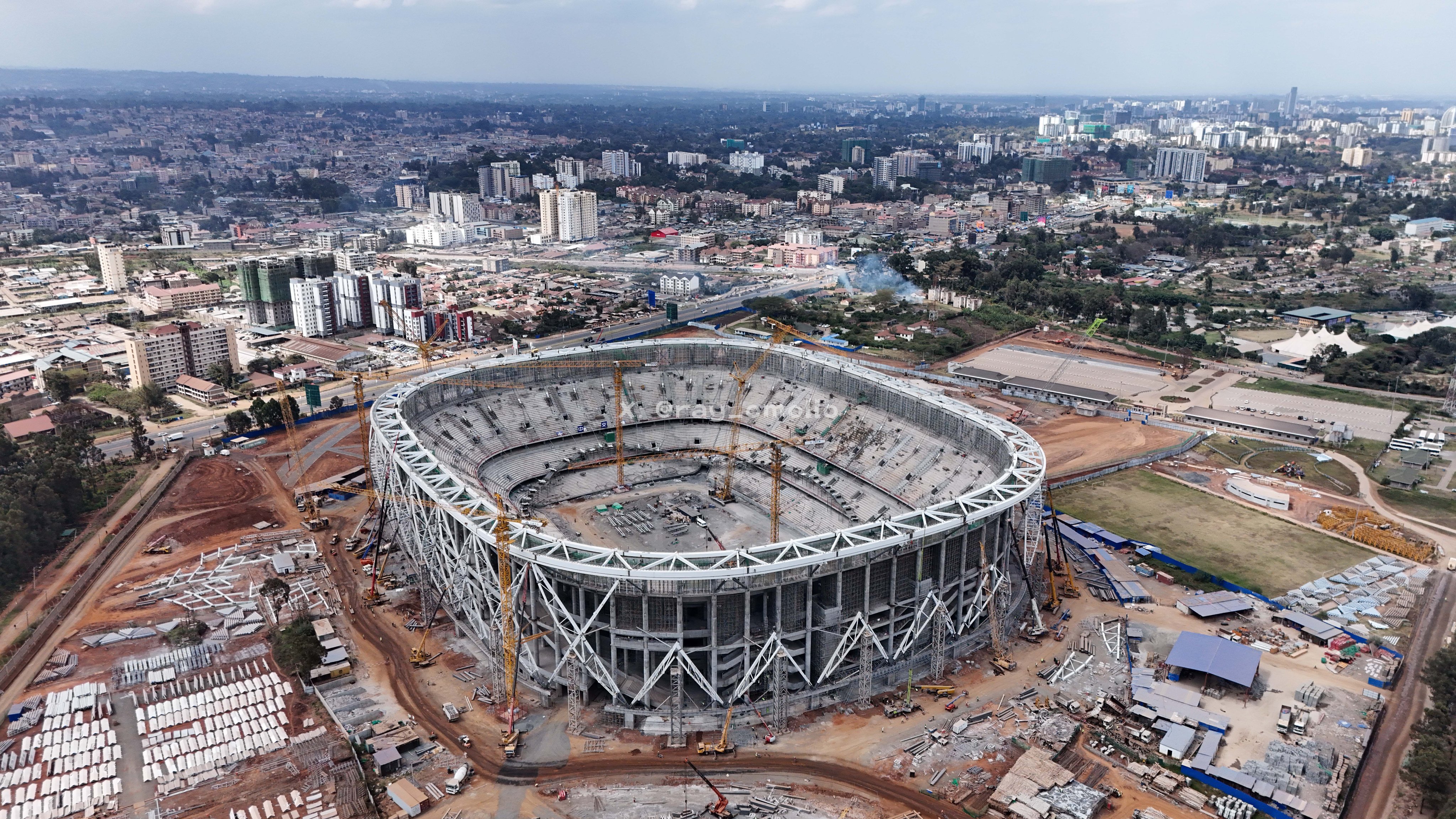 Ongoing construction works at Talanta Stadium project /PS OMOLLO/X
Talanta Sports City Stadium
Infrastructure momentum in 2026 will not be limited to transport. Urban and social infrastructure — particularly in sports and recreation — is also set to take centre stage.
The Talanta Sports City Stadium in Nairobi is among the most closely watched projects. As of November 2025, the facility was reported to be 66 per cent complete.
“We are very happy with the progress because overall, we are now at 66 per cent, and we are on course to ensure that all deadlines are met,” the Cabinet Secretary said after touring the site.
“By the end of December, the external works and the physical infrastructure of the project will be done,” he added.
The stadium is expected to be fully operational by February 2026.
Designed as a 60,000-seat facility for football and rugby, Talanta will feature modern spectator amenities, more than 54 VIP skyboxes, multiple training grounds and infrastructure built to international standards.
Beyond the stadium itself, the wider Talanta Sports City master plan envisions an integrated sports, entertainment and events hub, supported by roads, power, water supply and railway connectivity.
“Other ministries are working around the clock on water supply, roads, power infrastructure and the railway link connecting Talanta City to Bomas,” CS Mvurya said following an inspection earlier in November.
With operational readiness expected in early 2026 and its strategic importance ahead of the 2027 Africa Cup of Nations, Talanta stands out as a major project to watch next year.
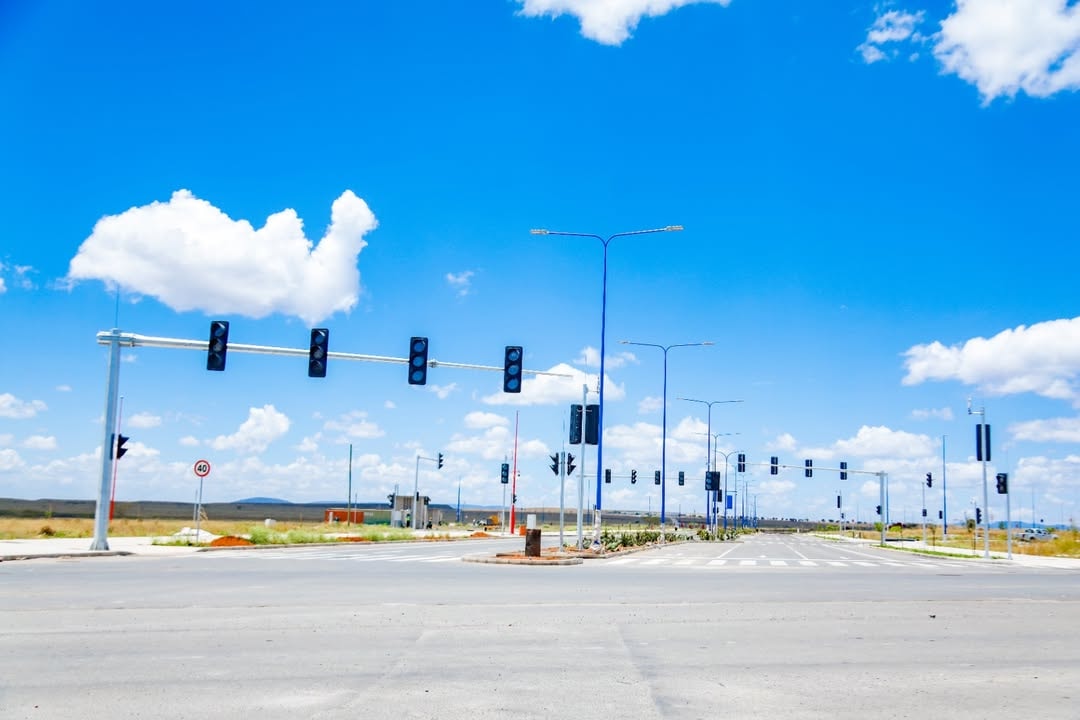 Konza Technopolis streetscape/FB
Konza Technopolis — smart city and tech investment zone
2026 could also prove pivotal for Kenya’s digital and knowledge-economy ambitions under Konza Technopolis.
On 13 October 2025, President Ruto commissioned Phase One infrastructure at Konza and declared the site “a smart city open for investment.”
According to the Konza Technopolis Development Authority (KoTDA), completed horizontal infrastructure includes more than 40 kilometres of roads, 170 kilometres of integrated water and drainage systems, a 120 MV gas-insulated power substation, six kilometres of underground utility tunnels combining fibre, power and water lines, and a solid waste facility.
KoTDA chief executive John Paul Okwiri said the infrastructure meets “world-class standards,” with cycling lanes, green spaces and ready utilities positioning Konza as an investment-ready destination.
The authority has reported strong investor uptake, noting in its 2025 release that more than 80 per cent of Phase One parcels have already been allocated to local and international investors.
As a result, 2026 is expected to be a transition year — moving Konza from infrastructure delivery toward early-stage occupation, commercial activity and residential development, with implications for real estate, technology, services and employment.
Water infrastructure projects
Water infrastructure is also emerging as a critical area to watch in 2026.
While speaking at Konza, President Ruto highlighted the scale of Kenya’s water-security challenge, calling for the construction of at least 50 mega dams comparable to the Thwake Dam.
Large multipurpose water projects are increasingly being positioned as key economic enablers, supporting irrigation, domestic supply and energy generation.
The Thwake Dam, designed to serve irrigation, household consumption and hydropower needs, remains among the most closely monitored national projects. Vision 2030 identifies it as a cornerstone of Kenya’s long-term water-storage and agricultural strategy, particularly for arid and semi-arid regions.
Although progress has been slower than initially projected — with funding delays and implementation bottlenecks acknowledged in official updates — Thwake continues to feature prominently in national planning.
If completed, the dam could anchor agribusiness, agro-processing and industrial activity across lower Eastern Kenya.
“We have just laid the foundation. To truly make progress, we need to build 50 mega dams like Thwake to irrigate two million acres of land,” Ruto said. “This will not only ensure food security but also enable us to export agricultural products to the global markets we have secured.”
Similarly, the Mwache Dam, planned to serve the Coast region, is cited in water-supply blueprints as critical to stabilising urban and agricultural water access along Kenya’s coastline.
Why 2026 matters
What distinguishes 2026 is not only the scale of individual projects, but the convergence of momentum across sectors.
Transport corridors, logistics infrastructure, smart cities and social amenities are increasingly being pursued under a coordinated development agenda, anchored in public–private partnerships.
This financing approach reflects an evolving strategy — one aimed at sustaining growth while managing fiscal pressures and crowding in private capital for public infrastructure delivery.
Challenges and caveats
The ambition, however, is not without risk. PPPs demand strong governance, transparency, financial discipline and long-term maintenance commitments.
Funding constraints have already contributed to delays in projects such as Thwake, which has faced setbacks since its inception in 2018.
At Konza, while infrastructure is in place, translating allocated plots into operational investments will depend on private-sector confidence and stable macroeconomic conditions.
Still, as 2026 approaches, Kenya stands at the threshold of potentially transformative infrastructure delivery.
With projects such as the Rironi–Mau Summit dual carriageway, Talanta Sports City Stadium, Konza Technopolis and planned upgrades to JKIA and port infrastructure, the country is signalling a development phase centred on connectivity, urbanisation and integrated growth.
If implemented effectively, these initiatives could reshape economic geography, unlock investment opportunities and lay foundations for long-term expansion.
For businesses and investors, 2026 is shaping up as a year to watch — and to position for.