County governments are constitutionally mandated to invest in development projects that create or improve public assets and services, including roads, schools, hospitals, and dams.
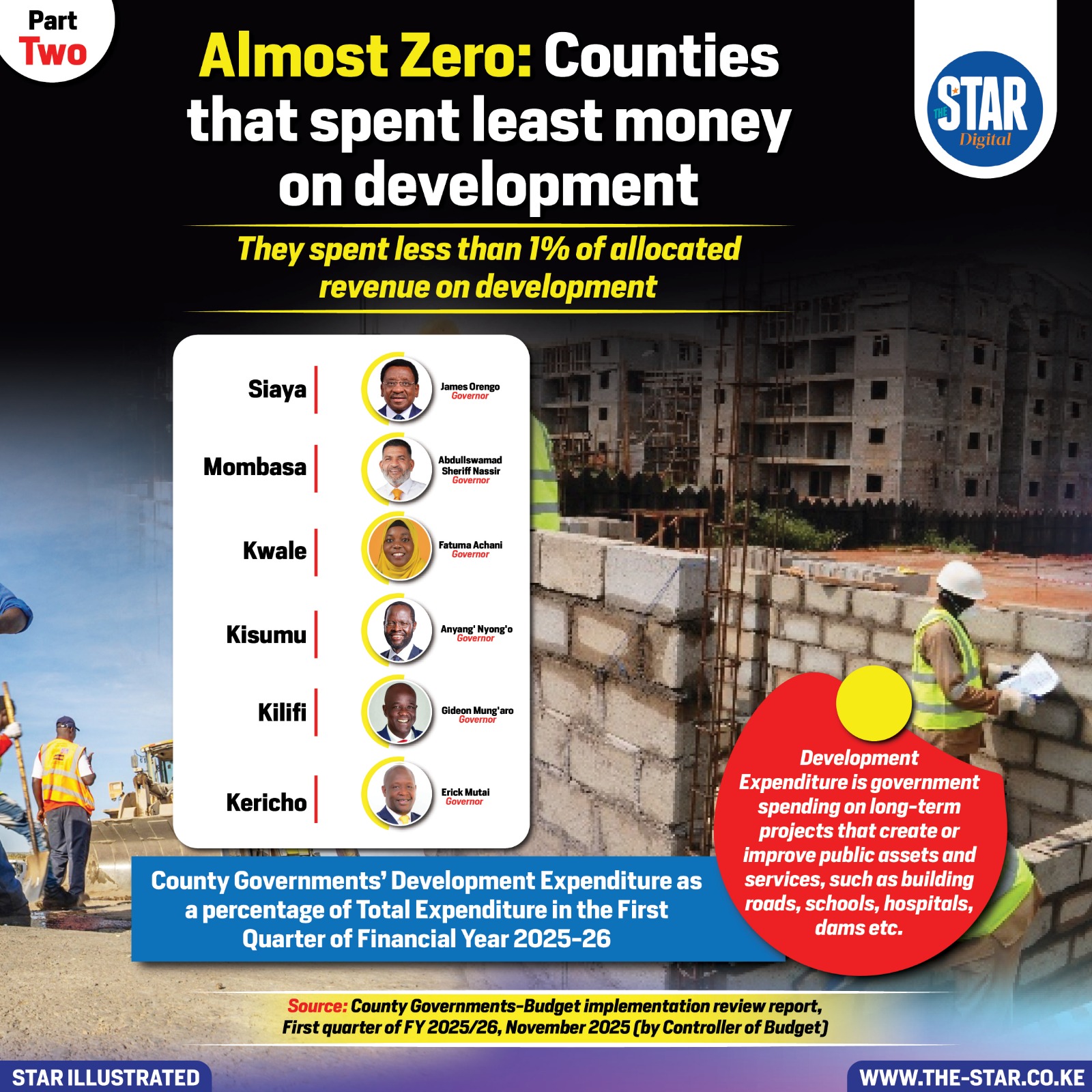
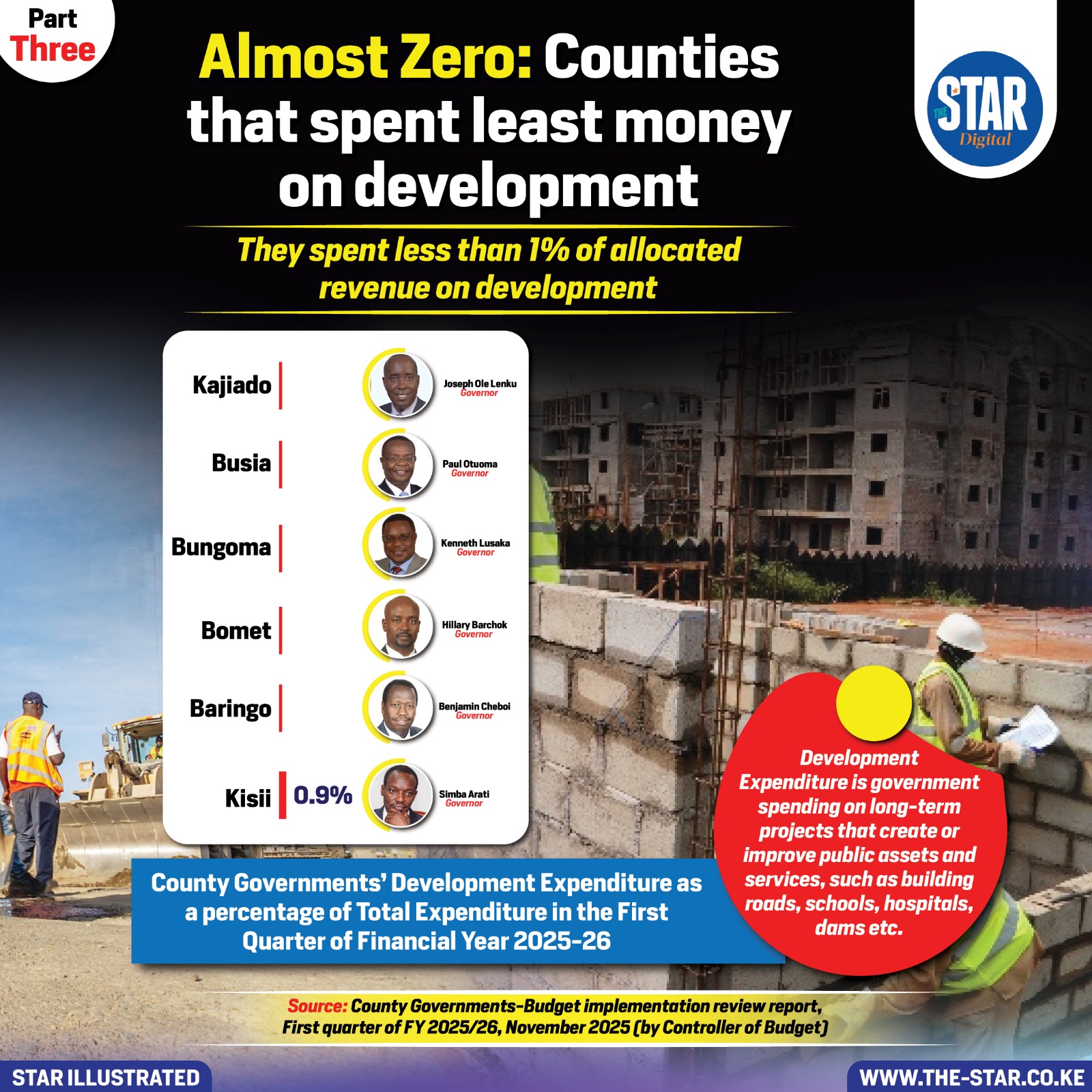
However, data from the Controller of Budget’s First Quarter Budget Implementation Review Report for FY 2025/26 shows that some counties are allocating an alarmingly low proportion of their budgets to development.
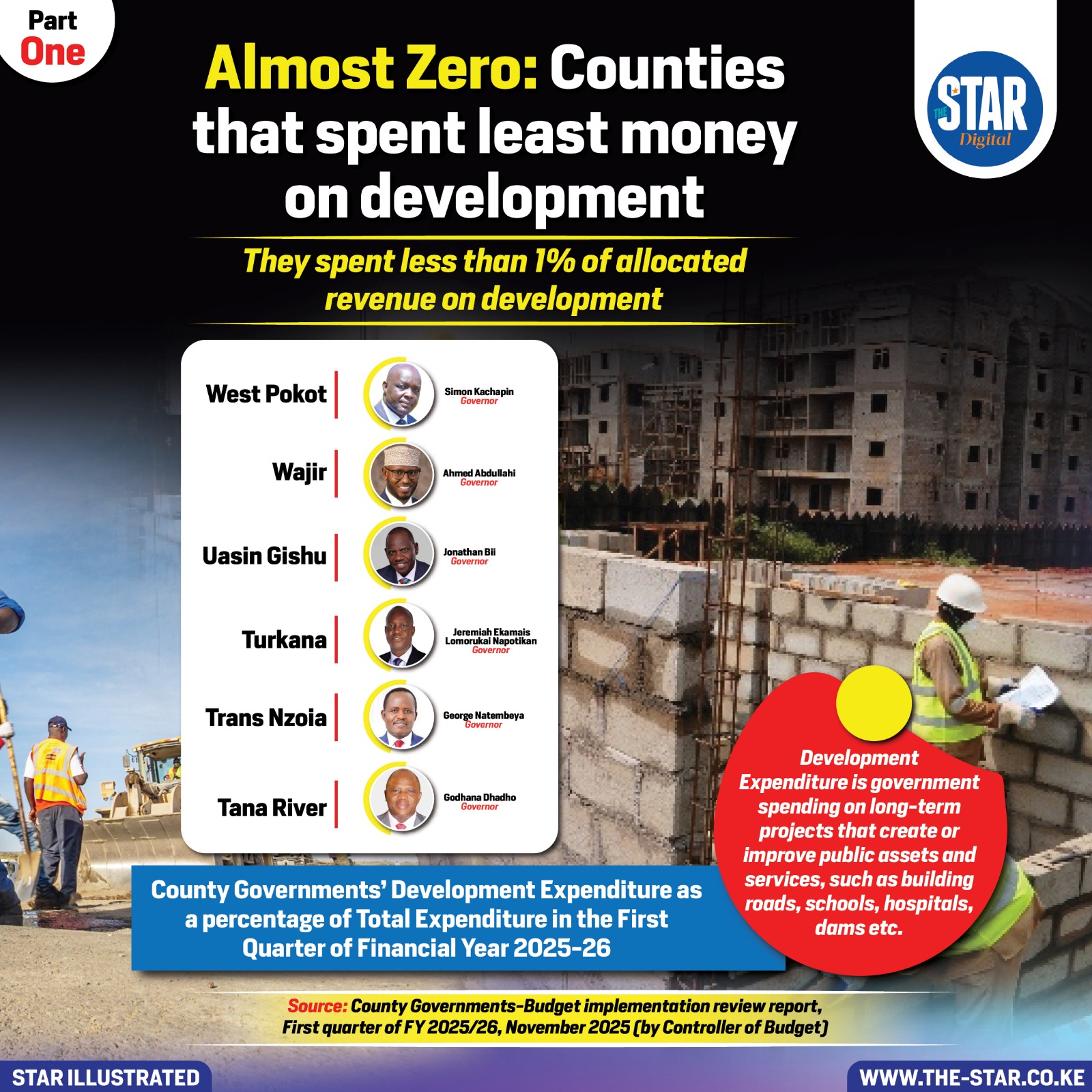
Counties such as West Pokot, Wajir, Uasin Gishu, Turkana, Trans Nzoia, and Tana River spent less than 1% of their allocated revenue on development during the first quarter. This “almost zero” expenditure paints a worrying picture for long-term growth, public service delivery, and citizen welfare.
The reasons behind these minimal allocations vary. In some cases, delays in procurement, project planning, and disbursement of funds have slowed the rollout of development initiatives. In others, operational costs, debt obligations, and wage bills have consumed most of the allocated funds, leaving little for infrastructure or community development.
The consequences of such under-spending are significant. Critical infrastructure projects stall, education and health facilities remain underdeveloped, and citizens’ expectations for improved public services go unmet. For counties already grappling with poverty, unemployment, and limited resources, the low development spend exacerbates inequalities and slows socio-economic progress.