Kenya’s fiscal landscape is undergoing a significant shift, specifically in how the nation prioritises long-term growth versus immediate needs.
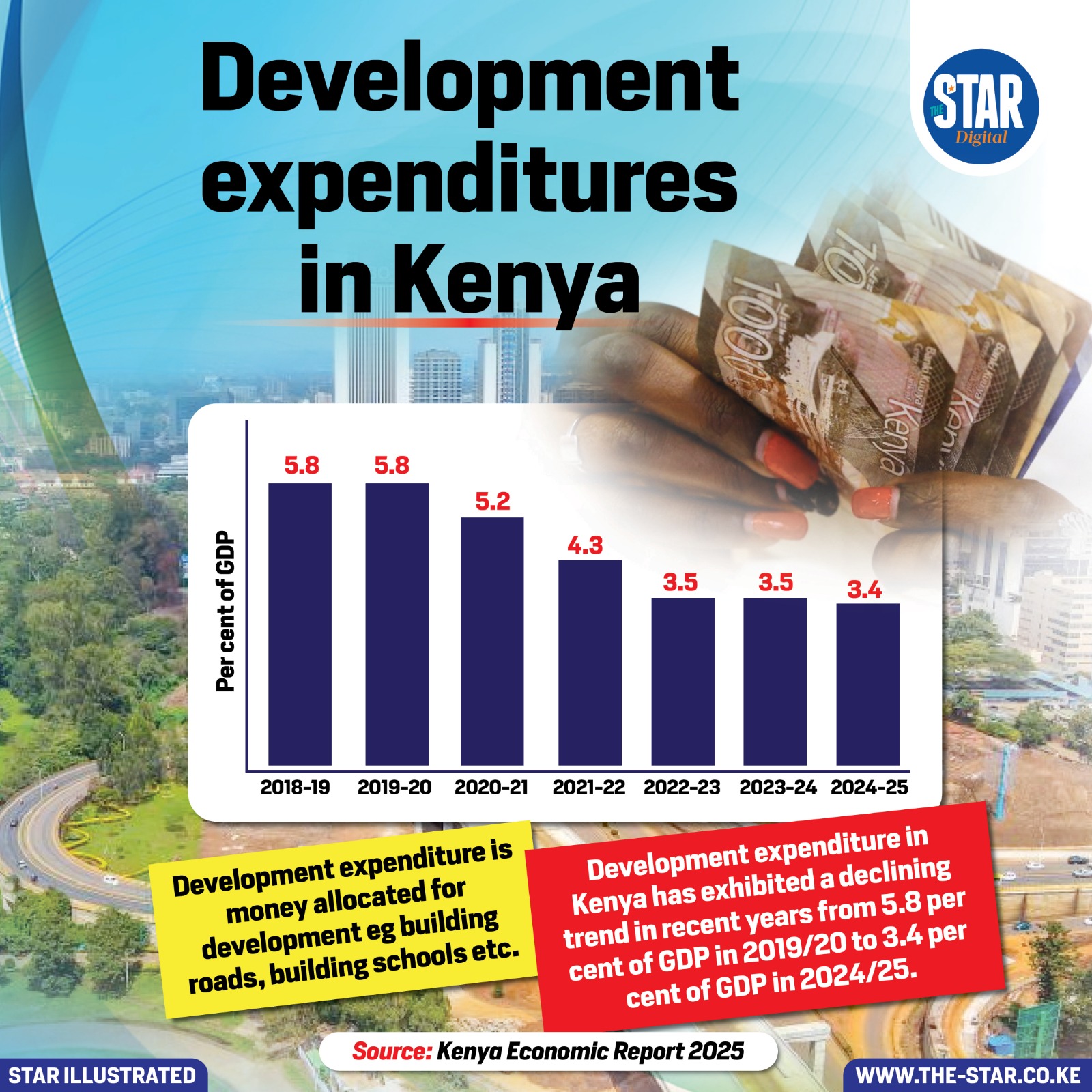
Development expenditure—the capital used to build the nation’s backbone through roads, hospitals, and schools—is witnessing a consistent downward trajectory.
At the start of the 2018/19 fiscal year, these investments accounted for 5.8% of the nation’s Gross Domestic Product (GDP).
Fast forward to the projections for 2024/25, and that figure is expected to contract to just 3.4%. This steady decline reveals a tightening fiscal "straitjacket."
While the economy grows, the portion of wealth being reinvested into tangible, multi-generational infrastructure is thinning out. The period between 2019 and 2022 saw the sharpest drop, falling from 5.8% to 4.3%. This suggests that external shocks and the rising cost of debt servicing may be crowding out the very projects intended to drive future prosperity.
When development spending stalls, the "multiplier effect" on the economy weakens. Every shilling spent on a new highway or a power plant usually generates more economic activity by creating jobs and lowering the cost of doing business.