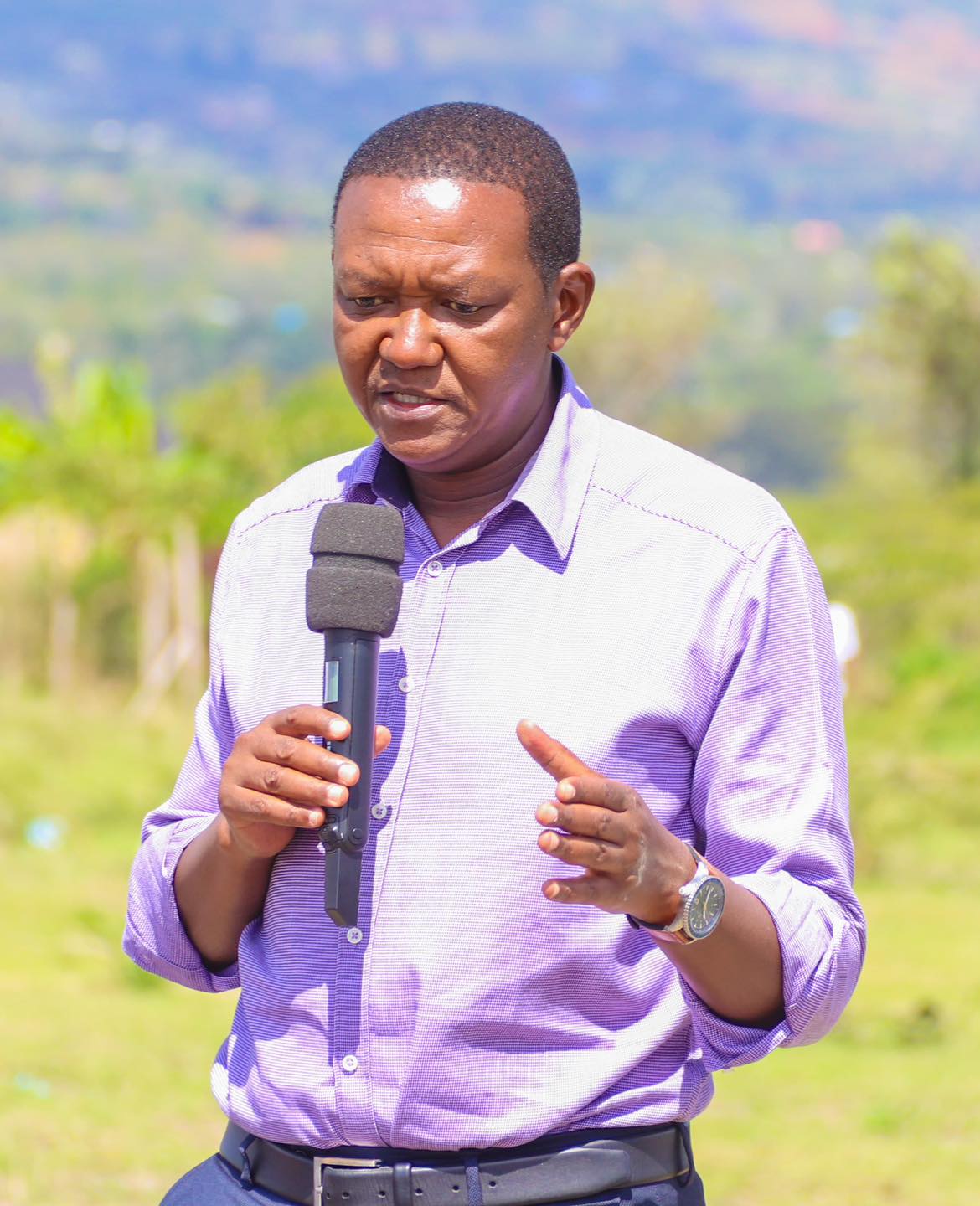
 Labour Cabinet Secretary Dr Alfred Mutua/HANDOUT
Labour Cabinet Secretary Dr Alfred Mutua has described the approval of the National Infrastructure Fund and the Sovereign Wealth Fund as the single most important decision he has made in his long public service career.
In a video shared on his social media platforms, Mutua reflected on his years in government, noting that while he has held several high-profile positions, none matched the significance of endorsing the two landmark funds during a recent Cabinet meeting.
“I have served in government for many years,” Mutua said. “I was government spokesperson under the government of the late Mwai Kibaki, I have been governor of Machakos County, and now I am Cabinet Secretary. I have been CS for Foreign and Diaspora Affairs, Tourism and Wildlife, and now Labour.”
Mutua said one decision stood above all others. “The most important decision I have made all these years was sitting in the Cabinet and approving the Sovereign Fund and the Infrastructure Fund,” he stated.
The Cabinet approved the establishment of the National Infrastructure Fund and the Sovereign Wealth Fund on December 15, 2025, setting in motion an ambitious Sh5 trillion long-term development and economic transformation agenda.
According to the government, the two funds are expected to serve as the backbone of Kenya’s plan to transition into a first-world economy through a sustainable, investment-led growth model that reduces overreliance on borrowing and taxation.
Mutua explained that historically, government revenues were often spent without a long-term savings strategy.
“Back in the day, when money was available, it was spent here and there. There were no savings, nothing,” he said.
Under the new framework, he said, revenues from natural resources such as minerals and oil will be set aside for the future rather than consumed immediately.
“Now earnings from all the minerals we have, all the oil, will be put somewhere—not for us, but for future generations,” Mutua said. “So that our great-grandchildren do not have to beg for loans at the IMF or the World Bank. They will be self-sufficient.”
He described the approach as forward-thinking, likening it to economic models adopted by developed nations. “That is the thinking of Japan, Norway, Sweden and the U.S.,” he said.
“You go to some countries, you look at the infrastructure and wonder how they did it. It is because they put money aside in a fund.”
Mutua also outlined the philosophy behind the Infrastructure Fund, noting that it will enable the government to support development without directly engaging in business.
“The role of government is not to do business. It is to facilitate business,” he said.
According to Mutua, the Infrastructure Fund will channel resources into critical projects such as dams, water programmes and highways.
A dispatch from State House following the Cabinet meeting said the National Infrastructure Fund will be responsible for mobilising up to Sh5 trillion needed to finance large-scale development projects critical to economic growth.
Both the National Infrastructure Fund and the Sovereign Wealth Fund are expected to finance Kenya’s transformation agenda across key sectors.