As December rolls into Kenya, cities and towns burst into life with tinsel, sparkling lights, and towering Christmas trees. Amid the festive bustle, one figure reliably draws attention: Santa Claus.
Known variously as Father Christmas, Baba Krismasi, or simply Santa, he has become one of the most recognisable symbols of the holiday season. But beyond the jolly laugh, red suit, and fluffy white beard lies a uniquely Kenyan story—a story shaped by culture, commerce, creativity, and the quiet labour of hundreds of people who bring the magic of Christmas to life.
Behind every “Ho-ho-ho” is a person, often juggling another job, who embodies hope, joy, and generosity. From bustling malls to quiet community halls, Kenyan Santas are more than entertainers; they are part of a seasonal cultural ecosystem that blends global tradition with local creativity.
A Seasonal Job Rich with Emotion
In Kenya, Santa is not just a commercial add-on. For many, he embodies joy, nostalgia, and the spirit of giving.
At a mall in Nairobi, 47-year-old Joshua Omwenga adjusts his velvet coat and tightens his belt before stepping onto the stage, where dozens of children chant for Santa. Omwenga, a shop owner, has been playing Santa for eight consecutive Decembers.
“When children see Santa, their faces light up in a way nothing else can produce,” he says. “It’s tiring work, but it’s beautiful. If you ever doubt joy, play Santa for one afternoon.”
His work involves greeting children, posing for photos, listening to wish lists, and distributing small gifts. He earns between Sh2,500 and Sh8,000 per day, depending on the venue—a seasonal income he describes as “a lifesaver.”
A Growing Industry
The business of Santa in Kenya has expanded rapidly over the past decade. Modern shopping malls, Christmas-themed entertainment spaces, corporate end-of-year parties, and church celebrations have created steady demand.
Event planners describe three major categories of Kenyan Santas: mall Santas, who remain stationed for weeks from late November to Christmas; mobile Santas, hired for private parties and corporate functions; and church or community Santas, often volunteers or part-time performers supporting congregations, CBOs, or charity initiatives.
Agencies now recruit, train, dress, and deploy Santa performers. One Nairobi-based agency has over 120 trained Santas. “Santa is no longer just a man in a suit,” says agency manager Celine Waki. “He is a performer, an entertainer, a storyteller. We train them on how to handle children, embody warmth, and remain in character, even when a child tugs at your beard.”
Demand has grown particularly among high-end hotels, expatriate communities, and corporate CSR events. These performances have become not just entertainment, but essential holiday experiences.
The Making of a Kenyan Santa
Playing Santa in Kenya comes with unique challenges and a style all its own.
The Suit – Most costumes are locally tailored in Kamukunji, Eastleigh, Gikomba, and industrial hubs in Kisumu and Mombasa, costing Sh4,000 for basic sets to Sh25,000 for premium imported costumes from Dubai or China.
The Beard – While global imagery depicts older white men, Kenya has embraced a more inclusive Santa. Synthetic white beards are common, but some performers bleach or dye their own. Rural churches and community events often feature black-bearded or grey-bearded Santas. “We have Kenyanised Santa,” Waki notes.
The Laugh – The classic “Ho-ho-ho!” remains essential, but performers adapt to local humour. “A child in Kisii won’t respond the same way as a child in Westlands,” says Omwenga. “Sometimes you greet them with ‘Sasa watoto!’ and they cheer louder than if you start with the classical Santa laugh.”
Cultural Sensitivity – Santas are trained to navigate multicultural settings, focusing on generosity and kindness rather than overt religious messaging unless in church settings.
Why Kenyans Love Santa
Despite his foreign origins, Santa has been embraced for several reasons. He is a symbol of joy in tough economic times. Families often see the season as a rare break from hardship.
Mercy Wanjiru, a mother of two from Embakasi, says: “Children don’t know that life is expensive. When they see Santa, they forget everything. And even we, the parents, forget our stress for a moment.”
Santa also catalyses family bonding. Annual visits and photo sessions have become cherished traditions, forming albums, WhatsApp memories, and shared moments.
Joel Onyancha, a clergy, explains, “Santa doesn’t replace our African Christmas. He complements it. Children enjoy him, and we use that excitement to teach love, giving, and compassion.”
Behind the Beard: Challenges of the Job
Being Santa is not without its challenges. Heat and exhaustion are constant companions, especially in outdoor events where temperatures inside the suit can exceed 35°C. Emotional burdens are common.
Omwenga recalls a child whispering, “Santa, can you bring my parents back together?” Requests for school fees, food, or help for sick siblings are frequent. Performers are trained to respond with reassurance while volunteers follow up privately.
Safety is another concern. Crowds can be overwhelming, and excited children sometimes pull beards or mob performers. Agencies now provide bodyguards or helpers to manage queues.
The Changing Face of Santa in Kenya
The modern Kenyan Santa has undergone a cultural transformation. Many speak Swahili, blending greetings: “Ho-ho-ho! Habari zenu, watoto?” or playful lines like “Mnajua kuna zawadi kwa watiifu?”
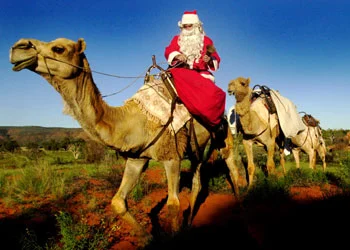
Santas arrive in style: tuk-tuks, boda bodas, camel caravans, police outriders, donkey carts, or even jet skis. They incorporate African proverbs and moral lessons, focusing on gratitude, humility, and community.
Santa work sustains a micro-economy. Daily earnings range from Sh2,000–Sh5,000 for mall Santas to Sh10,000–Sh30,000 for corporate gigs. Home visits fetch Sh3,000–Sh8,000, and helpers earn Sh1,500–Sh3,500. Related industries, including costume makers, photographers, event planners, and gift vendors, also thrive. One Nairobi mall generates over Sh3 million in photo revenue each December from Santa booths alone.
Charity and Community Work
Kenyan Santas are central to charity drives. They visit hospitals, street children, and prisons, softening communities and inspiring generosity. Volunteers report how appearances bring joy and hope to children facing hardship.
“Children don’t care about the suit. They care that someone listens to them, smiles at them, and gives them hope,” says Omwenga. These moments of connection keep Santas returning year after year.
Training the Next Generation
Agencies and event organisers now invest in structured training programs for aspiring Santas. Workshops cover child psychology, improvisation, crowd management, costume maintenance, and safety.
Young performers, some as young as 18, see Santa as more than a seasonal gig—it is a stepping stone into performance arts, public speaking, and community engagement. Many return annually, refining their craft and developing unique personas that resonate with children and families alike.
Santa as a Cultural Ambassador
Beyond malls and corporate events, Kenyan Santas have become informal cultural ambassadors. Photos and videos of Santas arriving in tuk-tuks or boda bodas have gone viral, highlighting how local communities creatively interpret global traditions.
Perhaps the most profound role of Santa is emotional. For many children, he is a figure of hope and wonder—a brief escape from the challenges of everyday life. For adults, he embodies nostalgia and the simple joys of childhood.
Omwenga recalls one child telling him, “Santa, when I grow up, I want to be like you, making others happy.” It is moments like these that sustain the tradition.
The Kenyan Santa Legacy
As Christmas traditions continue to evolve, Santa has become a symbol of Kenya’s ability to blend global influence with local identity. The red-suited figure has moved beyond malls to schools, churches, hospitals, and rural communities, touching lives in ways that go beyond commerce.
“Santa teaches us about joy, generosity, and imagination,” says Waki. “But most importantly, he reminds us that magic can be created anywhere, by anyone willing to give a little of themselves.”