As the festive season approaches, consumers are being urged to stay alert as scammers take advantage of increased spending, travel and online activity.
The holidays often create a sense of urgency and goodwill, making people more vulnerable to fraudsters who use increasingly sophisticated tactics to steal money and personal information.
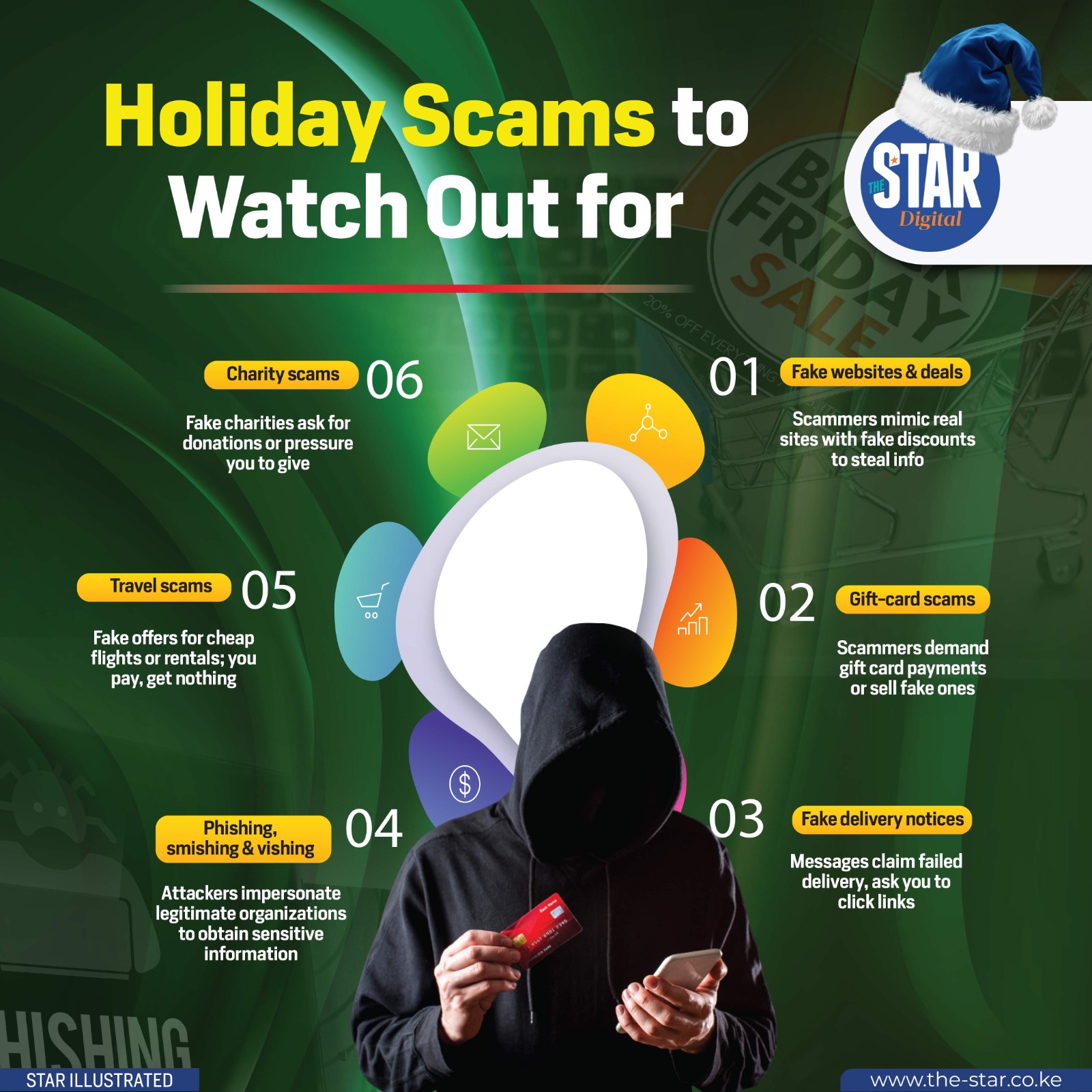
One of the most common threats is fake websites and deals. Scammers mimic legitimate online stores, offering attractive discounts that lure shoppers into entering card details or personal data. Once payment is made, goods never arrive, or sensitive information is stolen.
Gift-card scams are also on the rise during the holidays. Fraudsters pressure victims to pay using gift cards or sell counterfeit ones, knowing these transactions are difficult to trace or reverse.
Similarly, fake delivery notices exploit the surge in online shopping. Victims receive messages claiming a parcel delivery has failed and are prompted to click on malicious links that harvest personal details.
Another major risk is phishing, smishing and vishing. In these scams, criminals impersonate trusted institutions such as banks, mobile service providers or government agencies to trick people into sharing passwords, PINs or one-time codes. The messages often appear urgent, warning of account problems or suspicious activity.
Holiday travel can also expose consumers to travel scams, including fake deals on flights, accommodation or holiday rentals. Victims pay for attractive offers only to discover that the bookings do not exist.





Comments 0
Sign in to join the conversation
Sign In Create AccountNo comments yet. Be the first to share your thoughts!