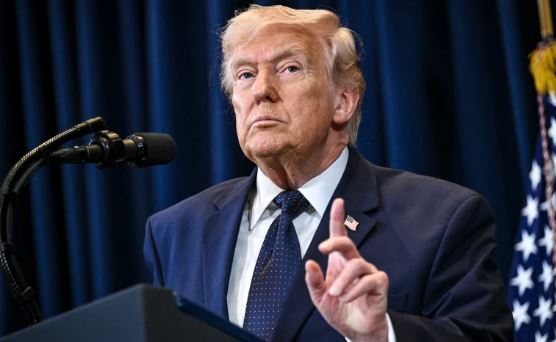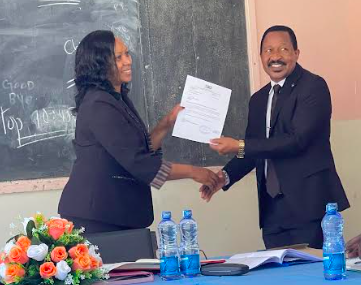
Dr Wanjohi Githinji is recognised as a board member by the principal of County Girls High School Nairobi, Anne Wahito/Handout
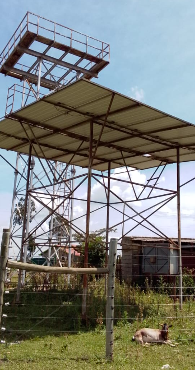
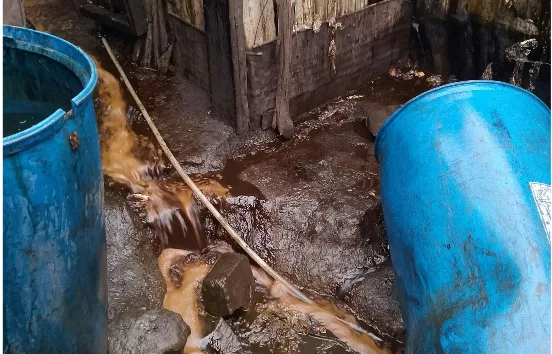
A solar-powered borehole water project supported by Dr Wanjohi Githinji that produces clean water, serving over 40 households/Handout
For more than three decades, Dr Wanjohi Githinji has stood quietly yet firmly at the intersection of classrooms, communities and policy rooms, shaping minds long before they find their voice and influencing systems long after the bell rings.
His work is neither loud nor fleeting; it is deliberate, rooted in service and anchored in the belief that education, when done right, can redraw the destiny of individuals and communities alike. From rural early childhood centres to national curriculum conversations, from mentoring teachers to advocating for indigenous languages, Githinji has built a career defined by depth, consistency and purpose.
A scholar by training, a teacher by instinct and a community servant by choice, he has remained unwavering in his conviction that the earliest years of learning carry the greatest power to transform lives. As a lecturer, a respected education policy voice and a grassroots development champion, Githinji’s influence transcends titles.
It is felt in empowered teachers, mentored youth, improved schools and communities with access to clean water. He offered a window into the life, philosophy and impact of a man whose lifelong mission has been to ensure education serves the public good.
Who is Dr Wanjohi Githinji?
I am an educationist, researcher, mentor and community servant.
Professionally, I am a senior lecturer at Kenyatta University. In public service, I have written voluntary articles in newspapers and appeared on TV and radio to advocate for children and indigenous languages, as well as to critique education matters. I am also a curriculum developer and consultant with the Kenya Institute of Curriculum Development and universities such as Mount Kenya University and the Catholic University. I currently serve as the project leader of the Springs of Hope Community-Based Organisation, chairman of the Nyeri County Education Board, County Girls High School in Nairobi, the Beyond Generations Self Help Group and a board member of Njabini Boys High School in Kinangop. Beyond formal roles, I see myself primarily as a teacher whose work extends from lecture halls to communities, schools and policy spaces, guided by a deep belief that education should transform lives.
What is the area of your specialisation?
My specialisation is early childhood education, with a strong focus on language development, teacher training methodologies, curriculum development and education policy. I am particularly interested in how children learn language and how early learning environments shape lifelong outcomes. However, my journey began as a high school teacher at Iruri Secondary School in Murang’a, after which I was transferred to Othaya Girls High School. I was later deployed to the early childhood programme, then popularly known as Dicece—District Centre for Early Childhood Education—in Nyeri, where I served as a trainer for ECDE teachers at the diploma level for 11 years. I later joined Kenyatta University as a tutorial fellow and was absorbed on permanent and pensionable terms after completing my PhD in 2014.
Why did you choose this speciality?
I chose early childhood education because it is the foundation of all learning. By the time a child reaches upper primary or secondary school, many outcomes are already determined by what happened in the early years. I was drawn to this field because it allows me to influence learning at its most formative stage and to support teachers who shape children’s earliest experiences. At the time, early childhood programmes were fully community-based, which gave me a platform to reach communities through advocacy and to uplift the role of ECDE teachers, who were often poorly remunerated and undervalued.
How long have you been in this area?
I have worked in education for 31 years, having started as a Bachelor of Education graduate from Moi University and employed by the Teachers Service Commission on June 1, 1994. I began as a classroom teacher and later transitioned into teacher training, university lecturing, research and education policy contribution. This journey has allowed me to engage education from both practical and academic perspectives.
What are some of your published works?
I have published peer-reviewed articles and opinion pieces on early childhood literacy, language of instruction, teacher characteristics and parental involvement in education. I also regularly write education commentary in newspapers, including the Daily Nation and Saturday Nation, where I engage in policy issues affecting learners, teachers and schools. In addition, I have appeared on radio and television platforms to discuss education matters.
How does your work impact the community?
My work impacts the community through improved learning outcomes, empowered teachers, mentored youth and informed policy dialogue. Whether through advocating for child-friendly schools, supporting ECDE teachers, mentoring young people, or mobilising resources for community projects such as access to clean water, the ultimate goal is always to improve quality of life.
In what ways do you touch the lives of the community where you come from?
I remain actively involved in my home community through education leadership, mentorship and development initiatives. I support schools, guide young people on career and life choices and mobilise partnerships that address practical needs such as clean water and education opportunities. I strongly believe that sustainable change begins at home.
How can modern technologies such as AI be infused into what you do?
Artificial intelligence can greatly enhance education through personalised learning, teacher support, research efficiency and data-driven decision-making. In my work, AI has potential in teacher training, curriculum design, assessment and academic research. However, it must be infused ethically and equitably, and used as a support tool rather than a replacement for human judgement and pedagogy.
What does ‘education is an equaliser’ mean to you?
To me, education as an equaliser means creating opportunity where circumstances are unequal. When done well, education allows a child from any background to compete fairly, dream boldly and contribute meaningfully to society. Without quality education, inequality is simply reproduced across generations. It is education that can make the son of a pauper dine with kings.
How critical is CBC in advancing Kenya toward becoming an industrialised nation?
The Competency-Based Curriculum is critical because it shifts education from rote learning to competency, creativity, problem-solving and innovation, all of which are essential for industrialisation. If implemented effectively, CBC can produce graduates who are adaptable, skilled, entrepreneurial and ready for a modern economy.
What needs to be done to improve the new system?
To improve CBC, there must be greater investment in teacher preparation, learning resources, assessment clarity and public understanding. Strong coordination between national and county governments, adequate funding and continuous teacher support are essential for the system to succeed. Many young people lack formal jobs.
What interventions are needed?
We need to strengthen skills-based training, entrepreneurship education, mentorship and access to capital. Education must align more closely with labour market needs while also nurturing self-employment, innovation and value addition, rather than focusing solely on white-collar employment.
What do you do when not in lecture halls?
I mentor young people, engage in community development work, write, conduct research, serve on education boards and participate in policy discussions. I also value time spent reading, reflecting and engaging with grassroots initiatives.
Why do you think members of the public consider you influential?
I believe people consider me influential because I consistently speak with clarity, act with integrity and remain accessible. My influence comes not from titles, but from sustained engagement, mentorship and a willingness to address difficult issues honestly and constructively.
What else would you wish the public to know about you?
What perhaps matters most is that I remain a lifelong learner and a servant of the public good. I see every role I hold as temporary stewardship and every opportunity as a chance to uplift others, especially children, teachers and young people whose potential deserves support. I also played a pivotal role in the inception of Kenyatta University TV as a committee member and the children’s programme Super Kids was my brainchild. I have been actively involved in Rotary International, Nyeri Club, where I have received several awards for selfless service. In 2011, the Higher Education Loans Board recognised me for faithfully clearing loans taken for my undergraduate, master’s and PhD studies.
Additionally, I integrate tree-planting sessions into youth mentorship programmes in schools and communities and I have supported a solar-powered borehole water project that provides clean water to over 40 households.