A critical look at the Kenyan economy over the last decade reveals a troubling paradox: while the nation’s Gross Domestic Product (GDP) continues to change, the portion of that wealth reaching the hands of workers is steadily diminishing.
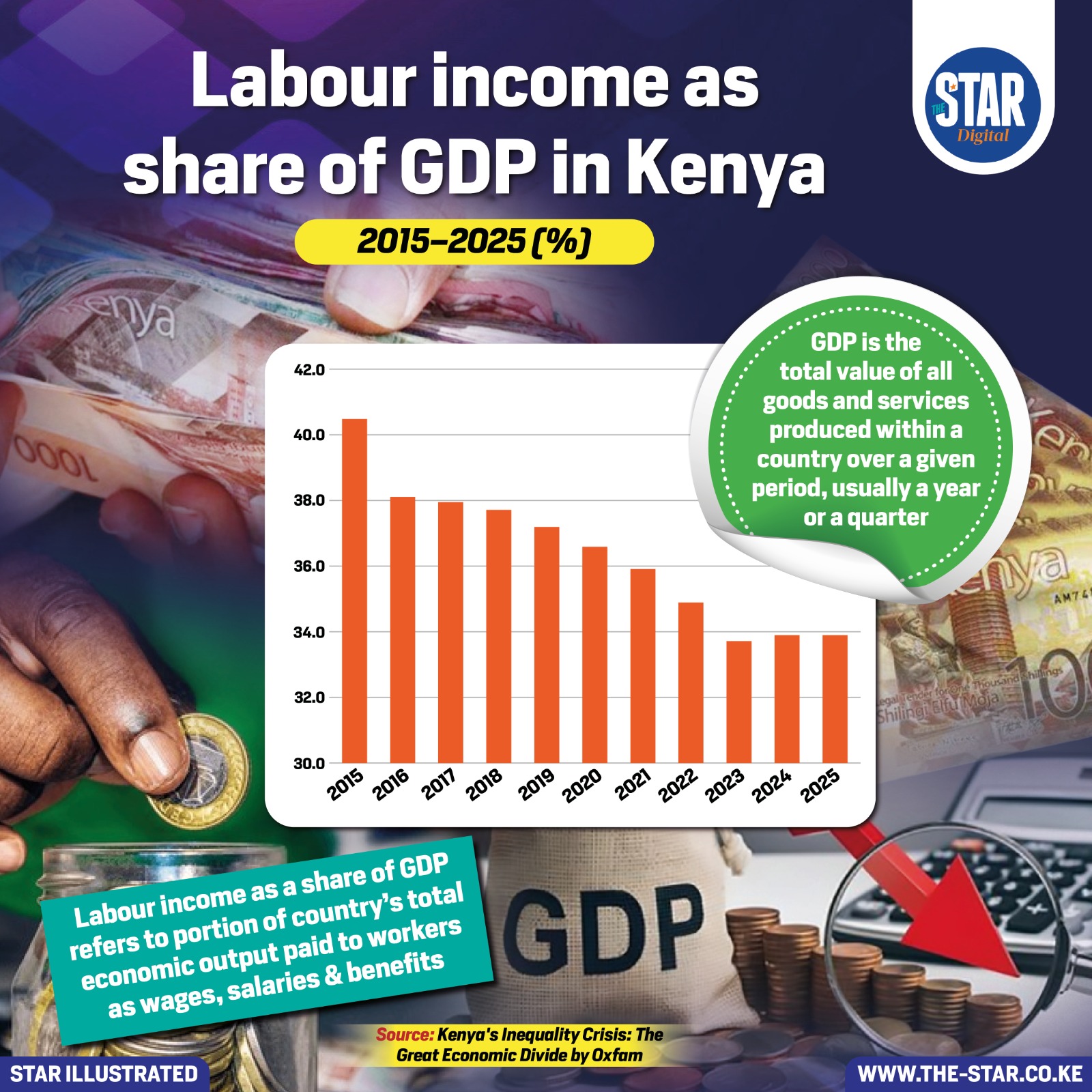
In 2015, labour income—which includes wages, salaries, and benefits—accounted for approximately 40.5% of the GDP. Fast forward to 2025, and that share is projected to drop to just 34%.
This downward trend, highlighted by Oxfam as a "Great Economic Divide," suggests that the fruits of economic growth are increasingly being captured by capital owners and corporate profits rather than the workforce.
Between 2015 and 2023, there was a near-constant decline, with a slight, marginal stabilization observed in the 2024-25 projections.
However, the overall decade-long slide indicates a systemic shift that leaves workers with less purchasing power and reduced financial security.
When the share of labour income falls, it often signals rising inequality.