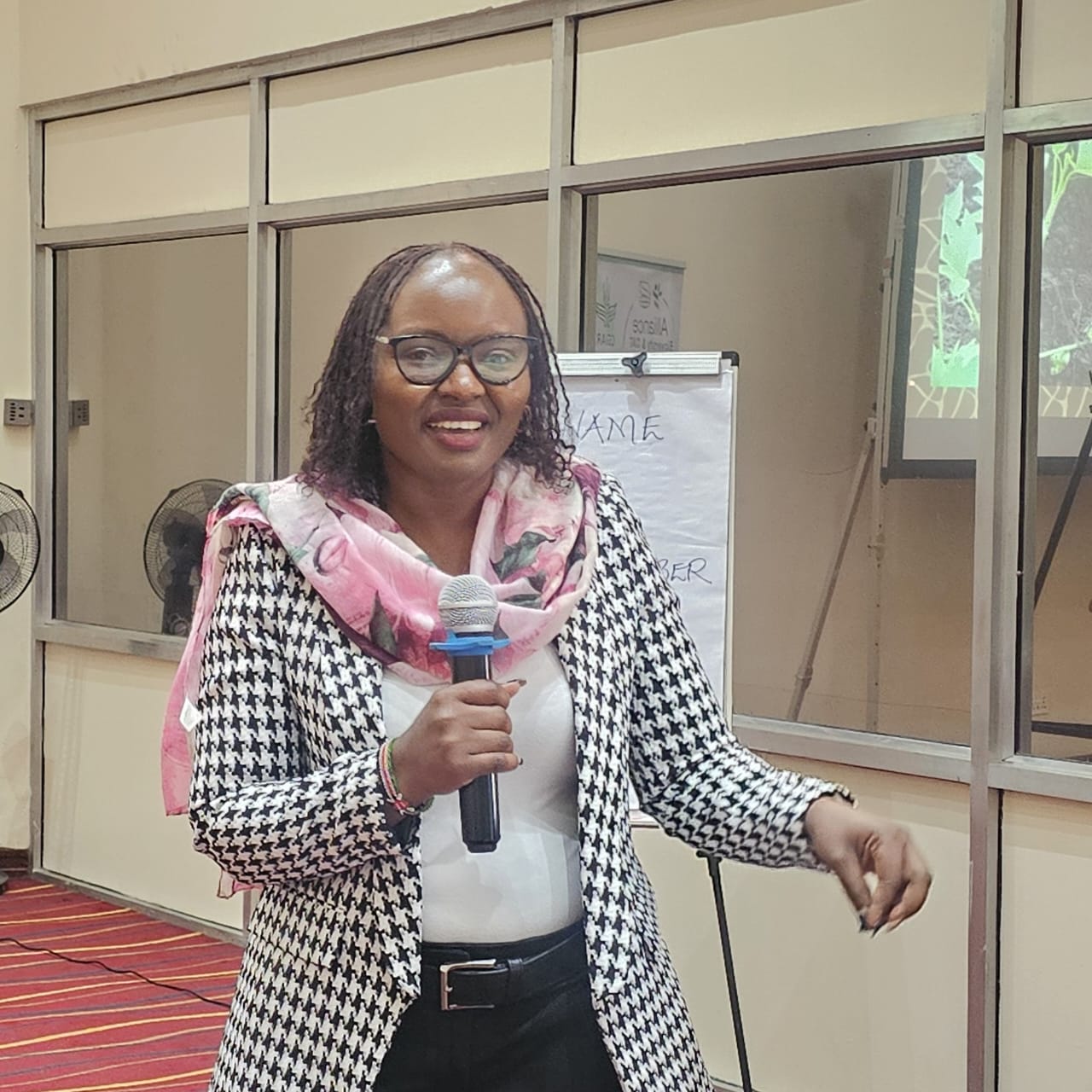
 Dr. Christine Chege, Senior Scientist at the Alliance of Bioversity International and CIAT.
As Kenya grapples with a growing nutrition crisis marked by both undernutrition and diet-related diseases, experts are calling for the strategic use of digital tools to improve access to affordable, nutritious foods.
According to the recent Kenya National Bureau of Statistics economic survey, nearly one in five Kenyan children under five years is stunted, while cases of overweight, obesity and non-communicable diseases such as diabetes and hypertension are rising rapidly, particularly in urban areas.
It further shows that poor diets, limited access to diverse foods and high food prices continue to undermine nutrition outcomes for millions of households.
Experts say digital innovations from mobile-based marketing platforms to digital finance and traceability tools, could play a critical role in making healthy foods more available, affordable and accessible.
Scientists, digital technology experts, policymakers and Micro, Small and Medium Enterprises (MSMEs) recently convened in Nairobi to examine how digital solutions can strengthen food systems and improve the consumption of nutritious foods across the country.
The experts called for the use of digital tools to promote increased access and affordability to nutritious foods.
This discussion followed research conducted by the Alliance of Bioversity International and CIAT under the CGIAR Science Program on Better Diets and Nutrition (BDN) Science Program, which revealed that although Kenya hosts 23 per cent of Africa’s agri-tech start-ups, scaling up remains a significant challenge.
Titled ‘Use of Digital Tools by Micro, Small and Medium Enterprises (MSMEs) for Nutritious Food Access in Kenya’, the study sought to understand the adoption, use, and impact of digital tools by MSMEs working with nutritious foods in Kenya.
Specifically, it examined how these tools enhance market efficiency, reduce transaction costs, ensure affordability, support financing, and promote better access to and consumption of nutritious foods.
“Some of the challenges towards the use of digital tools in the nutritious food space include awareness gaps, cost barriers, and infrastructure deficits such as unreliable internet, irregular electricity supply, and poor connectivity, especially in rural areas,” said Dr. Christine Chege, Senior Scientist at the Alliance of Bioversity International and CIAT.
She pointed out the user-related barriers that include digital literacy gaps, age-related challenges- where older individuals struggle with digital tools and limited capital among the youth to invest in advanced systems.
"Skills, confidence, and the ability to interpret digital information remain limited for many users. Gender was also identified as a key barrier, particularly in situations where women have restricted access to smartphones, face time constraints, or rely on shared devices. High costs of devices, data bundles, subscriptions, and maintenance further hinder access," she said.
“If well utilised, accessible and affordable digital tools would enhance real-time coordination with farmers, suppliers, and customers, ensuring quick aggregation and transport,” said Chege, who doubles up as Lead Specialist under CGIAR Better Diets and Nutrition science program.
She added that such coordination can also reduce spoilage, as pre-harvest order planning minimizes storage time for perishables such as vegetables, fruits, and dairy products.
Small-scale traders commonly use digital platforms for marketing and communicating with producers, fellow traders, and consumers.
“Digitally, we use phones to reach clients, suppliers, and for payments through M-Pesa (mobile money) and banks. Our group also uses digital platforms for savings and contributions,” said Mildred Malwa, Chairperson of the Kibra Business Association.
Social media, she added, has been especially helpful. Through platforms such as WhatsApp and Facebook, traders send pictures to clients and receive orders online. She called on innovators to continue developing technologies that are easy to use across demographics while ensuring affordability.
Innovators are now exploring solutions that enhance farmer profits and support cashless operations.
“We are also looking into the issue of traceability, so that traders can know where farmers are growing what and link this with market demand,” said Edwin Ogello, Product Manager at Safaricom PLC in charge of Digifarm.
He explained that such innovations would allow, for example, a trader interested in potatoes to trace a farmer with a ready crop in Nyandarua and transact directly.
“We want to ensure that these MSMEs have digital tools, can register farmers digitally, know which farmer deals with which crop, communicate with them, and access accurate prices,” Ogello added.
While digital transformation may not solve every nutrition challenge, combining it with strong policy, industry collaboration, and informed consumers creates a powerful catalyst for change, according to Patrick Muiruri, Deputy Director of Food Systems, Nairobi City County.
He noted that Nairobi County is making progress through its County Food Security Bill, which is heading into its second round of public participation. Muiruri emphasized the need for digital tools that address food production, distribution, utilization, and affordability.
“While it might be technically difficult to have a single tool that fits across the entire value chain, it is important to have appropriate digital tools for each group including farmers, transporters, traders, processors, and consumers,” he said.
Experts believe that if the agri-food system is fully digitized, nutritious food would become more accessible and affordable, and there would be less food loss within the food system, ultimately leading to a healthier population.
This initiative comes at a time when Kenya, like many parts of Sub-Saharan Africa, is experiencing rapid growth in digital adoption alongside rising cases of non-communicable diseases often linked to poor dietary choices.