Kenyan environmental enthusiast Truphena Muthoni’s recent attempt to hug a tree for 72 hours has rekindled discussions about the meaning attached to trees and the role they play in conservation efforts across Africa.
While her attempt drew widespread attention, environmental groups and regional conservation advocates note that tree-hugging carries long-standing cultural, ecological and spiritual significance.
Connection to Nature
Tree-hugging is often described by conservationists as a way of establishing a physical and emotional link with the natural environment.
The African Forest Forum states that such direct interaction enables people to better appreciate natural ecosystems.
Wangari Maathai, during the early days of the Green Belt Movement, encouraged communities to engage with forests in ways that deepened their understanding of ecological balance.

Stress Relief and Mental Wellness
Environmental health researchers in South Africa have highlighted the calming effect associated with contact with trees, noting correlations with reduced stress and improved mental clarity.
The South African National Biodiversity Institute reports that green spaces provide grounding experiences beneficial to human well-being.
Ugandan conservationist Dr. Arthur Mugisha has also spoken about forests as therapeutic environments for communities living near protected areas.
Appreciation of Environmental Resources
Tree-hugging has also become a symbolic way of acknowledging the value of trees in sustaining life.
According to the United Nations Environment Programme (UNEP), headquartered in Nairobi, trees contribute to air purification, water regulation and soil protection.
Wangari Maathai often linked such ecological services to social and economic stability, especially in rural communities that depended on natural resources for survival.

Promotion of Environmental Awareness
Public acts associated with tree-hugging are frequently used to draw attention to conservation concerns.
The Pan-African Climate Justice Alliance notes that symbolic gestures can be effective in mobilising communities and stimulating conversations about environmental protection.
In Nigeria, activist Nnimmo Bassey has used similar public demonstrations to highlight deforestation and climate impacts in the Niger Delta region.
Cultural and Spiritual Symbolism
Across Africa, trees are often associated with heritage, gathering points and spiritual significance. Kenyan cultural researchers at the National Museums of Kenya explain that certain indigenous trees serve as historical markers and custodians of community memory.
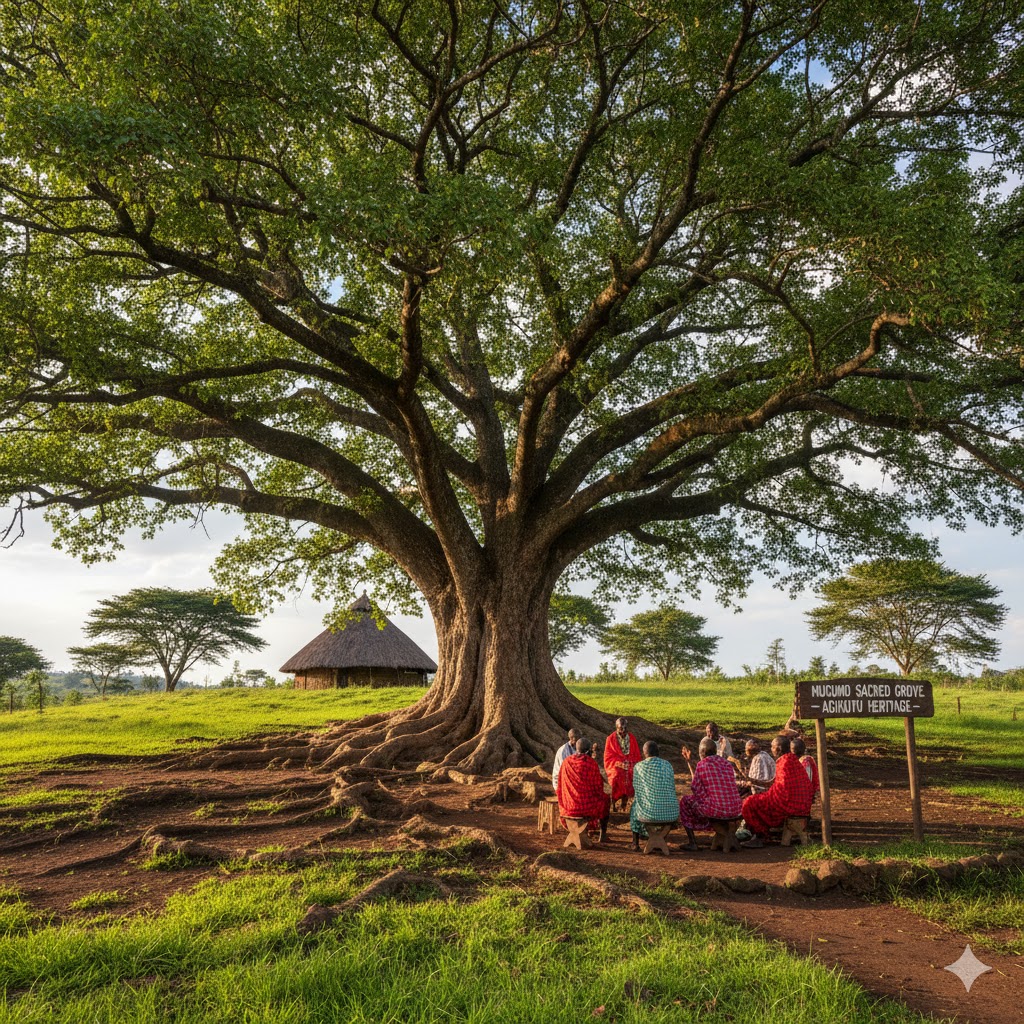
The Mugumo tree, sacred among the Agikuyu community, is traditionally viewed as a spiritual shrine and a place where elders prayed and communicated with God (Ngai).
READ MORE: Nyeri Woman Truphena Muthoni Attempts 72-Hour Continuous Tree hugging World Record
It symbolizes divine presence, ancestral protection, and major transitions, especially due to prophecies like those of Mugo wa Kibiru, who associated the fall of certain Mugumo trees with significant societal change.
Historically, it served as a community meeting point where elders settled disputes, making it a symbol of unity, justice, and social order.
Environmental Stewardship and Responsibility
Tree-hugging is increasingly adopted as an expression of responsibility toward future generations. The African Union’s Agenda 2063 highlights environmental protection as a central pillar of sustainable development.
In Rwanda, President Paul Kagame has frequently emphasized national tree-planting initiatives as part of long-term environmental management strategies.