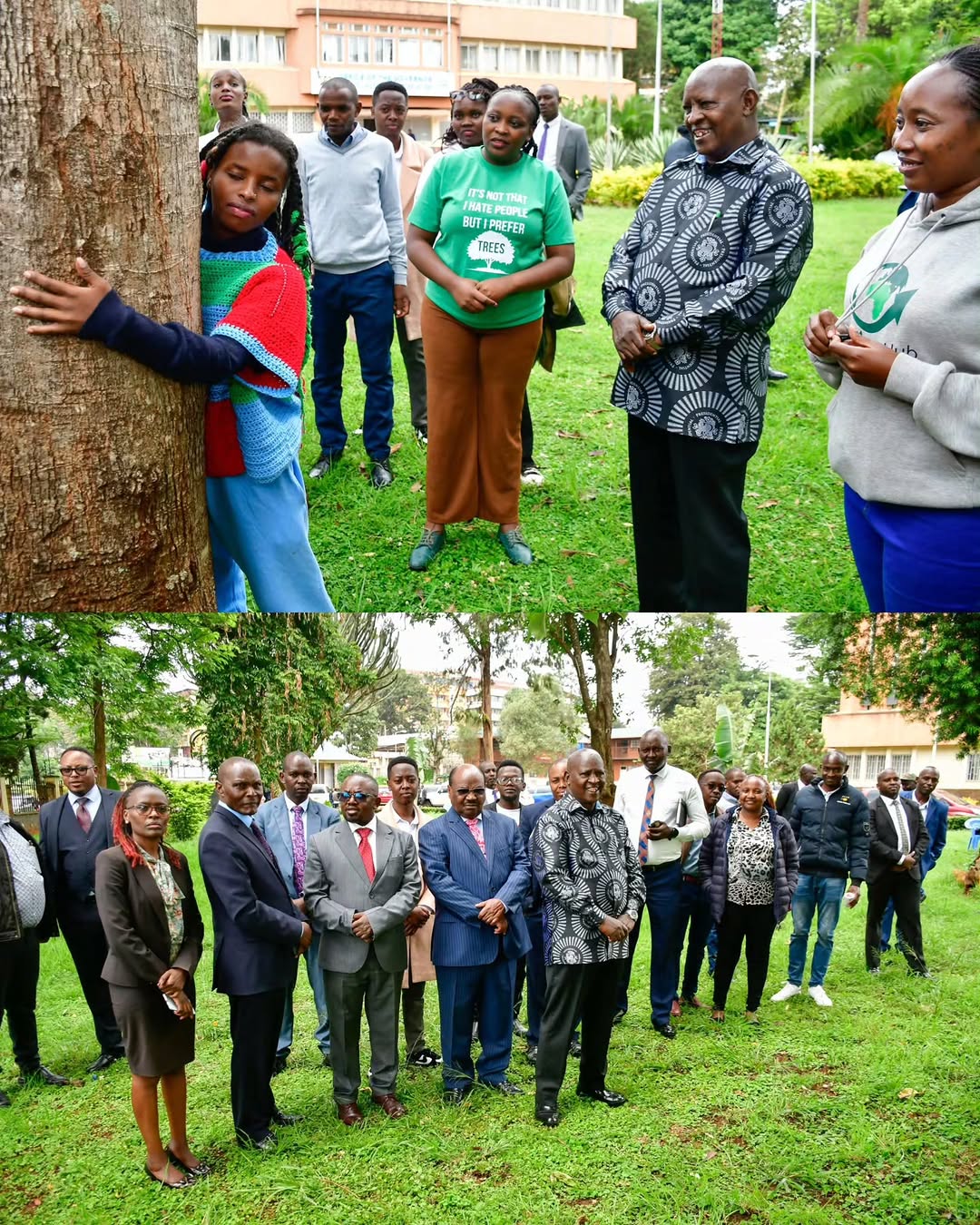
Having previously completed a sustained hugging effort spanning 48 hours, Muthoni is setting her sights on a new milestone: stretching the attempt across three full days (72 hours).
The Two Pillars of Endurance
Muthoni’s motivation to persevere through a potentially 72-hour hugging period is built on dual foundations: self-care and public mission.
She views the activity itself as a powerful coping mechanism, explaining that hugging serves as therapy.
For individuals grappling with daily pressures or dealing with stress or minor personal problems "shida kidogo tu", she believes the act of tending to the earth helps one to recover or heal.
This integration of mental health benefits into her environmental work establishes a profound connection between her personal well-being and the plants she stewards.

ALSO READ: Some of the most shockingly impressive Guinness World Records
However, the core public focus of the attempt is her unwavering commitment to fighting for indigenous trees or the ancient trees. "Kupigania indingenous trees zile za kitambo," she said.
Muthoni notes that these crucial native species are being cut down at an alarming rate necessitating constant advocacy to ensure their survival and continuity.
This responsibility of protecting historically significant foliage adds considerable weight to the physical demands of breaking a world record.
Sustainable Stewardship over Sheer Numbers
Muthoni’s dedication to environmentalism includes a strong critique of methods she deems unsustainable. While major reforestation efforts often emphasize massive numbers, she argues against the effectiveness of practices where the survival of the trees is not prioritized.
She uses the example of planting one million trees, questioning the viability of such a large-scale project when adequate care cannot be guaranteed.
Muthoni stresses that such high numbers are often "not sustainable", particularly because tree care requires significant time and resources. She details the impracticality of having a single person responsible for the survival of one million saplings.
She notes that because one person cannot look after that many trees, "most of the time," the trees will not survive.
This focus on quality over quantity positions Muthoni not merely as a planter, but as a proponent of long-term stewardship.
Her efforts are characterized by the responsibility she takes for the continued health and growth of each plant.