
The East African Community is entering a crucial phase in its effort to turn the region into a competitive industrial powerhouse. With its Industrialisation Strategy (2012-2032) halfway through implementation, the bloc has made significant progress, especially during Kenya’s recent leadership.
However, structural challenges still threaten to slow down growth. Manufacturing’s share of GDP remains at about 9.7 per cent, well below the target of 25 per cent. Persistent non-tariff barriers, high production costs and a heavy reliance on external markets continue to limit the region’s industrial goals.
Despite these challenges, Kenya’s leadership has brought new energy by focusing on practical, project-based solutions that strengthen regional value chains.
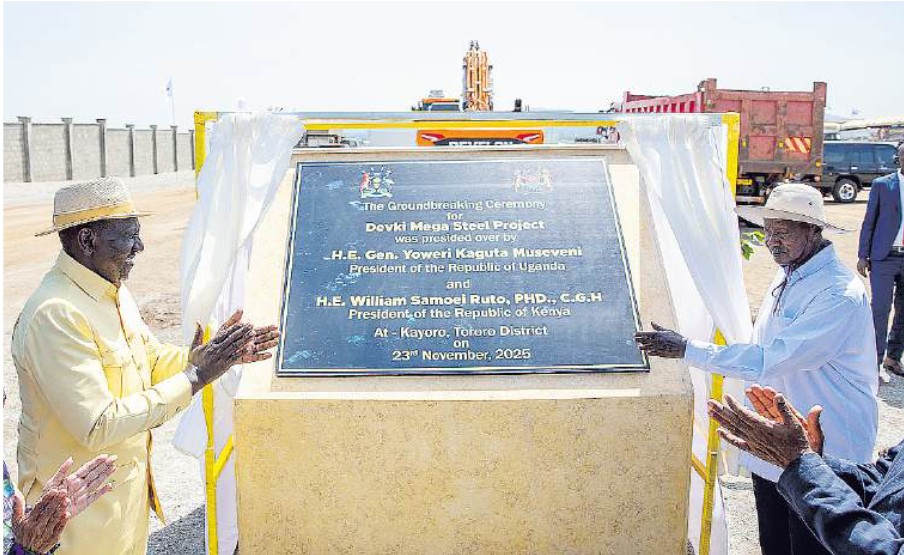
One notable initiative is the Tororo Steel Project in Uganda, which aims to create a fully integrated steel industry capable of supplying the entire EAC and AfCFTA markets.
Another significant development is the revival of the cotton, textiles and apparel value chain, connecting farmers in Tanzania and Uganda with manufacturers in Kenya and Rwanda.These efforts indicate a move towards collective regional industrial growth. Micro, Small and Medium Enterprises are vital to the regional economy and have also gained from these changes.
Harmonised policies, the annual East African Community MSME Trade Fair and new digital tools such as the MSME Database and Online Market Platform are helping small businesses access essential information and expand opportunities across borders.
Digital trade infrastructure has also made considerable progress. The rollout of the EAC Regional Digital Integration Project and the e-Tariff Tool aims to lower trade costs and improve transparency, though border clearance times remain longer than desired.
However, structural challenges remain. Non-tariff barriers persist, customs procedures differ significantly and new regulatory obstacles continue to arise.
High energy prices, often two to four times higher than global averages, hurt competitiveness, while limited financing hampers MSME growth. Additionally, the region’s trade profile is still vulnerable; more than 62 per cent of exports in the second quarter of 2025 went to just five countries outside Africa.
As Kenya’s leadership comes to an end, two key policy priorities emerge. The first is the need to finalise the long-awaited Common External Tariff review and implement a 35 per cent fourth tariff band to support emerging industries.
The second is to promote a Regional Pharmaceutical Manufacturing Compact, which would ensure guaranteed demand for locally produced essential medicines and enhance regional health security.
The incoming EAC leadership will have a promising foundation but must act decisively. Analysts highlight the importance of boosting accountability through a Regional Industrialisation Scorecard and suggest closer ties between summit decisions and domestic actions.
Somalia’s recent membership also brings new opportunities.
With the longest coastline in mainland Africa, Somalia could lead the establishment of a Blue Economy Industrial Corridor focused on fish processing, aquaculture and maritime logistics, providing a chance to diversify the region’s industrial base.
Security is also a significant concern. Experts caution that investment cannot flourish without stability. The next chairperson is expected to more closely integrate regional security cooperation with economic planning to attract long-term investors.
The EAC Secretariat is being encouraged to implement quarterly performance reviews, independent audits, and stronger technical support to assist member states in addressing non-tariff barriers and developing industrial clusters.
The consensus across the region is clear: the EAC’s industrial journey is progressing. Kenya’s time in leadership has demonstrated that practical, cross-border industrial projects are both feasible and transformative.
With focused leadership and consistent action, the bloc is well-positioned to accelerate its path toward an inclusive and resilient industrial economy that serves 290 million citizens.







